15 vs. 2 upset rankings: Iowa State least likely NCAA Tournament No. 2 seed to lose, but here's who could
Teams seeded No. 2 have lost 11 times to No. 15 seeds in the NCAA Tournament, and here's who's most likely to go down if it happens this year

While 16-over-1 upsets remain the gold standard in the NCAA Tournament, No. 16 seeds haven't provided much madness to March. Since the tournament expanded to 64 teams in 1985, just two 16s have pulled off the unthinkable: UMBC over Virginia in 2018 and Fairleigh Dickinson over Purdue in '23.
Instead, No. 15 seeds have been a bigger source of tournament chaos in the first round. The 15s have upset No. 2 seeds 11 times since 1985. The underdog has been more successful recently, with three wins over the past five tournaments: Oral Roberts over Ohio State in '21, Saint Peter's over Kentucky in '22 and Princeton over Arizona in '23.
This year, Furman, Idaho, Queens and Tennessee State are the NCAA Tournament's No. 15 seeds and will try to bust people's brackets.
15 vs. 2 upset rankings
These are ordered from least likely to most likely.
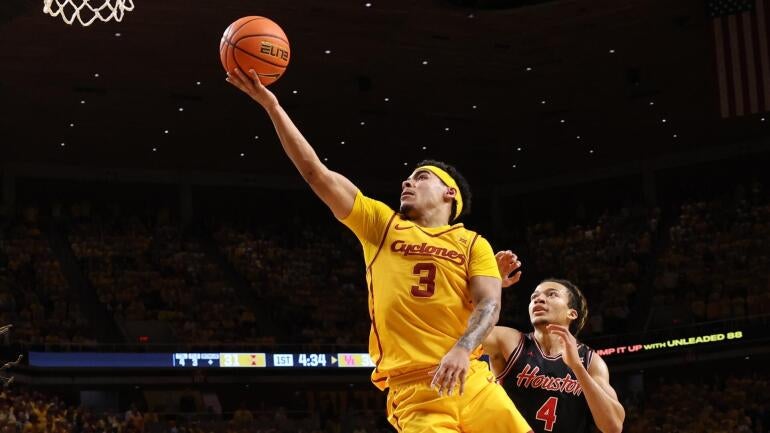
4. Tennessee State over Iowa State
The Tennessee State Tigers (23-9) enter their first NCAA Tournament since 1994 on a six-game winning streak, their longest of the season. They've blown out opponents over that stretch, averaging an 18.0 margin of victory.
Tennessee State is at its best when it can turn defense into offense. The Tigers force 14.7 turnovers per game, which ranks 18th in the country. That has helped them average 15.9 fast-break points per game, which is 14th in Division I.
But on Friday, Tennessee State will run into a Cyclones team that doesn't commit turnovers (10.3 per game, third in the Big 12) and is better than the Tigers at forcing them (15.3, seventh in the nation) despite playing a much more difficult schedule. Senior guard Tamin Lipsey is a battle-tested veteran who is unlikely to be spooked by playing in the tournament.
In addition, Tennessee State has faced just two Quad 1 opponents this season, losing by eight points at Belmont and losing by 29 at Tennessee.
3. Idaho over Houston
One way for a No. 15 seed to knock off a No. 2 is to win the 3-point battle. When they're hot, the Idaho Vandals (21-14) can do that.
The Vandals, who are playing in the tournament for the first time since 1990, average 10.0 3-pointers made per game, which leads the Big Sky conference and ranks 34th in the country. According to Synergy Sports, Idaho is the epitome of a feast-or-famine team from behind the 3-point arc. It scores 29.4 points per game in spot-up situations, making 43% of their spot-up three-point attempts in wins this season. However, in losses, the Vandals score just 17.9 per game, converting 28.9%.
If Idaho can make threes at a high level, it has a chance against a Houston team that has struggled scoring at times this season. During their three-game losing streak in February, the Cougars averaged just 63.0 points per game. In addition, Houston likes to play at a deliberate tempo (63.3 possessions per 40 minutes), ranking 352nd in the country.
In a low-possession game, the Cougars' margin for error is smaller, especially if the Vandals have found the range from beyond the 3-point line.
2. Queens over Purdue
The Queens Royals, who are in just their fourth season in Division I, will be playing in the NCAA Tournament for the first time in program history. They earned their inaugural tournament bid by knocking off the top two seeds in the Atlantic Sun Tournament.
The Royals (21-13) have a style of play that can be dangerous against Purdue. They make 10.2 3-pointers per game, which ranks 28th in the country. According to Synergy, a massive 45% of Queens' shots in the half court are catch-and-shoot jumpers, and the Royals average 1.12 points per catch-and-shoot jump shot in the half court overall. That ranks 18th in the nation.
That could be bad news for the Purdue Boilermakers, who have limited size and athleticism on the perimeter and struggle defending 3-pointers. The Boilermakers allow opponents to shoot 34.2% from beyond the arc, which ranks 224th in the country. Earlier this season, Purdue gave up 11 3-pointers to Iowa State (on 23 attempts) and was blown out at home, 81-58.
Add in the fact that the Boilermakers are just 6-4 over their last 10 games and play at a slow pace (64.4 possessions per 40 minutes, 324th in Div. I), and this game could get more interesting than the seeds suggest.
1. Furman over UConn
The last time the Furman Paladins were in the NCAA Tournament, they pulled off one of biggest upsets of the bracket: beating No. 4 Virginia, 68-67, as a No. 13 seed in 2023 and prompting play-by-play announcer Kevin Harlan to ask, "Did we just see what we think we just saw? Wow!"
This year, the Paladins (22-12) enter the tournament after sweeping three wins in three days in the Southern Conference tournament. They have the length to compete with UConn on the boards. All five Furman starters are at least 6-foot-5, which is one of the reasons the team ranks 31st in the country in rebound margin (5.8 per game).
Paladins guard Alex Wilkins is arguably the most talented freshman in the low-major conferences and has an ability to score in bunches (team-leading 17.7 points per game).
Maybe most importantly, Furman faces a Huskies team that is not playing its best basketball. UConn is coming off its worst loss of the season, a 72-52 defeat to St. John's in the Big East Tournament final. In addition, the Huskies are not at full strength; point guard Silas Demary Jr. is dealing with an ankle injury but is expected to play, while forward Jaylin Stewart has not played since Feb. 21 and is not certain to be available on Friday.