Bracketology: Alabama, Nebraska and Texas Tech each drop in NCAA Tournament projection after losses
There was significant Bracketology movement following a busy Tuesday of college basketball action

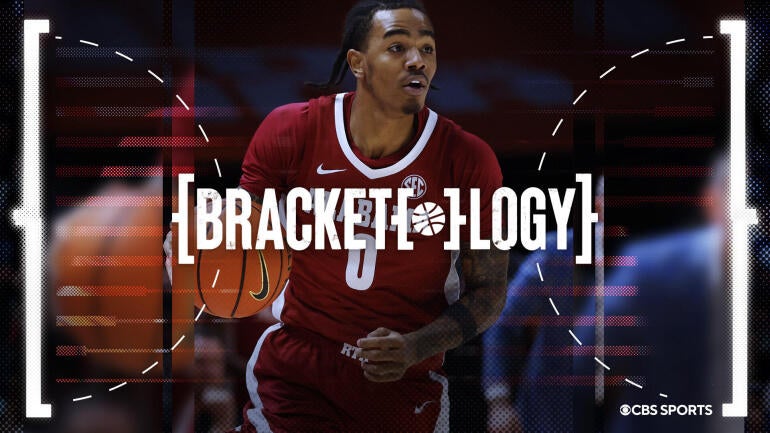
The Bracketology fallout from Tuesday night's results demonstrated how tightly condensed teams in the 2-4 seed range are in the NCAA Tournament seeding picture with just a week and a half remaining until Selection Sunday. Alabama, Nebraska and Texas Tech each fell from the No. 3 seed line to the No. 4 seed line following losses.
Their defeats paved the way for Gonzaga, Iowa State and Virginia to each rise back onto the No. 3 seed line. More fluctuation near the top of the bracket could be in store following Wednesday's action, depending on what happens with No. 7 Houston and No. 15 Purdue.
The Cougars are entering their Senior Night game with Baylor as a No. 2 seed in CBS Sports Bracketology, but a surprise loss would have them flirting with a drop. Purdue will be seeking to stop a two-game slide when it plays at Northwestern. The Boilermakers enter as a No. 3 seed, but if they were to drop a game against a lower-tier Big Ten opponent, they could wake up on the No. 4 seed line.

Here is a look at how the top of the bracket shapes up in Wednesday morning's version of CBS Sports Bracketology.
Bracketology top seeds







Check out the full field of 68 at the CBS Sports Bracketology hub.
Quiet at the top
When it comes to the No. 1 seed line, things are a bit less fluid. Duke, Michigan and Arizona are firmly entrenched as No. 1 seeds. UConn has the fourth No. 1 seed for now, but Florida remains right on the Huskies' heels after clinching an outright SEC title on Tuesday night.
As for the No. 2 seeds, Illinois has arguably the slimmest margin for error with a WAB ranking of 12. While the Illini's standing in that vital resume metric is more in line with a lower-tier No. 3 seed, they counterbalance an imperfect resume with a predictive analytics profile that averages out as the sixth-best of anyone in the field. All Illinois has left before the Big Ten Tournament is a Sunday road game vs. lowly Maryland, which means the Illini's potential for volatility is slim.
Seismic victories
Tuesday night's theme was all about seismic victories for teams either on the bubble or needing just a bit more validation. The biggest winner was Georgia, which made a rare two-seed jump by rising to a No. 7 seed following a 98-88 win over Alabama. TCU is now close to locking up a spot in the bracket after upsetting Texas Tech on the road. Texas A&M's win over Kentucky and UCLA's win over Nebraska were also massive for the Aggies and Bruins, who have been living life on the bubble.
Rematch rules
Amid conference consolidation and the proliferation of nonconference matchups between high-major schools, the NCAA Tournament Selection Committee faces challenges in attempting to avoid regular-season rematches. The 2025 NCAA Tournament bracket featured three potential second-round games between conference teams, although none came to fruition.
The committee will still seek to minimize conference meetings and nonconference rematches, and our model is coded to do the same. However, NCAA bracketing principles permit games between conference teams in the second round, so long as the teams played each other just once before the NCAA Tournament. For conference teams that met twice prior to the NCAA Tournament, principles state they should not meet prior to the Sweet 16. If the teams played three times, NCAA bracketing principles state they should not play before the Elite Eight.

Concerning rematches of nonconference games, NCAA bracketing principles state that they should be avoided "in the First Four and first round." The committee will also "attempt to avoid" nonconference rematches in the second round. But the committee has historically prioritized keeping teams on their natural seed line over changing their seed line for the sake of avoiding a rematch.