Grading the NCAA Tournament selection committee: Vanderbilt a huge miss, Auburn and Miami (Ohio) good calls
Here's what the committee got right -- and what it missed -- in building the final 68-team bracket

The NCAA Tournament selection committee got a lot right in how it picked, seeded and bracketed the 2026 Big Dance. It's a grueling process layered in complexity, and there is no such thing as a "perfect" bracket.
It's through that lens of grace that we now bust out the microscope to dig on grading its work. With the First Four games set to begin Tuesday in Dayton, Ohio, the page will soon flip from processing the bracket to forgetting the debates which surround its complexion.
So let's dive in on what the group got right and what it got wrong. What did the NCAA selection committee get right? A lot.
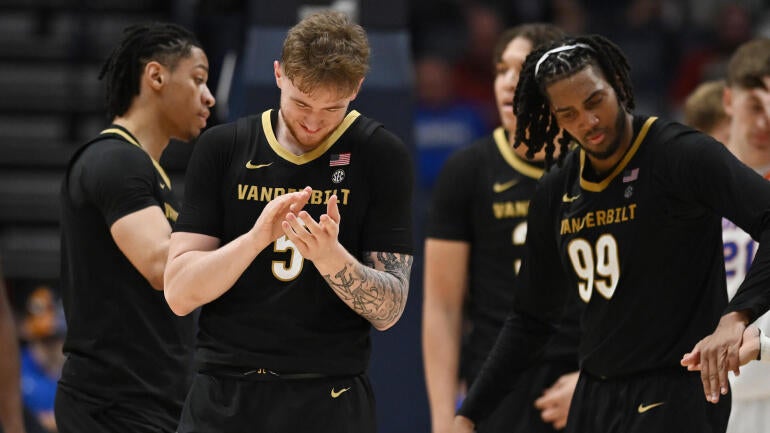
But the discussion on what it got wrong must begin with Vanderbilt, which landed as a No. 5 seed in the bracket, despite every metric the committee uses suggesting the Commodores deserved better. It was a huge miss that mirrors its laughable miss on Louisville last year.
The Cardinals' results-based metrics suggested they deserved a No. 4 seed in 2025, and their predictive metrics suggested they deserved no worse than a No. 6. Inexplicably, they landed as a No. 8 seed.
The Commodores are this year's version of the Cardinals.
It's time for brackets! Fill yours out today and join our Bracket Challenge to play for a dream trip to the 2027 Final FourⓇ.

Miss: Vanderbilt gets the shaft
Even after losing to Arkansas in the SEC Tournament title game on Sunday, the Commodores' results-based metrics put them squarely on the line between a No. 2 seed and No. 3 seed. They will be No. 9 in the final Wins Above Bubble (WAB) ranking and are No. 9 in the Kevin Pauga Index (KPI). Those are the two most significant results-based metrics used by the committee.
From a predictive metrics standpoint, the Commodores are entering the NCAA Tournament No. 12 at KenPom and No. 10 at Torvik, which suggests the absolute worst-case scenario should have been Vanderbilt landing as the best No. 4 seed. There is no metrics-based defense for placing the Commodores as a No. 5 seed.
The committee looks even wilder for its Vanderbilt decision because of where the Commodores slotted in the March Madness Bracket Preview on Feb. 21. Back then, the committee believed the Commodores were a No. 4 seed.
All Vanderbilt did from there was add four more wins over NCAA Tournament teams, including a whopping three "Quad 1A" victories in the nine days leading up to Selection Sunday.
The selection committee wants us to believe that what happens during conference tournament week counts. They are holding up Purdue's spot as a No. 2 seed following its Big Ten Tournament title as an example of that.
But it looks like they threw in the towel on trying to process the gravity of what Vanderbilt accomplished in a 91-74 SEC Tournament semifinal beatdown of Florida on Saturday. The Gators, who are a No. 1 seed in the NCAA Tournament, entered with the nation's second-longest winning streak at 12 games, and the Commodores beat the reigning national champions 91-74. It brought a surge in the metrics that the committee claims to look at.
Vanderbilt may have been better off staying at home and preparing for the Big Dance than expending the energy required to play Tennessee, Florida and Arkansas over a three-day span, because it seems like the committee had already locked the Commodores in before they ever showed up to Bridgestone Arena.
Kansas was a No. 3 seed in the Feb. 21 bracket preview and went 3-4 from there with a stretch that included losses to non-tournament teams Cincinnati and Arizona State by a combined 26 points. On Selection Sunday, Vanderbilt ranked ahead of Kansas in literally every metric the committee "uses" and significantly ahead of KU in many of them. Yet Kansas ended up with a No. 4 seed.
Michigan State was also a No. 4 seed in the bracket preview and went 4-2 from there with one additional Quad 1A win. Yet, the Spartans rose a seed line to a No. 3 in the real bracket while the Commodores — who added three Quad 1A victories — fell a spot. That's inexplicable and indefensible.
Nebraska took losses against UCLA and Purdue by a combined 36 points after landing as a No. 3 seed in the bracket preview, and its best victory following the preview was at home in overtime against an Iowa team that landed as a No. 9 seed.
Vanderbilt slayed dragons after the preview while Nebraska held on for dear life. Yet, the Commodores landed behind the Cornhuskers. As for that comparison, Vandy could get a chance to settle it on the court against the Cornhuskers in the second round.
There weren't a ton of egregious misses from the committee. But this was a big one.

Hit: The Miami (Ohio) decision
The fact that the selection committee had the courage to send Miami (Ohio) to a First Four game was commendable. During last month's mock selection in Indianapolis, NCAA officials and committee leaders emphasized that selection and seeding are two different processes. Selection is more about results-based metrics, and seeding is where predictive metrics factor in.
Against that backdrop, Miami made it into the field of 68 with room to spare because of a top-40 resume. But it was sent to a First Four game because of predictive metrics that average out around 90th. This decision was based in sound logic and aligned with our CBS Sports Bracketology interpretation of how one of the most vexing at-large candidates in NCAA Tournament history should be handled.

Hit: Leaving Auburn out
There would have been at least some metrics-backed defense for putting Auburn in the field with a 17-16 record. But the committee applied common sense — and a proper read of SMU — by putting the Mustangs in over Auburn (and Oklahoma).
While Auburn arrived at Selection Sunday ranking one spot better in the all-important WAB metric than SMU, the Mustangs were more deserving of a spot in the field. Committee chair Keith Gill noted that the absence of SMU guard B.J. Edwards down the stretch impacted the Mustangs, who are expected to have Edwards back for the NCAA Tournament.
SMU went 1-5 without Edwards after starting 19-9 with him. Edwards rates as the Mustangs' second-best player in evanmiya.com's player efficiency tool, and his expected return for the Big Dance will dramatically improve the defense of a team that struggled down the stretch.
Generally speaking, the committee handled the bubble well.

Miss: Gonzaga as a No. 3 seed
One year after seeding Gonzaga as a No. 8 based on its results-based metrics and seemingly ignoring the Zags' great predictive metrics, the committee overcorrected and leaned way too hard into predictive metrics with the Zags this year. With a No. 17 WAB ranking and No. 17 standing in KPI — two vital results-based metrics — Gonzaga was probably closer to a No. 5 seed than a No. 3 seed. But let's split the difference and agree the Zags should have been a No. 4 seed.
Here's something else the committee may not have weighed properly when rewarding Gonzaga with a better seeding than it deserved: its best victories — Alabama, Kentucky and UCLA — all came when star forward Braden Huff was still playing.
CBS Sports' Jon Rothstein reported that Huff remains doubtful for the first weekend of the NCAA Tournament as he continues recuperating from a significant knee injury. Even if Huff returns for a theoretical Sweet 16 game, what can Gonzaga realistically expect from him after more than two months away?
This Zags team is still good without Huff, but it doesn't have the ceiling that its No. 3 seed would suggest. During Huff's absence, the Zags took an inexplicable loss at Portland and also dropped a game against Saint Mary's, which cost them an outright title.
Perhaps the committee could claim that it rewarded Gonzaga with a No. 3 seed for being a "double champion" of the WCC (although the Bulldogs shared the conference crown with Saint Mary's). If that's the logic, then St. John's deserved better than a No. 5 seed after being an outright double champion of a better league.
In fact, the Red Storm arrived at Selection Sunday with a better standing than the Bulldogs in results-based metrics and five more victories across Quad 1 and Quad 2. These teams should not be separated by two seed lines.

Hit: NC State sent to Dayton
I did not vociferously advocate for NC State to be slotted in a First Four game during our internal Bracketology "committee" meeting late Saturday night as we prepared to unveil our final projection. Why? Because I didn't think the committee would peel back the layers on NC State's flimsy body of work.
But give the committee a ton of credit for looking under the hood on the Wolfpack and sending them to Dayton, Ohio, as one of the "Last Four In."
The Wolfpack's best road wins over Clemson and SMU depreciated in value over the season's final month, and a 24-point beatdown of North Carolina came with an asterisk since UNC was missing stars Caleb Wilson and Henri Veesaar. A tally of 11 Quad 1/2 victories was great, but there were zero victories against teams ranked in the top 30 of the NET.
This team dropped seven of its final nine games. That stretch included losses to non-tournament teams Notre Dame and Stanford. All of that messiness showed up NC State's No. 43 WAB ranking, which is a ranking that suggests NC State got exactly what it deserved.