John Calipari denounces NCAA eligibility rules after Baylor signs James Nnaji, outlines potential changes
Calipari spoke at length about protecting the integrity of college basketball

By
Carter Bahns
•
2 min read
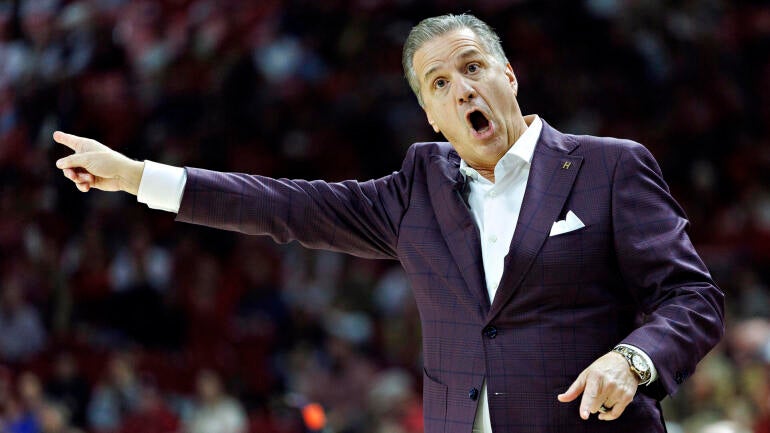
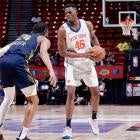
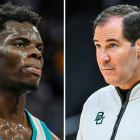
Baylor shook college basketball to its core with its midseason acquisition of former NBA Draft pick James Nnaji, who joined the Bears' roster on Christmas Eve and became eligible to play immediately. Don't blame Baylor coach Scott Drew, some anonymous coaches told CBS Sports, for simply acting within the NCAA rules with the controversial addition to his roster. Arkansas' John Calipari said the same when he went on the record in defense of Drew.
But that doesn't mean Calipari is a fan of the move. On the contrary, he unleashed a seven-minute postgame diatribe against the NCAA's eligibility rules, questioning why Nnaji -- who spent the last four years in the EuroLeague -- and others with professional experience should be allowed to play college basketball in the first place.
"I don't blame coaches," Calipari said following No. 18 Arkansas' Monday win over James Madison. "I've got friends that are playing with 27-year-olds and they feel bad. I said, 'Don't feel bad.' We don't have any rules. Why should you feel bad? Let me give you this, real simple: the rules bes the rules. If you put your name in the draft -- I don't care if you're from Russia -- and you stay in the draft, you can't play college basketball. Well, that's only for American kids. What? If your name is in that draft and you got drafted, you can't play, because that's our rule. But that's only for American kids. OK."
Nnaji is the first player to join a college roster after being selected in the NBA Draft. The No. 31 overall pick in 2023 has not played an NBA game, though, which the NCAA compliance department concluded makes him eligible for competition.
This is far from the first instance of a student-athlete holding professional experience. Numerous college basketball players came to the United States after playing professionally overseas, and seemingly every year there is a case of a former professional athlete in one sport or another signing with a college program.
Calipari argues that the eligibility loophole is a detriment to high school recruits.
"Does anybody care what this is doing for 17- and 18-year-old American kids?" Calipari said. "Do you know what this opportunity has done for them and their families? There aren't going to be any high school kids. Who other than dumb people like me are going to recruit high school kids? … I'm going to keep doing it. But why would anybody else if you can get NBA players, G League players, guys that are 28 years old, guys from Europe?"
What can be done to prevent these eligibility anomalies from becoming more mainstream? Calipari introduced a few potential measures. The first is that if a player leaves their name in the draft, they cannot play college basketball. Second, if a player joins a roster in the middle of the season, they must sit until the following year. The Arkansas coach also said that NIL collectives should not be involved in recruiting.
Calipari called for a specific change to the transfer portal, as well.
"If your coach leaves or is fired, you can transfer without penalty," Calipari said. "You can do it once. And if the coach is fired or leaves, you can end up doing it twice. But after that you gotta sit out."
The NCAA has seen many of its eligibility rules across multiple sports challenged in court. Enforcing stricter regulations in college basketball would almost certainly come with pushback.
To that end, Calipari sent a message to the NCAA: "Let them sue us."