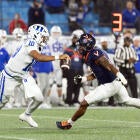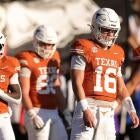


On a sleepy Friday evening in July, the college football world received a jolt that could impact a significant number of rosters just days ahead of the start of fall camp. All 2022 class athletes who exhausted their eligibility in four years are now eligible.
With one order from Judge Charlotte Sweeney in Colorado as part of the Wisne vs. NCAA case, college football front office staffers and agents were sent scrambling to understand the ramifications.
While some of the specifics remain unclear and teams are unsure if the ruling will hold up on appeal, one thing is obvious a day later -- schools are moving quickly to add potential pieces to their rosters.
"There will be players that are rosterable," one Power Four general manager said.
Members of the 2022 class filed a wave of lawsuits against the NCAA in the wake of the organization's alteration of its eligibility rules. While athletes will now get five years to play five seasons, athletes who had already exhausted their eligibility were not grandfathered into the ruling.
It had mostly been basketball players challenging the rule in court up to this point, but Sweeney's order was much broader in scope, allowing all 2022 class athletes who had exhausted their eligibility to return.
That impacts hundreds (potentially thousands) of FBS football players.
CBS Sports has spoken with dozens of sources since the ruling was issued Friday night to better understand how college front offices and agents are approaching this swerve. Whether or not NFL players could return, or if players are even in good enough shape to play, this is what you need to know.
Schools believe players from class of 2022 can return
While compliance offices are attempting to understand the full scope of the ruling and untangle the specifics of the order, schools are actively putting together lists and engaging with former players about their interest in a potential return, according to sources.
CBS Sports spoke with agents on Friday night who had already been in contact with schools, asking if any of their players met the criteria for a fifth season.
Multiple general managers CBS Sports spoke with already knew which of their former players would be eligible under the ruling and would be happy to take some of them back for the 2026 season.
Among the players who have already expressed an interest in returning include former Arizona State All-Big 12 safety Myles Rowser, ex-Florida State quarterback Thomas Castellanos and former Virginia defensive end Cazeem Moore.
Teams are operating with caution
Compliance offices were still working to better understand Friday's ruling. While the consensus is that the ruling does apply to all 2022 class members who finished their fourth season last year, schools remain cautious about whether an appeal could stop the order.
Multiple sources that CBS spoke with mentioned the Charles Bediako situation with Alabama basketball last year. Bediako returned to college basketball in January of 2026 despite playing professionally for two seasons. A judge granted Bediako a temporary restraining order allowing him to play for five games, but an Alabama circuit court judge later denied his motion for a preliminary injunction, and he could not play the remainder of the season.
That's what some sources believe could happen in this case.
There are NCAA rules -- via NCAA bylaw 12.9.4.2 -- that could lead the NCAA to vacate wins from a program if it competes with an ineligible player, and that court order is eventually overturned. However, Alabama was not punished amid the Bediako situation.
So, while you're seeing schools move aggressively to gauge the interest of players in a return, there isn't necessarily a rush to add them back to a roster. Uncertainty remains about whether players will be eligible to play (and remain eligible) during the 2026 season.
The NCAA is expected to quickly appeal the order to the Tenth Circuit Court of Appeals, which, if successful, could take away blanket eligibility for 2022-class athletes.
A looming NFL question
While most college programs are set to begin fall camp next week, NFL training camp is already underway across the league. Some front-office staffers are wondering whether they can get players currently on NFL rosters to leave their teams and return to college.
Agents CBS spoke with said it doesn't make much sense to pull a player off an NFL training camp roster and bring them back to college. There are some circumstances in which it could prove prudent, especially in the case of an injury or if you're an undrafted free agent with a low chance to make a roster.
Said one Power Four general manager: "If NFL doesn't matter, I've got a lot of money that's better than camp."
NCAA rules generally prohibit players who've earned money as a professional from returning to college. Yet as the Bediako situation showed, there are ways for athletes to get around that.
NFL teams are also wondering about the ruling and whether players currently in their training camps will try to return to college.
Other important takeaways
- There aren't as many players who fit that criteria as you might expect. CBS Sports spoke with more than a dozen front office staffers on Friday. Most of them had three or fewer players who'd even qualify under these criteria, and those players didn't get drafted.
- There's real concern about whether players can return to the sport and contribute after nine months off and away from the program's strength and conditioning program. Many of the players who could return have already started actual jobs.
- There won't be big paydays for many of these players even if they do come back. Some schools have the flexibility to pay up for depth. Most of the funds allotted for the 2026 season have already been allotted by schools, however.
- Roster limits are also a concern. It's unclear at this point whether the judge's order will enjoin the transfer portal and roster limit rules. Boise State sports law professor Sam Ehrlich told CBS Sports that the full injunction has yet to be posted, and that the plaintiffs in the case were seeking to enjoin transfer rules and roster limits.
- If the judge granted those requests as well, players would be able to move to different schools, and schools could sign as many of those players as they wish. If not, players are far more limited in their mobility.
- If the 105-player hard roster cap remains in place, multiple sources have said they would likely make late cuts to the roster, meaning walk-ons would likely be booted from the team just weeks before the start of the season.
- For those questioning whether these players can now move to other teams, the transfer portal is currently closed. There will be a window from Aug. 3-10, which is strictly for basketball players who were part of a specific lawsuit.