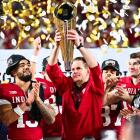
President Trump signs executive order centered on Army vs. Navy Game preserving traditional time slot
The order directs federal agencies to work with the NCAA, College Football Playoff and broadcasters to prevent scheduling overlap with the Army-Navy Game

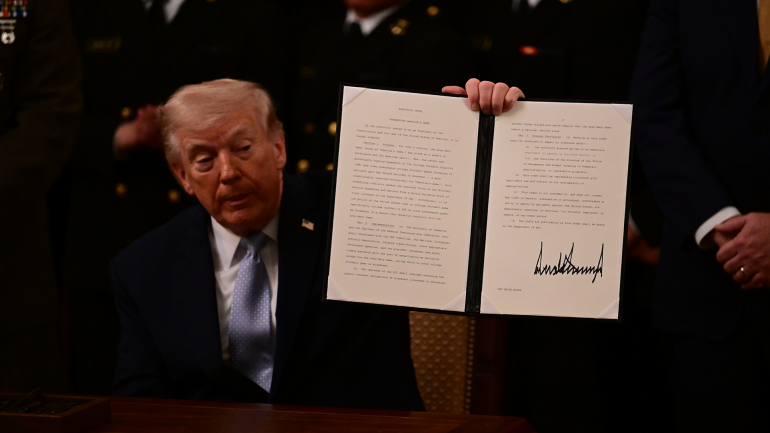
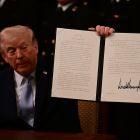
President Donald Trump on Friday signed an executive order aimed at preserving a long-standing college football tradition, mandating efforts to create an exclusive national broadcast window for the annual Army vs. Navy Game. The order instructs the Federal Communications Commission and the Department of Commerce to coordinate with the NCAA, College Football Playoff and broadcast partners to prevent scheduling conflicts during the game's traditional time slot.
It centers on the second Saturday in December, long associated with the standalone staging of Army-Navy.
The Army vs. Navy Game has been played annually since 1930 and remains one of college football's most consistent standalone events. CBS Sports holds the broadcast rights through 2038.
The directive follows Trump's earlier comments in January, when he raised concerns that playoff expansion and an increased number of postseason games could begin to overlap with the matchup's traditional broadcast window. That concern has grown as college football's postseason structure continues to expand, increasing the number of games played in December.
In the order, Trump says such conflicts "weaken the national focus" on the service academies and calls for an exclusive broadcast window so the game is not competing with other college football broadcasts. It also directs the FCC to review whether the Army vs. Navy Game could be treated as a "national service event" under public interest considerations.
The signing came on the same day the Navy football team visited the White House after winning the 2025 Commander-in-Chief's Trophy, which is awarded annually to the service academy champion. Trump has attended recent editions of the Army vs. Navy Game and has repeatedly emphasized its national significance.
While executive orders apply to federal agencies rather than private scheduling bodies, the directive signals an effort by the administration to influence how college football's postseason calendar is structured around one of its most tradition-rich matchups.