Money, momentum and leverage: Miami's run to CFP National Championship fuels ACC resurgence
Miami delivered more than a national title shot; it handed the ACC long-awaited momentum at exactly the right time

•
5 min read

Miami and the ACC have already scored a big win before the Hurricanes face Indiana in next Monday's national championship in South Florida.
An improbable three-game run through the College Football Playoff delivered Miami something no one could script: a title game in its own backyard. It's a perfect collision of timing and ambition for a program that has been fighting like crazy to get back on the national stage after last hoisting the trophy 24 years ago.
Two weeks before Mario Cristobal's first game as Miami's head coach in 2022, the CFP quietly planted a seed of hope by awarding Hard Rock Stadium the 2026 national championship game. Privately, Miami administrators dared to think Cristobal's fourth year could mark the program's return to true national contention. At the very least, January 2026 became a target on the calendar.
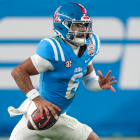
"There are no words that can describe what all those people [in Miami] and all the people on the field right now are feeling," Miami athletics director Dan Radakovich told CBS Sports as he soaked in a thrilling 31-27 victory against Ole Miss in the semifinals last week at the Fiesta Bowl. "To be able to come back to Miami, to come home and play for a national championship is indescribable."
The windfall isn't just emotional. It's competitive and financial.
"It's a special moment for the league as well," ACC commissioner Jim Phillips said after Miami's win in the Fiesta Bowl. "We've been getting better over the course of the last four or five years."
The ACC is taking a victory lap heading into its first championship game in six years, and it has receipts. The ACC leads the country with a 9-4 bowl record, including a 7-2 mark against power conferences. Nine of the ACC's 17 teams won eight games or more, and the conference finished 8-6 against the SEC, the conference that has geographically and competitively dominated the ACC for the last two decades. Miami set the pace, going 3-0 against the SEC, including wins against Texas A&M and Ole Miss in the CFP.
"A lot of the reasons why we have progressed is some of the teams that we have faced throughout the course of the season in our conference," Cristobal said. "The level of play from a quarterback standpoint, line of scrimmage standpoint has proven itself in the postseason."
Miami's path to the CFP National Championship: 10 reasons why Hurricanes reached title game vs. Indiana
David Cobb

From existential crisis to CFP cash
Just two years ago, the ACC was fighting for survival.
Conference realignment rumors had the league in a chokehold. Clemson, Florida State and other big brands openly explored exit strategies. The Pac-12 had already collapsed, and the ACC appeared next in line.
Instead, the league bent and survived.
Revenue-sharing agreements were rewritten. "Success initiatives" were installed at the urging of the league's biggest brands, rewarding teams for high TV ratings and stellar win-loss records. The changes were designed to reward traditional powers, but in the short term, Miami has emerged as the biggest beneficiary.
In the past, CFP earnings were dispersed among ACC members, but that changed in 2024 at the behest of the big brands. They wanted those payouts all to themselves. Now, the CFP will pay Miami -- not the conference -- for its playoff run.
The Hurricanes will receive $20 million for winning three games and advancing to the national championship, plus $12 million in travel reimbursements, conference and CFP officials confirmed to CBS Sports. That's a $32 million jolt for Miami, which in the past likely would have received less than half that amount.
A new CFP contract with ESPN, starting next season, will increase conference payouts, nearly tripling the totals.
A perfect storm for the Hurricanes, Hoosiers
The matchup between the Hoosiers and Hurricanes is feeding the frenzy.
Miami fans are flooding the secondary market. So are Indiana supporters, a fanbase riding one of the sport's most improbable ascents from the losingest program in FBS history to the precipice of becoming college football's first 16-0 team since 1894. Indiana boasts the nation's largest living alumni base (805,000, according to the school) and overwhelmed seating assignments at the Peach Bowl semifinals last week.
Each school is allotted only 20,000 tickets for the 65,000-seat Hard Rock Stadium. Unsurprisingly, the demand has led to sticker shock.
The get-in price for the title game is nearing a record $3,500 on Ticketmaster, the CFP's official reseller.
"I wish I could give every person a ticket to come to the game," Miami president Joe Echevarria said last week. "I wish we could put 300,000 people in that stadium, but we're going to have one heck of a party."
Momentum on the field, limits in the boardroom
What comes next is less romantic.
The ACC's postseason surge arrives just as CFP executives reconvene to debate the playoff's future, but success on the field doesn't guarantee power in the room.
The Big Ten and SEC maintain control over decision-making in CFP matters. Discussions are ongoing about whether to keep the field at 12 teams next season or expand to 16 or more. ESPN granted an extension to those talks until Jan. 23, and all 10 FBS commissioners, plus Notre Dame AD Pete Bevacqua, are scheduled to meet on the eve of the national championship Sunday in Miami.
The divide remains sharp. The Big Ten favors a 24-team playoff with multiple automatic qualifiers after previously introducing a 16-team model with unequal AQs. The SEC and other power leagues support various 16-team models. The ACC wants expansion, but with equal automatic bids.
"You have to (expand). You can't ignore what's occurred," Phillips told CBS Sports. "When you look at the last two years at 12, and what we had done previously with the format of four (teams) for 10 years, there are some good takeaways. One of them is that some of them signal we don't necessarily have the right format if you leave good teams (out)."
The debate is personal for the ACC. The conference has addressed CFP fallout in each of the last three years.
The exclusion of Notre Dame from the CFP in December prompted its AD to lash out at Phillips and the ACC for not actively campaigning for the Irish in the media. Upset, Notre Dame opted out of the bowl season.
A year earlier, Miami was among the first teams excluded from the field. In 2023, undefeated Florida State won the ACC title despite the absence of injured quarterback Jordan Travis, but still dropped in the rankings and was not included in the four-team playoff.
"Those were deserving teams," Phillips said. "This year, Notre Dame deserved to be in and BYU was really good. And maybe Vanderbilt.
"My point is we owe it to college football to work together and really look at that data over the last two years."
For now, the debate can wait.
The ACC has reclaimed the spotlight just as the sport's center of gravity shifts again. Miami has delivered the league back to the sport's biggest stage, and next week, college football follows the ACC straight into the Hurricanes' backyard.