When top quarterbacks bypass the NFL Draft: What history says about Dante Moore's choice
Elite quarterbacks have long faced the return-or-declare dilemma -- from Sam Bradford to Andrew Luck -- and now to Dante Moore

•
5 min read
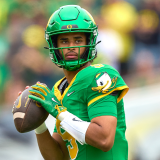
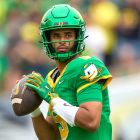
Oregon quarterback Dante Moore announced Wednesday that he's returning to school for the 2026 season and will bypass this spring's NFL Draft. Moore was ranked as the No. 2 overall prospect and second quarterback behind Indiana's Fernando Mendoza in CBS Sports' NFL Draft Prospect Rankings. Had Moore elected to enter his name in the 2026 NFL Draft, he was a clear top-10 pick -- and likely No. 2 overall choice by the New York Jets.
Instead, Moore joined several other signal callers in the last 30 years who decided to bypass the opportunity to enter the draft to return to school. This year alone, Texas quarterback Arch Manning quietly turned down the chance to go first overall; some analysts think Manning would have been the No. 1 pick this spring, but the plan all along for Manning was to start at least two seasons at Texas. He will more than likely join Moore in the 2027 NFL Draft, where they can duel for top billing.
While not all decisions are created equal, some have paid off more than others. Former Stanford quarterback Andrew Luck famously returned to school for his senior year instead of entering the draft. Despite doing that, Luck was selectedby the Indianapolis Colts with the No. 1 overall pick in the 2012 NFL Draft.
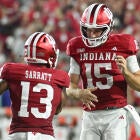
While next year's NFL draft class projects to be more talent-rich at the top, Moore returning to school gives Oregon a solidified quarterback room heading into this fall. The Ducks landed a commitment earlier this month from former five-star quarterback Dylan Raiola, who transferred from Nebraska after his sophomore season. With Moore back, Raiola enters fall camp as the backup, which he is OK with.
Dante Moore, Dylan Raiola in the same Oregon QB room? It's possible Ducks use Nebraska transfer as 2026 backup
Chris Hummer
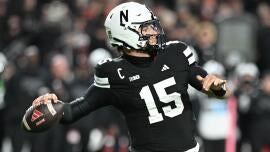
On the topic of Moore's stunning decision, here are other examples of quarterbacks staying one more year in college football instead of entering the NFL Draft.
Peyton Manning, Tennessee
Where they were drafted: No. 1 (1998) | Career earnings: $247,714,000
Manning was a notable example of a prominent player bypassing the draft to return to school. Manning shocked the college football world in 1997 by announcing he would be returning to Tennessee for his senior season. Still, Manning was selected by the Colts the following year with the No. 1 overall pick. Manning went on to become one of the best quarterbacks in NFL history.
Matt Leinart, USC
Where they were drafted: No. 10 (2006) | Career earnings: $22,645,000
After leading USC to the 2004 national title and winning that year's Heisman, it would have been logical for Leinart to enter his name in the draft. But when you're the toast of Los Angeles and taking classes like ballroom dancing, you can also see why Leinart wanted to return to school.
Leinart and USC got this close to a three-peat, but lost to Texas in the BCS title game that year. Considering his final year saw Leinart amass even more national fame, score the winning touchdown at Notre Dame (in the Bush Push) and then share the field with other living legends in the greatest college football game of the modern era, he probably has no regrets.
Sam Bradford, Oklahoma
Where they were drafted: No. 1 (2010) | Career earnings: $103,045,000
Fresh off winning the Heisman in 2008 and finishing as the national champion runner-up, Bradford made the remarkable decision to run it back in 2009 at Oklahoma. It was a year to forget.
Bradford appeared in only three games and underwent season-ending shoulder surgery after he re-injured his right shoulder against Texas. Still, Bradford was selected No. 1 overall by the Rams in 2010 and went on to earn over $100 million.
Jake Locker, Washington
Where they were drafted: No. 8 (2011) | Career earnings: $12,586,002
In 2009, Locker was selected in the tenth round of the MLB Draft. Still, he elected to stick with football and decline a contract. Locker accounted for 28 touchdowns during his redshirt junior season in 2009 and elected to return to school the following year. Locker was picked in the top 10 (No. 8 overall) in the 2011 NFL Draft.
Andrew Luck, Stanford
Where they were drafted: No. 1 (2012) | Career earnings: $97,107,998
While Luck was eligible for the 2011 NFL Draft, he elected to remain at Stanford to complete his degree. Had he entered, Luck would have battled Cam Newton to be the No. 1 pick.
Instead, Luck returned to Stanford for his redshirt junior season and led the Cardinal to an 11-2 record and finished as the Heisman runner-up to Robert Griffin III. Luck still went No. 1 overall the following year, topping RG3 at least in that regard.
Matt Barkley, USC
Where they were drafted: No. 98 (2013) | Career earnings: $7,849,113
Barkley is the lone quarterback on the list who clearly erred in forgoing the draft. Barkley, who would've likely been a top 10 pick in 2012, returned to USC where he missed the end of the season due to a shoulder injury. Barkley was selected in the fourth round by the Eagles and spent most of his professional career on various practice squads.
Marcus Mariota, Oregon
Where they were drafted: No. 2 (2015) | Career earnings: Active NFL player
After throwing for 3,665 yards and accounting for 40 touchdowns, Mariota decided to return to Oregon for his redshirt junior season. Mariota went on to win the Heisman Trophy during the 2014 campaign. Mariota led Oregon to the national title game in the first year of the four-team College Football Playoff, losing to Ohio State. Mariota was selected No. 2 overall in the 2015 NFL Draft, only behind Jameis Winston.
Justin Herbert, Oregon
Where they were drafted: No. 6 (2020) | Career earnings: Active NFL player
Herbert was a projected top 10 pick in the 2019 NFL Draft had he declared for the draft. However, Herbert returned to Oregon for his senior season and led the Ducks to a 12-2 record. The Los Angeles Chargers selected Herbert with the No. 6 overall pick in the 2020 NFL Draft. Herbert signed a five-year, $262.5 million deal with Los Angeles in 2023.

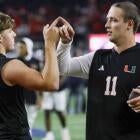
Cam Ward, Miami
Where they were drafted: No. 1 (2025) | Career earnings: Active NFL player
After initially declaring for the 2024 NFL Draft, Ward elected to withdraw his name and then entered the transfer portal, where Miami swooped in with a big-time opportunity and the stage for Ward to raise his stock from an early Day 2/late first-round guy to higher up.
The 13-day detour that made Cam Ward the No. 1 pick in the 2025 NFL Draft
Chris Hummer

Ward indeed had a standout final season in college, which helped him become the No. 1 overall pick by the Tennessee Titans this past spring. Ward raised his draft stock significantly at Miami. His decision to bypass the draft the first time paid off.