How BYU kept Kalani Sitake: A visit with LaVell's widow, a donor push and a community love bomb
BYU moved quickly as Penn State closed in, rallying donors, leaning on LaVell Edwards' legacy and delivering the reassurance Sitake needed to stay.

•
4 min read
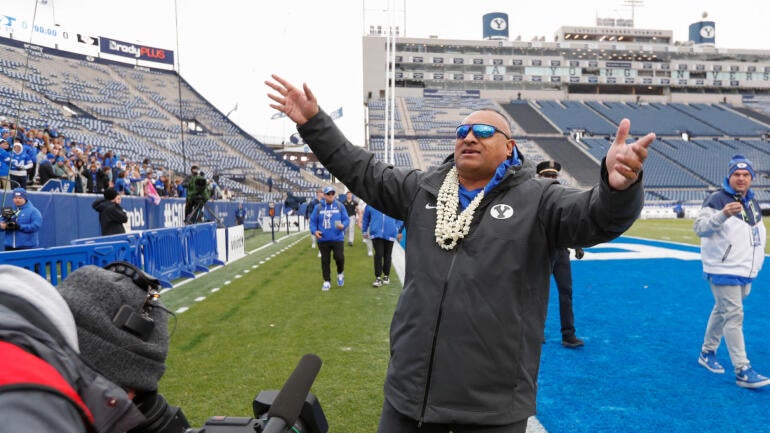
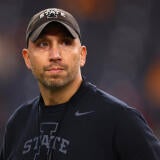
As BYU prepares to play in its biggest game in well over a decade with the Big 12 title and a berth in the College Football Playoff on the line, there was deep uncertainty this week about head coach Kalani Sitake's future.
Sitake has courted other inquiries in the past including being the mix at Arizona, UCLA, and most recently UCF. But this year's interest from Penn State was much more serious. Penn State had been running an extremely quiet search since firing James Franklin in mid-October. It had been a point of pride for AD Pat Kraft that there were few, if any, leaks in direct contrast to the pursuit of Lane Kiffin by Florida and LSU. But that changed this week as word began to spread that the interest was mutual between Sitake and Penn State.
Sources on both the Penn State and BYU sides believed Sitake was going to leave to be the head coach of Penn State. In Happy Valley, Nittany Lion administrators had been operating with confidence that Sitake was going to be their man for weeks, and it was only Tuesday when it became apparent that Sitake was going to stay at BYU. That decision surprised sources at BYU, Penn State and even those familiar with Sitake's thinking.
In a message to his team, Sitake put the uncertainty in Provo to rest, announcing "I'm not going anywhere," to thunderous cheers.
Sitake has said he wants to be the "Polynesian LaVell." He has certainly leveled BYU up, achieving four 10-win seasons in six years. But many inside and outside both programs raised an eyebrow at Sitake's potential fit at Penn State. He has never coached east of the Rocky Mountains. He is a devout Mormon and BYU alum who played under national championship-winning coach LaVell Edwards, who died in 2016. Kalani and his wife Timberly maintain close relationship with the Edwards family.
Part of Sitake's decision-making process in recent days included meeting with LaVell's widow, Patti. Her feedback after one meeting was, "I hope he stays, because BYU needs him," according to a source. It was part of, as Timberly described it, a love bomb from the BYU fanbase.
We love you Coach @kalanifsitake 💙 pic.twitter.com/dw88QMSblg
— BYU FOOTBALL (@BYUfootball) December 3, 2025
There are also the fiscal realities of the situation. According to multiple sources, Sitake's salary at BYU was around $4 million per year. That figure put him in the bottom half of Big 12 head coach pay. Penn State's package was set to more than double his salary to north of $10 million per year. In the end, Sitake's extension at BYU is set to make him the highest paid coach in the Big 12 besides Colorado's Deion Sanders, who makes $10.8 million on average.
The extension will also include an increased salary pool for assistants and enhanced compensation for a roster whose price was approximately $10 million in 2025 (including rev-share and third-party NIL funds), which was the bottom of the Big 12. A common quip in BYU circles is that the Texas Tech team the Cougars are about to face in the Big 12 championship game has a defensive front paid more than BYU's entire team.
Money can be a bit of a touchy subject around BYU athletics.
Tensions exist surrounding the resources the school was devoting to basketball versus football. Last winter, first-year basketball coach Kevin Young was able to secure approximately $5 million for the package that landed 5-star phenom AJ Dybantsa, plus the funds needed to land coveted transfer point guard Rob Wright III. Those basketball Cougars are ranked No. 9 currently.
Sitake this week also met with leaders of The Church of Jesus Christ of Latter-day Saints. The church owns and operates BYU, but the athletic department does not get direct funding from the church. Tithing is an important tenant of the Mormon faith, and BYU takes great lengths to make sure tithing money does not go directly to athletics; it is considered sacred money within the LDS church and those funds are used all over the world -- as well as to subsidize tuition to BYU Provo and its other campuses. BYU does not operate fiscally like other athletic departments because, as officials claim, it does not carry debt to fund facilities projects or sports.
Sources within BYU's athletic department stress that the new money is coming mostly from donor funds. One donor was likely Crumbl cookie CEO Jason McGowan, who tweeted that he was going to help retain Sitake:
Some people are not replaceable. Sounds like it is time for me to get off the sidelines and get to work.
— Jason McGowan (@jasonmcgowan) December 1, 2025
But it is unlikely he is the main source, as BYU's highest-level boosters opt to keep more of a low profile, according to a source. McGowan did not respond to a request for comment.
"We are excited to announce a long-term agreement to extend Kalani Sitake as BYU's head football coach," athletic director Brian Santiago said. "He is a proven leader, and we are grateful he is once again choosing BYU. His legacy of building a championship program the BYU way will continue on. He is one of the best people in the business. We are excited to continue to ride the wave of positive momentum with him."