Fantasy Baseball Offseason Reaction: Assessing Edwin Diaz's Fantasy outlook following Dodgers deal
Edwin Diaz brings strikeout upside, but his role could fluctuate in L.A.

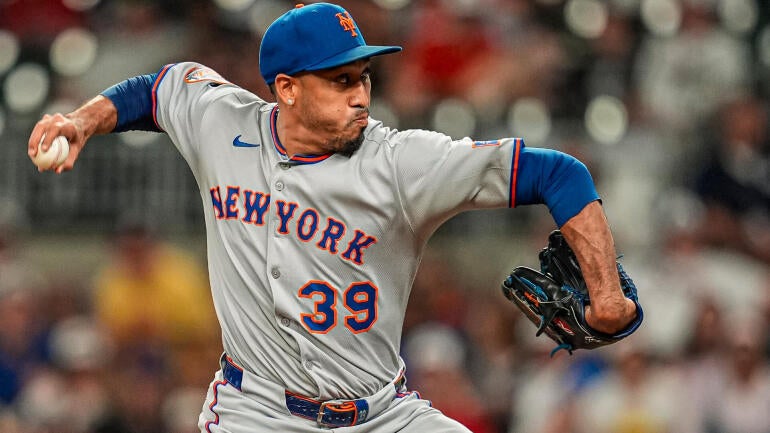
The Dodgers are always active in free agency, and they landed their first big fish of the offseason Tuesday, signing All-Star closer Edwin Diaz to a three-year deal. The deal will reportedly pay him $69 million, a far cry from the $102 million, record-breaking deal he signed with the Mets the last time he was a free agent, though still a record for annual average value for a reliever.
It comes one year after the Dodgers signed Tanner Scott to one of the largest contracts ever for a reliever, though that obviously didn't go well. Scott struggled in his first year with the Dodgers, lowering his walk rate to the lowest of his career but also dealing with the lowest strikeout rate of his career en route to a 4.74 ERA and eventually losing the closer job. Scott now slides into a setup role, though he serves as a cautionary tale for Diaz, who is now joining a team with plenty of alternatives if he stumbles.
And Diaz is, well, known for stumbling. He usually rights himself and is often one of the most dominant closers in baseball, as he was in 2025 when he put up a 1.63 ERA with 98 strikeouts in 66.1 innings of work. When he's on top of his game, Diaz is about as unhittable as anyone in baseball, as he was when he struck out 50.2% of batters in 2022, the third-highest single-season rate in baseball history. But it's not always smooth sailing with him.
He was dominant in 2025, of course, but actually lost his job at one point in 2024. He finished the season with a 3.52 ERA and has alternated sub-2.00 ERA seasons with marks in the 3.50 range – and had a 5.59 ERA back in 2019, his first season with the Mets. His strikeout rate has taken a step back in the past couple of seasons, and there are occasional bouts of wildness and homer issues that have caused plenty of consternation for his managers and fans.
And the Dodgers have alternatives, obviously. Scott should bounce back and return to being a capable late-inning option, if not the dominant shutdown one the Dodgers paid him to be; Blake Treinen has some closer experience; they could even turn to Roki Sasaki in a high-leverage role if he stumbles as a starter again, as they did at the end of 2025. And as we saw with Scott last season, the Dodgers are willing to be flexible with the closer job even if they're paying the main guy a bunch of money.
I don't expect Diaz to lose his job. I expect him to have a longer leash than Scott and ultimately be more successful. But relievers are unpredictable in the best of circumstances, and Diaz has been volatile throughout his career.
And then there's this: For the Dodgers, all that matters is October. They want to use the regular season to get their ducks in a row and make sure they are aligned for the playoffs. Blake Snell just pitched 61.1 innings for the Dodgers in the regular season, and they almost certainly view that as a huge success because he was healthy and dominant in the playoffs. If they feel like pulling Diaz from the closer's role for a month or two if he struggles will help him get back on track for the games that really matter, I suspect they won't hesitate to.
Which is all to say, while Diaz generally has as much upside as any closer in baseball, there might be more ways for this to go wrong than there are for other top-shelf closers. He should be one of the first off the board in most drafts, but I wouldn't have him as the first – that would be Mason Miller, now that the Padres have confirmed he will be the closer in 2026. Diaz should be the next man up, but be warned that it could be a bumpier ride than you might think.