An appreciation for shotmaking: Waialae Country Club shows this brand of golf still has a place on PGA Tour
The classic Seth Raynor design stood tall against the modern game in the first tournament of the PGA Tour season

At the onset of the year, I made a list of goals I want to accomplish in my own personal golf game. They have your run-of-the-mill hits, of course, like playing more rounds, making a hole-in-one and going on a buddies trip, but there are two actions items that have been seared into my brain the last few weeks because the way in which they run, counterintuitive to each other.
You see, I want to lower my handicap to the lowest figure of my life. I want to play smarter golf. I want to shoot scores in the 60s and feel the rush of stringing together birdie after birdie. I want that plus sign next to my name again.
But, the thing is, I still want to be able to hit shots while I accomplish this. I want to shape them. I want to flight them. I want to use the conditions to carve them. I want to play Golf with a capital G, even if this tightrope act may ultimately be one which results in a faceplant. It's just more fun that way, score be damned.
You may read this and think, "Well, yeah, you have to hit shots in order to play golf," but actually, I don't think you do. At least not the type of golf you have in mind. I'm talking about the type of golf that was on display at Waialae Country Club this past weekend at the Sony Open.
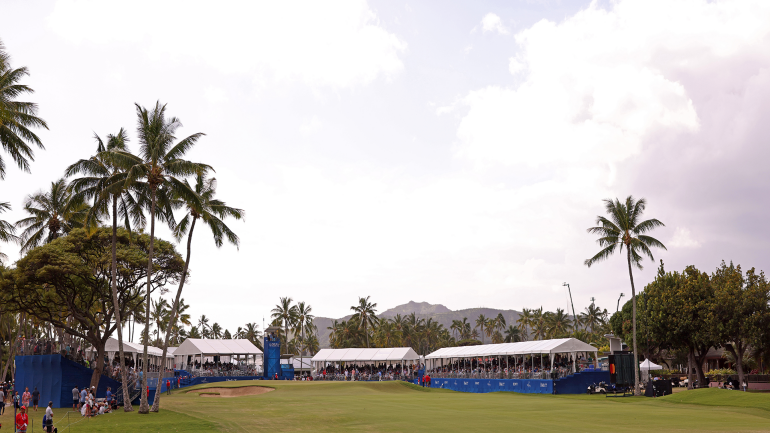
Measuring around 7,000 yards and playing to a par 70, the Seth Raynor design should be obsolete by now. The game should have passed it by, but yet it remains and is still one of players' favorites for what it requires out of them. It's not distance that they need but rather skill -- the ability to hit different shots out of different windows at different times while considering a whole myriad of factors.
Now, that is timeless.

When trying to compare eras in different sports, a common refrain among those who side with recent or active players is that these guys become more athletic through general evolution, right? Technology has improved. Equipment and training aids have become more helpful. Data is being implemented in ways to drive decisions like never before.
Players' eating habits are way better. They rarely consume alcohol and stick to the same meals that they know fuel them in the most effective manner. Workouts are getting more out of them, while recovery methods like cold plunges and red light therapy restore muscles and alleviate aches and pains in a blink of an eye.
While not basketball or football players, golfers fall in this same boat. Equipment is a far cry from what it was at the start of the century as big mis-hits continue to be a thing of the past. Driving ranges are littered with Trackman and Foresight launch monitors as some players are beholden to their numbers like toddlers with a tablet in front of them.
On the golf course, players and caddies know where to press their luck and can quantify how much more advantageous it may be to take, say, driver off the tee on a certain hole as opposed to laying back and playing for position.
As such, many believe golfers have gotten better. I'm not here to say they haven't -- I mean, have you seen what Scottie Scheffler has done the last four years? Have you seen Rory McIlroy when he is firing on all cylinders? -- but I don't think all of them have. I think the bulk have just become more efficient.
They have gotten better at identifying the path of least resistance, taking it and attempting to put as few strokes as possible on their scorecard. That's the name of the game, after all, isn't it?
This weekend in golf got me thinking about this. Over in Dubai, blustery conditions wreaked havoc on players in the second round to the point that 2019 Open champion Shane Lowry took to social media and expressed how much fun he had in them. He signed for a 3-under 68 and beat the field average by nearly six strokes.
"It was refreshing playing in those conditions today," Lowry wrote. "Fun needing to shape shots and hitting 8 irons 130 yards."
On the other side of the the planet, something similar unfolded at the Sony Open. In what some believe to be the last trip the PGA Tour takes to Hawaii due to future scheduling changes, Waialae Country Club enjoyed one last hoorah. From Thursday afternoon through Saturday, players were forced to play golf with a capital G.
If you weren't about it, you were on your flight back to the mainland on Friday.
Nearly everything had to be accounted for on every shot -- varying wind directions depending on which way the hole ran, shot shapes and run outs and how they affected the total yardage, where the correct miss was. Golf may be played in an arena during the early portion of the week, but when it actually matters and real stakes are on the line, it is best that it remains an outdoor sport.
"On a driving range you're not normally hitting a lot of those shots," Jordan Spieth said. "You're not hitting 5-iron from 160 and trying to like chip it. You just get a really good gauge on where things are at, and when you're doing it well it's really fun."
In a perfect world, this would be the case every week. Golfers required to play golf, required to do more than see the target, know the number and swing away. The juggling act in between the ears of deciding which variables to weigh and which to ignore is an integral part of the game. It's where the elite separate themselves even more.
Instead, there are only a handful of instances each year in which the confluence of variables set the table in such a way. It's part golf course, part time of year and part luck. For the 2026 season, it happened to be served in the first week, and although the PGA Tour may be leaving Hawaii in the future, I hope the tournament was enough to remind them it doesn't need to leave the golf behind, too.