How Anthony Davis' injury impacts his trade market and his future with Mavericks
Anthony Davis is injured again, hurting his hand one month before the 2026 NBA trade deadline

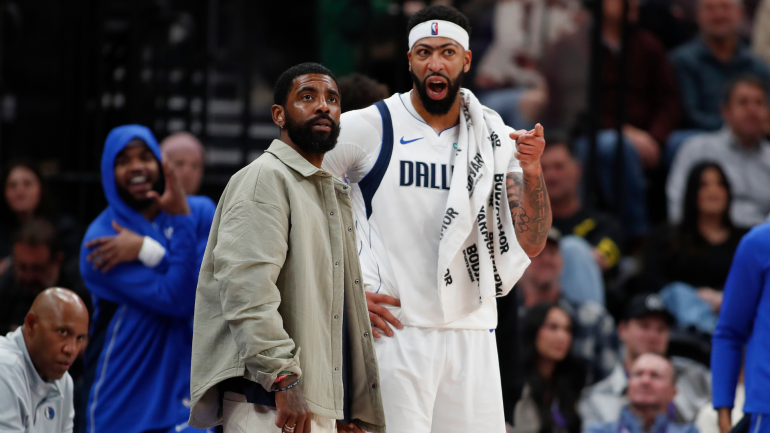
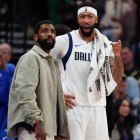
An Anthony Davis injury is sadly common news. A very thorough Reddit user recently researched Davis' history and found that he had suffered 296 injuries in his NBA career to 51 unique body parts, but today, our focus is on just one of them. In a recent game against the Utah Jazz, Davis suffered ligament damage to his left hand.
If he has surgery, that will likely end his season. If a second opinion determines that surgery is not necessary, he is still looking at a minimum six-week absence, according to ESPN. This poses a pretty significant problem for a Mavericks team that had previously been shopping Davis on the trade market. He was already inevitably going to fetch less than he did for the Los Angeles Lakers last season since, well, there are only a handful of assets in the NBA better than Luka Dončić and none of them are available for Davis or otherwise.
But now? It's not clear what sort of market Davis will be able to generate. So let's recalibrate the Davis trade market after the injury. Where does his trade value sit now? What does this mean for the Mavericks, and for Davis himself? And are there still teams that make sense for Davis as an in-season trade candidate?
How does the injury affect Davis' trade value?
"Every team in the East believes they're an Anthony Davis away from making the finals," one source recently told The Athletic. Well, that may no longer be true. If Davis is out for the regular season or close to it, there's little he'll be able to do to swing the Eastern Conference playoffs. Davis turns 33 in March. His appeal will primarily be to win-now teams. Davis can't win now. He might be able to win soon, but surgery takes "now" off of the table.
That lowers his trade value substantially. There may still be teams that view him as a worthy investment for the 2026-27 season and beyond, but at his age, his value is likely to decline with each passing year. The best postseason run he has left in him was probably going to be 2026, and now it might be over before it begins. Take those win-now teams off of the table and the price goes down by sheer volume. The more teams want a player, the more his team can get for him. A lot of suitors are probably walking away right now.
And those who remain are reckoning with that 296 injuries to 51 unique body parts. It seems as though every time Davis starts to build some momentum, an injury takes it. Will anyone trust Davis to remain healthy after a trade? And even if he does, what sort of player will Davis be for them? Remember, Davis was grumbling about his desire for the Lakers to add another big man before they traded him. Part of the appeal of Dallas to him was the idea of playing power forward next to Daniel Gafford and Dereck Lively II. He has primarily played center this season because Gafford and Lively have dealt with injuries, but his shot diet still looks more like a power forward's. Around one-third of his shots are coming outside of the paint. He's made just 37.8% of his mid-range looks 27% of his 3s. His free-throw rate is way down.
Davis remains a very strong defender. Maybe he'd be better on offense in a better ecosystem. There will be a market for Davis in the offseason, and maybe even to the right team now. He will generate positive value. It just won't be anywhere near what the Mavericks gave up to get him. That's a sunk cost. The Mavericks have to act in their best present interest, regardless of the bad press that would come with a weak return. So now we ask, what exactly does this mean for Dallas?
What does all of this mean for the Mavericks?
There's a silver lining here for the Mavericks. Part of the motivation of trading Davis was the need to lose games. The Mavericks don't control their own first-round picks between 2027 and 2030. That makes the 2026 NBA Draft absolutely critical. It's their one chance to draft a young, cheap co-star for Cooper Flagg that's on his timeline. Having Davis on their team only hurt their draft position. He may not be playing at a superstar level, but he's still the best player on this mess of a roster.
Well, if Davis is injured enough to miss the rest of the season, that solves the draft issue without a trade. Dallas could tank in peace and then bring Davis and Kyrie Irving back next season with an eye on managing two timelines. A healthy Davis and Irving would be ready to win now. Flagg and the 2026 draft pick would take over later, and probably benefit from the playoff games Davis and Irving could help them reach. A hybrid of Nico Harrison's deranged vision and the more measured approach most have called for since the Mavericks won last May's lottery.
What this critically gives Dallas is internal leverage. The Mavericks may not be able to drum up a bidding war anymore, but the mere fact that they could justifiably keep Davis allows them to turn away bad offers. Anyone trying to trade for him has to beat the appeal of playing Davis and Irving together next season. All of this trickles down to the rest of the roster. For example: "We're trying to win next year, so we're not going to give you Daniel Gafford unless you make a fair offer."
Remember, the Mavericks don't have a permanent general manager at the moment. Harrison is gone. Maybe Dennis Lindsey returns from Detroit to lead the team. Maybe one of the interim co-GMs, Michael Finley or Matt Riccardi, gets the gig. Maybe it's an outsider. Or maybe Mark Cuban manages to exert enough influence on the new owners he sold the team to that he holds the true power in Dallas anyway. The Mavericks might prefer the idea of settling their front office dynamic before answering any Davis questions. But Davis has an important question of his own to consider.
What does all of this mean for Davis?
In that same story in which The Athletic relayed the win-now upside Davis offered Eastern Conference teams, it was noted that Davis and his camp do not expect the Mavericks to offer a contract extension this offseason. The priority, therefore, was to get him traded to a team that would offer him an extension. Davis has two years left on a 35% max deal.
That ship has now sailed. Extending Davis at this point, at least for any teams that were on the fence, would be downright irresponsible. Harrison, his longtime ally from Nike and the man who bet his career on him, was probably his only realistic chance at such a deal. At this point, Davis is overpaid. The last thing most teams would want to do is commit extra money for Davis for what would be his age-35 and older seasons.
So where do his priorities shift? The name of the game now will probably be finding his way to a team in which he's best suited to showcasing his skill set. Ideally, that team would have relatively clean books on the hopes that he might earn an extension once he gets there, but more than anything, it can't be an unbalanced roster like the Mavericks have. He needs to go somewhere with the shot-creation and versatility to maximize his skill set.
So who might be interested in Davis, now or later?
Any of the older teams that might have been in the mix, at least at the deadline, are out. The Warriors and Clippers can't justify surrendering what little they have to get someone who might not be able to help them in the 2026 playoffs. The Bucks were facing an uphill battle because of matching salary anyway, and they're trying to prove to Giannis Antetokounmpo that they're capable of giving him a winner now. Maybe they'd revisit a Davis trade over the summer, but for now, they can't afford the step back.
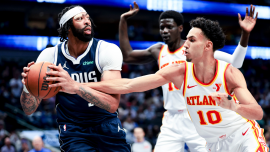
Atlanta has been the team most closely linked to Davis. This might have been a blessing in disguise for the Hawks. It never really made sense for them to trade for someone at Davis' salary or in his age range. The Trae Young trade gave them the financial flexibility they'll need to maximize their depth and versatility around the younger core. That always made more sense than a Davis pursuit. But clearly there was some level of interest in Davis regardless. At least now, the Hawks can use the rest of this season to evaluate their existing core without Young before deciding how to allocate their newly available money in the offseason.
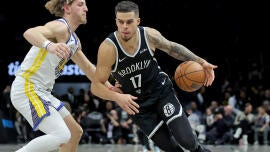
Where this gets somewhat interesting would be teams that may not be winning now, but might want to take a step forward next season. Take the Brooklyn Nets. They traded a premium to regain control of their 2025 and 2026 first-round picks. They're going to tank to maximize that pick before once again sending next year's pick to Houston. Without a reason to lose next year, maybe they'd want Davis as a step toward respectability.
Making the money work would be tricky... but a New Orleans reunion makes some basketball sense. If the Pelicans were interested in tanking they wouldn't have given away this year's unprotected first-round pick. They're going to need a rim-protector next to Derik Queen as he becomes their offensive fulcrum. Maybe there's something to be done involving Zion Williamson's mostly non-guaranteed contract and some other outgoing money?
If there's a stealth Davis fit out there, it's the Charlotte Hornets. Don't laugh! They've had a top-five offense since the beginning of December and are ready to make a run at the Play-In Tournament this season. What they lack is a defensive anchor. You know, like Davis, and all of the shooting and playmaking here would do wonders for him on offense. Having Kon Knueppel on a rookie deal would at least give Charlotte a bit of financial wiggle room if it wanted to give Davis a one-year extension, which would expire right as Kneuppel's market-rate deal kicks in. Oh, and the Hornets control Dallas' first-round pick in 2027, making them obvious trade partners. If Charlotte's options are keeping that pick in a world in which a healthy-ish Davis and Irving are playing for the Mavericks or trading it for someone who could help them take a real step toward the playoffs, well, it's worth considering.
The likeliest outcome here is that all trade talks get tabled until the summer. Trades are just easier in the offseason. Roster limits are bigger. Teams have more financial wiggle room. Everyone knows where they're drafting. At that point, the Mavericks will be able to choose between running it back with Davis or taking what is probably a fairly light offer relative to their original expectations. But if someone is willing to come in with a meaningful offer right now, it's probably one of these younger teams. They'd actually benefit from having Davis sit out now, as it would help their draft position, but then they could bring him in as sort of an early offseason upgrade before trying to compete next season.