Anthony Davis trade grades: Mavericks, Wizards both make questionable decisions in deadline puzzler
The Wizards and Mavericks made one of the most surprising trades in recent deadline memory

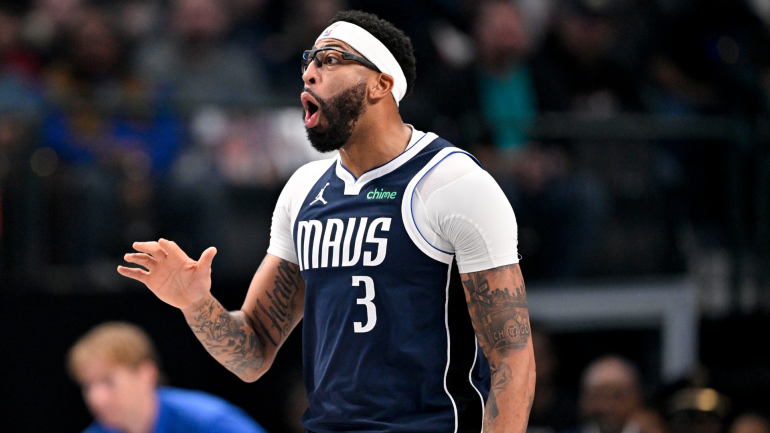
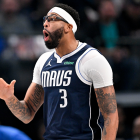
For the second consecutive trade deadline, Anthony Davis has been involved in a stunning blockbuster. This time, he's headed to the Washington Wizards alongside D'Angelo Russell, Danté Exum and Jaden Hardy for Khris Middleton, AJ Johnson, Malaki Branham, Marvin Bagley, two first-round picks (from the Thunder in 2026 and the Warriors in 2030) and three second-round picks (2026 from Phoenix, 2027 from Chicago and 2029 from Houston), according to ESPN.
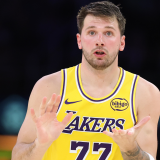
The deal marks the end of a tumultuous year for Davis in Dallas. As the return in the disastrous Luka Dončić trade, Mavericks fans could never quite embrace him as the new face of the franchise. When the lottery gave them Cooper Flagg afterward, the franchise seemingly moved on and planned to go younger for the sake of maximizing Flagg's future. That put Davis in purgatory, and now, he's headed to the Wizards.
So, how did the teams involved do here? Let's grade the trade to find out.

Washington Wizards: D+
For years, Anthony Davis has been considered the ideal teammate for Trae Young. A defensive anchor to cover for him at the rim, and an all-time lob threat to work with him in pick-and-roll. Of course, we assumed this would happen with the Lakers or Hawks, not the Wizards, and that it would come when the two of them were held in a bit higher regard, not where they are now, a world in which Young was cap-dumped and Davis is injured and past his prime.
The basic concept of Washington trading for Young, in a vacuum, made some sense. The team had little veteran presence. Getting a traditional point guard to organize the offense made developmental sense for their young players, many of whom had struggled to grow on a Washington team built to tank. The Wizards have leaned fully into that tank since getting Young, as he hasn't suited up for Washington since his acquisition. Davis, recovering from a wrist injury, likely won't play for the Wizards anytime soon either.
But when he does play, he raises a lot of significant questions for Washington. How many shots and touches do the Wizards want to devote to older players rather than the young talent base they've spent the past few years drafting? More importantly, how much money are they willing to devote to two players the rest of the league seemed mostly ambivalent about acquiring? A month or so ago, the Wizards were primed to have more cap space than any team in the NBA this summer. That space, and the younger players and draft assets it could have brought, is now gone.
There has been a lot of noise about Davis wanting an extension on a new team. To put it plainly, it would be patently insane for Dallas to give him one. Davis is already owed almost $63 million in for the 2027-28 season through a player option. The 2028-29 season is when foundational Wizards youngsters Alex Sarr and Kyshawn George are set to start their likely rookie extensions. Davis should be off of the books by then. Will Young be? He's under contract through next season. The Wizards haven't extended him yet, and without knowing how he looks in Washington or who the Wizards draft in June, it's too early to say whether or not they should. But as we see with James Harden most deadlines, players of a certain caliber expect to be paid long term. Young and Davis are in that dangerous territory in which they were once good enough to expect that sort of treatment but lately haven't been.
This frankly reeks of ownership impatience. The Wizards have been among the NBA's worst teams for three years now, and prior to this rebuild, had a reputation as a team that never tanked -- at least intentionally. Washington still owes a top-eight protected first-round pick to the Knicks. They'll do what it takes to keep it. But the messaging here is clear: the Wizards expect to win next season. That's a dangerous position to be in when you're relying on Davis to stay healthy, Young to defend and a bunch of very young players to grow up fast.
Dallas Mavericks: C-
Let's get this out of the way: those first-round picks are about as fake as any ever traded for a player as notable as Davis. One of them, from Oklahoma City, is almost certain to come in at No. 29 or No. 30. The other, from Golden State, is top-20 protected, so either the Mavericks get nothing or they get a late first-round pick. Teams will frequently use protected picks or swaps that are unlikely to ever convey in order to juice up the perceived value of a trade package for PR purposes. This is about as brazen an example of that as you'll see. The Mavericks can say they got two first-round picks for Davis. They really got one pick that's as late in the first round as it can possibly get and another that only has a one-in-three chance of conveying. The pick value here is inconsequential.
This is a cap dump dressed up as a blockbuster. In one move, the Mavericks went from $16 million above the luxury tax line to below it altogether. Perhaps more importantly, they got off of the next two years of his max contract, and the pressure for an extension that would have come with it. That's not nothing. They are now free to build around Cooper Flagg in earnest. The ghosts of the Dončić trade can now be put to rest. Everyone in Dallas can move on.
It's just worth asking... should Dallas have moved on? Flipping Davis made all the sense in the world last summer, when he likely would have net a significantly better asset package and the Mavericks needed to find a way to tank in order to maximize their 2026 first-round pick -- the last one of their own they control until 2031. Well, a few things have happened since then. For one, Davis became significantly less valuable. Any dreams of turning him into another young star to pair with Flagg or a mountain of draft picks died early this season. Davis is also dealing with a wrist injury that may keep him out the rest of this season. The Mavericks had a path to tanking without giving Davis away.
That theoretically gave Dallas a path to balancing the present and the future. They could still make a high draft pick in 2026, but then bring Davis and Kyrie Irving back next season. Flagg isn't a traditional teenager. He's ready to win here and now. Punting that chance away for such a meager package is disappointing. As much PTSD as that fan base has over the original Davis trade, it's still disappointing to have only seen him play a single game with Irving, and for that duo never to have the chance to play with Flagg.
Is the added financial flexibility worth giving that chance away? I would argue the answer is no. Remember, Davis and Irving are both set to come off of the books in the summer of 2028. At that point, Flagg will still on his rookie deal, and the Mavericks could have fairly easily still planned for max cap space. It might've been uncomfortable if Davis or Irving was angling for an extension, but the chance to get Flagg real playoff experience in the near future would have been valuable enough to make it worthwhile. Now, he's likely going to spend a few more years on a team that may not be tanking, but probably isn't good enough to win anything meaningful, and without their picks available to take advantage of that, there's just little to be gained by not positioning yourself to win in the short term.