Giannis Antetokounmpo is staying with Bucks at trade deadline: Here's how sweepstakes will change this summer
Giannis Antetokounmpo isn't going anywhere, and neither will the trade chatter

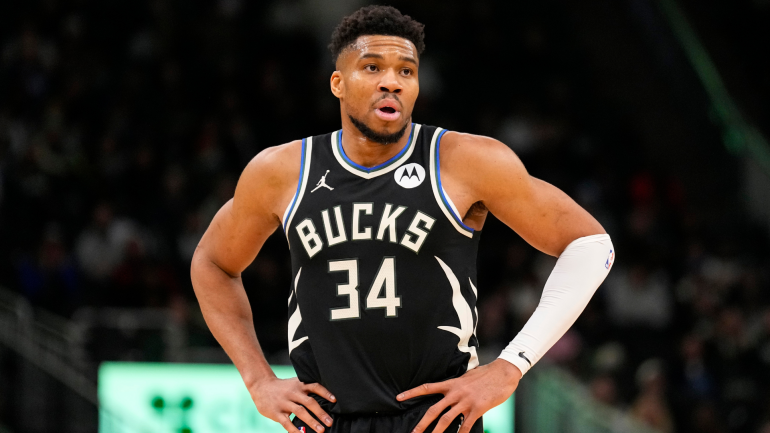
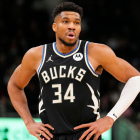
NBA trade deadline day is here and Giannis Antetokounmpo will remain a Milwaukee Buck. After fielding offers in the days leading up to the final buzzer, the Bucks have elected to retain the greatest player in franchise history, at least for the time being, according to ESPN. So, does that mean Antetokounmpo will retire in Milwaukee?
Well, not quite. The situation has not materially changed. Antetokounmpo still has a player option for the 2027-28 season, meaning he can became a free agent after next season. After this season, he becomes eligible for a contract extension. Specifically, that eligibility comes in October, but the Bucks will surely take his temperature earlier in the offseason. If Antetokounmpo is not willing to sign an extension, that is a functional trade request. Milwaukee cannot keep Antetokounmpo knowing that they could lose him for nothing in a year.
So the Bucks now have the rest of this season and perhaps the beginning of the offseason to try to convince Giannis to stay. If they can't, the trade sweepstakes are back on over the summer. And if that happens, the landscape is going to look very different. So let's look at what's going to change over the next few months, both for Antetokounmpo and for the rest of the league as a two-time MVP's future hangs in the balance.
How will the Bucks spend the rest of this season?
Tanking. Or, well, trying to tank, anyway. Milwaukee technically does not control its first-round pick, but it doesn't need to in order to land a high selection in June's NBA Draft. The Hawks will receive the higher pick between the Bucks and Pelicans. The Bucks will receive the lower pick. However, the Pelicans are 13-40, currently in the second-best position for the lottery. The Bucks are tied for eighth right now. Basically, this means the Bucks should expect to pick in the back half of the top 10. If their pick jumps up in the top five, they'll still benefit by swapping with the Pelicans, who, at this moment, can pick no lower than sixth. If both picks jump, that's the jackpot. Milwaukee can pick as high as No. 2. They just can't pick higher than Atlanta (via New Orleans).
There's just one problem here. Antetokounmpo is currently out with a calf strain. He estimated a 4-6 week recovery process when he went down late last month. In a perfect world, the Bucks would not put him on the court again this season. But if he's healthy and wants to play? There's nothing the can really do to stop him. And if he does play, the Bucks will probably be at least moderately competitive. They're 15-15 with him on the court this season. Not good enough to contend, but enough to ruin a tank. The worst-case scenario here would be a surprise Play-In berth. The Bucks are only three games behind No. 10 Chicago at this moment, and the Bulls have a roster full of guards after a flurry of deadline moves. If Milwaukee sneaks into the actual playoffs, it can pick no higher than 15th.
So the goal, first and foremost, is to put Antetokounmpo on ice and lose games. If anyone on the roster stands out in those losses as possible long-term keepers? Great, maybe that'll help convince Giannis to stay. But the pick is what matters.
Lottery night is the first major domino
So, in our future-looking scenario, we've now reached May. After the lottery plays out, the Bucks will have a better idea of where they stand. They'll know where they're picking, obviously, and everything changes if they manage to get into the top three and land Darryn Peterson, Cam Boozer or A.J. Dybantsa, the three potential franchise players in this class. In the likelier event that they don't, they'll still at least be able to go shopping with their own pick for a win-now trade.
Just as importantly, they'll know where everyone else is picking. Making a trade at the deadline requires some guesswork. You're hoping that any picks in the upcoming draft you get will be as high as possible, but plenty can change in the last two months of the season. That's especially true for a team landing Giannis. By May, the Bucks will have scouted this draft class thoroughly and will know which players and which ranges of the draft they want to target. Being able to trade for exact picks means a good deal here.
And again, an unexpected lottery result can change a team's plans quickly. That's true for the Bucks, but it's also true for everybody else. There are going to be veterans on the trade market in May that weren't leading up to this deadline, and the Bucks may want to take a swing at some of them.
The playoff dust needs to settle
The championship race is wide open right now. There's no clear Eastern Conference favorite, but the gap between No. 2 and No. 6 in the standings is just 3 ½ games and No. 8 Orlando gave up four first-round picks for Desmond Bane last June. That means there are probably seven teams that expect to at least win a series and four or five who hope to make the conference finals. Most of them will be disappointed.
The Thunder look mortal in the West. Denver, San Antonio, Minnesota and Houston all hope to knock off the champs. Mathematically, one of them won't even make it out of the first round. The Lakers may not either. A hot Play-In Tournament team could shake up the entire board. The point being, there are going to be teams that don't meet their own playoff expectations. When teams don't meet their playoff expectations, they tend to consider more significant changes.
In other words, there may have been teams that sat out the first Giannis derby who are more interested in the second. The hope for Milwaukee would be that at least one of the Spurs, Pistons and Rockets crash out in the playoffs and consider something drastic. All three have the combination of draft picks and young talent they would seemingly want in order to make a deal of this magnitude. All three seemingly want to use the 2026 postseason as a way to evaluate that young talent before deciding how best to proceed. Though it is unlikely, any one of these teams could fairly easily win the Antetokounmpo sweepstakes if they decided to get involved... assuming Giannis himself signs off on a deal.
How do trade logistics change over the summer?
Making big trades during the season is hard for a variety of logistical reasons. Very few teams have open roster spots. Many teams are hard-capped and therefore constrained in what sort of financial maneuvering is possible. The Stepien Rule and the seven-year rule can place uncomfortable limits on the sort of draft picks you're allowed to trade. All of these things get easier over the summer.
Let's start with the picks. Teams are allowed to trade picks seven years into the future. Right now, that means they can trade picks as far away as 2032. However, in the offseason, the league year will turn over, opening 2033 draft picks up for trades. Second, we address the Stepien Rule, which states that teams must have a first-round pick in every other draft. However, this rule only looks forward. In other words, a team that has a pick in 2026 but not 2027 cannot trade its 2026 pick at the deadline... but they can trade it after they've made it.
What this means is that a number of teams who might be interested in Antetokounmpo will have either one or two more picks to trade over the summer than they do now. So who are those teams?
- The Heat go from having two tradable first picks (in 2029 and 2031) to four: 2026, 2029, 2031 and 2033.
- The Lakers go from having one tradable pick (in either 2031 or 2032) to three: 2026, 2031 and 2033.
- The Cavaliers go from having one tradable pick (in 2031 or 2032) to two: 2026 and either 2031 or 2032. If Cleveland manages to get under the second apron before the deadline passes, it will also be able to trade its 2033 first-round pick, giving the Cavs three along with 2031 and 2026. If the Cavaliers can't manage to do so, that 2033 pick will be frozen.
- The Timberwolves go from having no tradable first-round picks to having two: 2026 and 2033.
- The Knicks go from having no tradable first-round picks to having two: 2026 and 2033.
Remember, this applies to the Bucks as well. At this year's deadline, they had one tradable pick, in either 2031 or 2032. Over the summer, they have three: 2026, 2031 and 2033. Remember, we expect that 2026 pick to be fairly high in a very strong draft. This means that while the teams trying to trade for Giannis will have more to offer, the Bucks will also have far more to work with as they try to strengthen the roster around him. While it is unclear who exactly they would pursue, with some lottery luck, they'd feasibly have the ammunition to chase an All-Star. Or, given the depth issues that team has, it might make more sense to go after several role players. Either way, the Bucks will have ammo.
Roster limits are a major thorn in the side of front offices during the season. They aren't in the offseason. Teams can roster up to 20 players over the summer. It's therefore simple enough to make a six-for-one trade that just isn't feasible in February. When you're matching a contract the size of Antetokounmpo's, that might be necessary.
Every team's finances are different. Broadly speaking, though, it's easier to make big trades over the summer because you haven't made major commitments yet. This might mean you just have less salary on your books and therefore more maneuverability. It might also mean you haven't created a hard cap yet. In the new apron era, there are several ways to do so:
- There are seven ways to trigger a first-apron hard cap: using the bi-annual exception, using the non-taxpayer mid-level exception, using a mid-level or bi-annual exception in a trade, acquiring a player through a sign-and-trade, signing a waived player whose previous salary was higher than the non-taxpayer mid-level exception (essentially, a pricey buyout player), making any trade in which you absorb more salary than you send out, and using a trade exception generated during the previous offseason or regular season.
- There are five ways to trigger a second-apron hard cap: using the taxpayer mid-level exception, aggregating multiple salaries in a trade, trading cash, signing-and-trading one of your own free agents and using him as outgoing salary to take back someone else's contract, and signing-and-trading one of your own free agents and using the trade exception that generates to acquire another player.
Basically, this means there are 12 hard cap mechanisms, and once they're triggered, they can't be undone for the rest of the league year. During the season, it's possible for most teams to be dealing with a hard cap of some sort. Nobody was waiting for a Giannis trade last summer. Everybody just went about their business. But if the whole league knows one is coming? They'll adjust accordingly. If they need to avoid a hard cap, the can.
The other major financial change that occurs is that certain players have drastically different cap numbers because they've signed an extension in the past that kicks in over the summer. The most notable example for our purposes here would be Paolo Banchero. This season, he's making around $15.3 million on the last year of his rookie deal. Next season, he's set to make an estimated $41.5 million in the first year of his rookie deal. In other words, he's a far easier contract to match with Antetokounmpo's in a trade if Orlando, run by many of the same people who drafted Giannis in Milwaukee, wants to take a home run swing. Two other notable names here would be Jabari Smith and Shaedon Sharpe in case Houston or Portland jump into the fray.
A number of veterans around the league signed veteran extensions that change their salaries next season, but we won't bother covering them. One to keep in mind for Milwaukee's purposes, though, is A.J. Green. The extension he signed last offseason takes him from the minimum up to around $10 million next season, giving the Bucks a bit more tradable salary if they want it.
Does Giannis gain leverage over the summer, or lose it?
This is a tricky question. Some of it depends on where he wants to go. If he decides, for instance, that he only wants to play for the Lakers or Heat, he suddenly gains a good deal of leverage. Why? Because the Lakers and Heat are positioned to have 2027 cap space. They can just wait a year and sign him outright, provided they don't take on substantial money in the next year and change. This is how the Lakers leapfrogged the Celtics for Anthony Davis, for instance.
If Antetokounmpo wants to go to the Knicks or Timberwolves, however, those teams are not currently positioned to sign him outright because of their existing financial obligations. It's easier to scare off undesirable suitors when you can tell them "The team I want to play for has cap space and I am signing with them next summer no matter what." The vague fear of free agency can still work, but it's not quite as effective as the knowledge that the player has a desirable destination waiting for him in a year.
Generally speaking, though, the longer a player has on his contract, the less leverage he has to force a specific destination. This is what ruined Damian Lillard's bid to get to Miami. He had a three-year contract, and given his age, they were likely going to be the three best years left in Lillard's career. The Bucks therefore had no qualms trading for him despite that Miami interest.
At the trade deadline, it would have been feasible for someone to rent Antetokounmpo without the foreknowledge that he'd extend. They'd be getting him for two playoff runs, at least. Now, you're only getting him for one. If nothing else, that's significantly less valuable. The rental price has dropped substantially, at least, and you could argue that even the long-term price should as well. After all, Antetokounmpo is already 31. The best postseason a 31-year-old has left in their career is usually the one that happens when they're still 31. Someone has already lost a prime Giannis playoff season, and given the way his playing style is expected to age and how many injuries he's racked up, it's not clear how many more he has left.
The physical toll Giannis has exerted over his career factors into another element of this saga: his next contract. Had he been traded before the deadline, he would have been able to sign an extension with a new team in October. However, because his max extension goes beyond the NBA's extend-and-trade limits, he won't be able to sign for his absolute max, projected at $275 million over four years, until six months after he is traded. If he's moved on July 1, for instance, he can extend at his max on Jan. 1, 2027. This is a bullet in Milwaukee's chamber. If Antetokounmpo wants that extension before playing a game next season and risking further injury, the Bucks are the only team that can give it to him.
He might also view getting an extension in-season as vital, and therefore want a summer move rather than waiting until 2027 free agency. Notably, his max on his next contract would be slightly lower in free agency than it would be through an extension because his new team would not have his Bird Rights. This means it could have him under contract for only four years rather than five (his extension would add four years to his 2027-28 player option), and he could get only 5% raises annually rather than 8%. He'll be well-compensated either way, but hey, if he cares, it matters.
If you add all of this up, Giannis probably does have a bit more power to direct a trade to his preferred destination over the summer than he did at the deadline. Milwaukee had the luxury of kicking the can down the road into the summer during this deadline cycle. There's nowhere left to kick it afterward. For all of the reasons we've covered, these trades are far easier to make over the summer. If they take this into next season and plan to move him at the 2027 deadline if needed, they'd be doing so at a drastically reduced price.
However, the Bucks probably more have power to extract a better offer over Antetokounmpo's preferred teams over the summer than they did during the season. If you were going to make a trade with the Knicks, Wolves or Heat, for instance, you might as well get the extra picks that waiting allows for, and a looser financial environment may make those teams more eager to consummate a blockbuster because they'd have more faith in their ability to build the proper team around Antetokounmpo. Doing so during the season is far more difficult. Rob Pelinka described doing so around Luka Dončić last season as "building an airplane in the sky."
Maybe Antetokounmpo would have preferred getting moved this week. He's a competitor. He surely wanted to play in the 2026 playoffs. But on balance, the summer probably made a bit more sense for everyone involved. The Bucks should be able to make a better deal. Antetokounmpo has an easier path to his teams of choice. And hey, Jon Horst has pulled plenty of rabbits out of his hat during previous transaction cycles. Maybe there's some miracle move we're not seeing that convinces Giannis to stay in Milwaukee after all.