What's next for NBA expansion? Five big-picture questions as Seattle, Las Vegas get closer to having teams
The NBA is expected to vote on exploring expansion at this week's board of governors meeting

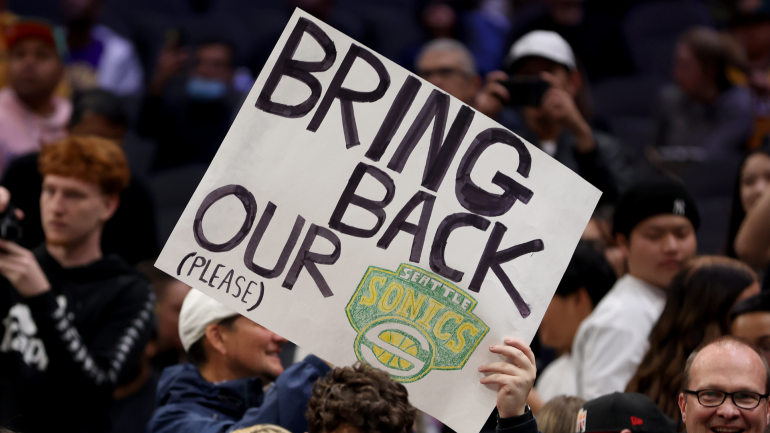
For the first time in more than two decades, NBA expansion is finally on the horizon. NBA owners are set to vote on whether or not to explore expanding into Las Vegas and Seattle at this week's board of governors meetings (happening Tuesday and Wednesday), and with momentum seemingly building, it feels likelier than ever that we will have two new teams playing in the NBA before the end of the decade.
And what exactly that means for the remaining 30 teams is, at this point, unclear. The NBA hasn't expanded since it added the Charlotte Hornets in 2004. If new teams debut for the 2028-29 season as is the reported target, that 24-year gap between expansions would be by far the longest in NBA history, demolishing the previous record of nine years. Expansion used to be a relatively common occurrence in the NBA. Teams knew what to expect.
But barely any of the owners and general managers running NBA teams today were in their current positions in 2004. The rules governing expansion, for reasons we'll soon cover, are fairly fluid. We can't really predict all of the ways the addition of two new teams is going to impact everybody else.
The Collective Bargaining Agreement lays out very little when it comes to expansion proceedings. The amount of money expansion teams are allowed to spend is set in stone: 66.67% of the cap in their first year, 80% in their second, 100% in their third. The basic structure of an expansion draft is laid out as well. But beyond that, there are questions that need answers, and those questions, in turn, raise further questions.
So with expansion potentially on the way, let's look at some of the biggest questions facing teams as they navigate the first potential additions of new competitors in over two decades.
1. How will an expansion draft work?
Some elements of the expansion draft are relatively straightforward. NBA teams must make at least one player available to be selected by the new teams. Expansion teams are allowed to waive the contracts of players they take in the expansion draft without them counting against the cap. That much is laid out in black and white. But Article XL, Section 1 of the Collective Bargaining Agreement includes a clause that allows for a fair bit of flexibility in how exactly the expansion draft is conducted:
"The NBA may determine during the term of this Agreement to expand the number of Teams and to have existing Teams make available for assignment to any such Expansion Teams the Player Contracts of a certain number of Veterans under substantially the same terms and in substantially the same manner that Player Contracts were made available to the Charlotte expansion Team pursuant to the 1999 NBA/NBPA Collective Bargaining Agreement; provided, however, that any change shall be subject to the approval of the Players Association, which shall not be unreasonably withheld."
What this essentially means in english is that the 1999 CBA laid out a basic framework that the then-Charlotte Bobcats used when they entered the league, but if the NBPA agrees, the NBA is allowed to make changes to that structure. When the Bobcats arrived in 2004, the other 29 teams were allowed to protect eight players in the expansion draft including their own restricted free agents. Anyone else on the team was fair game, though teams could only lose a single player, and if a team had less than eight players available, it had to make at least one player available.

Is eight still the appropriate number today? NBA rosters looked very different in 2004 than they do today. Most notably, teams now develop players through the two-way system, shuttling them back and forth between the NBA and the G-League. The G-League had only just been born when the Bobcats arrived (and was called the D-League at the time). Should two-way players -- all of whom become restricted free agents after the season -- be eligible for the expansion draft?
There's also the subtle matter of negotiation. Would the NBA be able to extract higher bids for these teams if their new owners expected to have easier access to existing talent? In that case, there's an argument for allowing teams to protect fewer players. This is a tricky balance. The NBA wants these new teams to succeed quickly in order to build up their fanbases. The other owners don't want to create stiffer competition. On top of all of this, Charlotte entered the NBA alone. This time around, there would be two teams joining the league. There's precedent for that. The last two-team expansion draft came in 1995 for the Raptors and Grizzlies. But plenty changes in 30 years, and it's hard to imagine the rules this time around won't be subject to changes.
2. Where will the expansion teams pick in the NBA Draft?
There is no written rule determining where exactly incoming teams are to pick in their first NBA Draft. The rule changes with each expansion. When the Hornets and Heat arrived in 1988, they picked No. 8 and No. 9, respectively. One year later, the Timberwolves and Magic picked No. 10 and No. 11. In 1995, the Grizzlies picked No. 6 and the Raptors picked No. 7. In addition, neither team was eligible to pick No. 1 until 1999. A fun fact here: the Raptors actually won the 1996 lottery and the right to draft Allen Iverson... but had to cede the pick to Philadelphia and choose second. This rule wasn't retained for the Bobcats, who picked No. 4 in their first draft and were fully eligible to win the 2005 lottery.
Essentially, this means we have no idea where the new teams will draft. Will it be a pre-determined slot? Or will they be allowed to participate in the lottery of their inaugural draft? Speaking of which... the NBA has made it clear that lottery rules are going to change because of all of the tanking taking place this season. How will that affect incoming teams?
Remember, expansion franchises tend to be bad for their first few years. That is especially true when you consider the cap limitations they're forced to operate under in their first few years. Say the lottery rules change in ways that make it harder for teams that are consistently bad to get high draft picks multiple years in a row. Could that create a scenario that makes it exceedingly difficult for an expansion franchise to get off the ground with its first franchise player?
This is another topic potentially subject to negotiation. New owners are expected to bid $7-10 billion for these teams. That's the top of the market, as aside from the $10 billion Lakers valuation, no NBA team has ever sold for more than the $6.1 billion the Celtics got. Potential new owners are inevitably going to try to angle for more favorable draft position, but only time will tell how successfully they do so.
3. Could expansion spark a comeback for free agency?
The slow decline of NBA free agency is a complicated topic, but here are the broad strokes: the 2017 and 2023 CBAs, in a variety of ways, made it easier and more favorable for players to sign contract extensions with their existing teams. As more players used these relaxed rules to sign extensions, fewer notable ones reached unrestricted free agency. This created a bit of a feedback loop. Teams saw fewer valuable free agents and stopped prioritizing cap space. Players saw less available cap space and started signing extensions they may otherwise have declined. The cycle self-perpetuates, leading to where we are now, a fairly barren free-agent landscape.
Adding two new teams has the potential to change the dynamic of the market. The obvious reason for that is that these teams aren't starting with existing contract baggage. They may not have a full cap to work with initially, but their books are as clean as they want them to be, opening the door for them to spend in free agency if they want to. With two new cap space teams potentially on the table, more players may be willing to take a risk on free agency. If they do so, the feedback loop could slowly start to reverse. The more players prioritize free agency, the more teams will, which in turn incentivizes players to do so, and so on.
A bit more cap space on its own probably doesn't do that, but remember, we're increasing demand here without increasing supply. Rather than 30 possible free-agent spenders, there would be 32, yet the pool of available players wouldn't change. We've already seen the trade market go out of whack, with non-star players frequently drawing multiple first-round picks in trades because of favorable contracts and limited available alternatives. If tanking suddenly becomes a less viable strategy because of lottery reform, the league may move back toward free agency organically. Expansion could just be a hastening agent.
I doubt free agency ever regains the prominence it had in the 2010s, when the best players in the league moved frequently of their own volition, but the pendulum has swung a bit too far in the other direction in the 2020s. I'd expect some degree of balance to come once the new teams have established themselves in the 2030s.
4. How will expansion affect roster-planning for existing teams?
Quick question: if there were an expansion draft tomorrow, who would the Oklahoma City Thunder leave unprotected? There's no good answer. Everyone on their roster is either a valuable player on a good contract or a recent high draft pick who's been held back by medical issues.
Teams like Houston, Utah, Brooklyn and San Antonio could all have versions of this problem. We're in the depth and asset accumulation era. Some teams have so many draft picks that they inevitably stack more players than they can keep. The pace of the modern sport is so demanding that teams have to build to play 10- or 11-deep. This is part of why expansion is viable, but some teams are better equipped to handle it than others. We might see a higher caliber of player become available through the expansion draft than ever before, simply because of how deep some teams have become.
Of course, we have years before the expansion draft arrives, and that's where some of these front offices are going to be tested. Could we see teams consolidate their talent, trading three or four valuable pieces for one great one just to avoid losing someone great to the expansion draft? How much of an effort will teams make to keep certain players off of the table, and will they let it affect their on-court product in the years leading up to expansion? Could we see teams load up on multi-year minimum contracts just for the sake of having lesser available players to offer up?
What about the normal NBA Draft? Are first-round picks going to become less valuable trade currency in a world in which two new teams enter the pool? Remember, having an unprotected pick in a year in which two expansion teams are likely to be bad is suddenly less valuable because there are now two more bad teams competing for draft position with the team that gave you that pick. Think of the Pelicans now, winning quite a bit and costing Atlanta draft position because of how many bad teams that were previously behind them in the lottery order are just more incentivized to lose.
And then there's the salary cap. When the idea of expansion came up a few years ago, we assumed it would come in an environment in which the salary cap was rising by the maximum 10% every year because of the league's enormous new national media rights deal. Well, that didn't happen a year ago. The cap is now projected to only rise by around 7% next season. The salary cap is calculated by projecting the next season's basketball-related income. Once that figure is projected, 44.74% of it divided by the number of teams in the NBA becomes the cap. Well, the denominator in that equation is about to change. Dividing by 32 teams leads to a smaller cap than 30. Now, the numerator would too. Having two new teams would lead to more revenue, but as the lion's share of league revenue comes from the national TV deal, which wouldn't change, cap growth would probably shrink, not rise.
Is that something teams would factor into their cap management? Could we see more caution in negotiating long-term contracts in the years to come? In truth, there are a number of factors beyond expansion that are going to inform cap projections, most notably the future of local television broadcasts. For now, this is somewhat uncertain, so it's hard to say, but it's a roster-building story to watch moving forward.
5. What happens to realignment and other logistical issues?
A frequent topic related to expansion is realignment. Las Vegas and Seattle would presumably be Western Conference teams. Therefore, someone in the West would have to move East. Minnesota and Memphis are the most widely-discussed candidates. Divisional realignment would seemingly be on the table as well, with the NFL's structure of four divisions featuring four teams filling each conference serving as the likeliest template.
But questions like this apply to almost every element of the NBA's structure. How about the lottery? Remember, reform is probably coming this summer. If there are two more teams, either the playoff structure has to change to allow two more teams in or the lottery structure has to change to accommodate two more non-playoff teams. Does the league have a plan for a 16-team lottery? Would the odds get flatter, or would the worst teams retain a similar advantage?
What about the NBA Cup? The NBA has been forced to use a six-group structure for the early stages of the NBA Cup, and it hasn't really caught on. With 32 teams, though, the NBA could potentially adopt a single-elimination structure that more closely mirrors March Madness. If the event continues struggling to gain traction, this is an obvious potential fix. If the NBA is set on group play, the FIBA World Cup also has 32 teams, and the NBA could copy its format with eight groups of four. The formula for determining opponents for the 82-game regular-season schedule would have to change as well, though perhaps divisional realignment could help on that front.
The broader point here is that, for obvious reasons, every existing NBA system and structure is designed around having 30 teams, and all of them would have to be tweaked to accommodate 32. In some cases, this can be done pretty elegantly. Having a 16-team playoff bracket actually works quite nicely in a 32-team league because it means half of the teams make it, and the other half don't. In other cases, it's a bit more challenging. But virtually everything would need to be addressed in some way if new teams arrive.