2026 Winter Olympics: Team USA hockey, Mikaela Shiffrin, Alysa Liu help deliver golden Milan Cortina Games
American and international stars delivered huge performances in big moments that made 2026 elite and revived the Winter Games

The 2024 Paris Games revitalized what those five recognizable Olympic rings mean as a symbol of athletic competition, global community, ambition and achievement on the world's stage. As soon as the most recent Summer Games concluded, the reviews were near-universal in agreement. The Olympics were officially back, with Paris' moment widely recognized as one of the best Games in history for a bevy of irresistible reasons: the jaw-dropping backdrops and unique stages for competition; the record-setting performances; the star power drawn in by one of the most famous cities in the world; and, crucially, the return of a normal Olympics after COVID had severe impacts on the previous two.
The Milan Cortina Games couldn't hit the same highs or have quite the same worldwide reach of the Paris Games (the Summer Olympics will always out-rate Winter) but all medals and moments considered, what we just watched over the past 16 days immediately vaults these Winter Games near the top of the list of the best ever.
What's more, for the first time since Vancouver in 2010, the world's best cold-weather athletes competed in a place that was both visually stimulating for TV watchers and viewership-friendly in the United States.
As for the U.S. delegation, this has to be regarded as the country's greatest go on snow and ice ever. Those in red, white and blue put on an epic showing, with Americans bringing home 12 gold medals, the most in any Winter Olympics. The 33 total medals were four off their best haul during those Vancouver Games 16 years ago.
My primary gig for CBS Sports is to write and talk about men's college basketball, but longtime readers know all too well how much I love the Olympics. And even in the midst of what I think will wind up being an all-time season in college hoops, I had my attention split for two weeks between American hardwood and Italian ice due to the gorgeous vistas, powerful storylines, emerging star power and ever-reliable drama that came across the TV with 16 disciplines in eight sports taking place an ocean and a continent away.
The redemption stories and breakout stars and anguishing images of failure that developed over two-plus weeks in the mountains of Northern Italy produced enough narratives to fill a 500-page novel. I'll go much shorter than that, but join me for a look back at the stars and moments that leveled up Milan Cortina and set a new standard for the Winter Olympics moving forward.
Immediately legendary: USA sweeps hockey gold
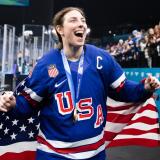
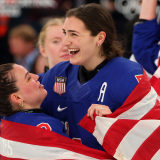
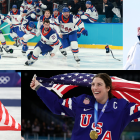
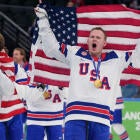
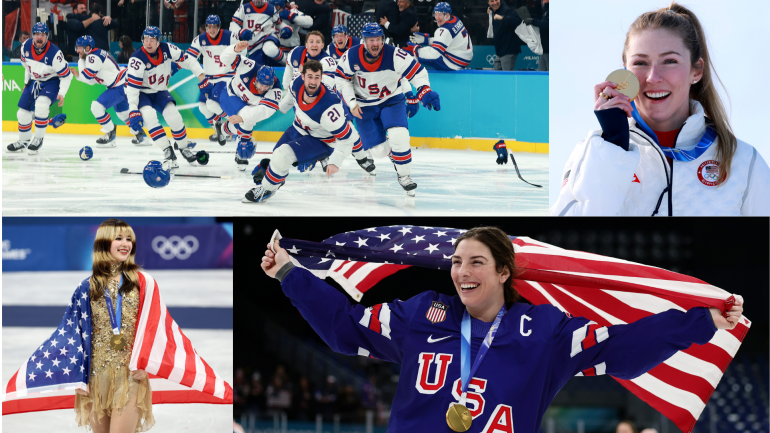
We start with ice hockey. The United States men's and women's teams won gold in the same Olympics for the first time, which is a monumental achievement in its own right. But then consider the details: The two teams did it three days apart in games that that both ended 2-1, in games that both reached overtime, in games that both downed a perfect rival, Canada.
For the women, Megan Keller became an American hero for her overtime goal that won the gold medal. And Hilary Knight, a legend in her own right, for getting the game to the bonus session and setting an Olympic scoring record in the process.
For the men, Jack Hughes is an immortal -- right alongside goalie Connor Hellebuyck (who should have won MVP) -- for getting the men's team its first gold since the "Miracle on Ice" in 1980. (Sunday's final was 46 years to the day since the U.S. defeated the Soviets in the medal round.)
It's only the third time men's hockey has won the Olympic tournament (1960 being the first). That hallowed 1980 team has been subject to documentaries. Both of these champions will be as well.
Mikaela Shiffrin's affecting redemption arc
Shiffrin, 30 years old and far from finished in her one-of-a-kind career, has grown into one of my favorite athletes. Shiffrin convincingly won the third Olympic gold medal of her career on Feb. 18, also notably her only one of these Games. It came in her best discipline, the slalom, and in staggering fashion. Shiffrin exorcised her previous eight non-podium skis in the Olympics by winning her two slalom races by 1.50 seconds, marking the largest margin of victory in an Alpine Olympic event since 1998. The gap in her win was so large, it was actually a longer amount of time than the advantage of the six previous Olympic slalom winners COMBINED.
She is now both the youngest (18 in 2014) and oldest to ever win gold in women's slalom. Shiffrin is also now the first USA skier with three golds in addition to being the only two-time slalom gold medalist in U.S. history. One barrier after another broken.
The way she got there deepens the impact of her story. Shiffrin failed medal in giant slalom and also shockingly blew a first-place lead in the Olympics debut of the team combined event with teammate Breezy Johnson -- whose downhill gold was one of the United States' 12. Shiffrin responded with one of the best races of her life. She earned it not because of the hard work, but because of how she so willingly put herself out there, time and again, with her struggles.
Every time I heard Shiffrin talk, or saw one of her social posts, it was nothing but positivity, affirmation of teammates and competitors and transparency about accepting the challenges of these moments, of living through them instead of going against them. When she won gold last week, cameras caught her expression, goggles still over the eyes, and the first word out of her mouth as she crossed the finish line?
Dad.
I almost cried when I watched it live.
Shiffrin unexpectedly lost her father to an accident in 2020. She'd won many big races since then, and had high-profile failures too. But winning a medal on the Olympic stage hadn't happened since he passed. Her honesty at her medal-winning press conference about processing grief is something everyone should watch.
An emotional Mikaela Shiffrin remembers her late father after winning gold 🥺 #WinterOlympics pic.twitter.com/kQJQpfq1DT
— Yahoo Sports (@YahooSports) February 18, 2026
Women provided so many inspirational performances
Cheers to Breezy Johnson, who not only won gold in Cortina, she did so on the course that was the stage of a pre-Olympics crash in 2022 that caused her to miss the Beijing Games. And so not only did she make a grand comeback at 30, she also got engaged after her final race.
The most uplifting performance of the past 16 days came via the carefree radiance of 20-year-old Alysa Liu, whose infectious personality and impressive singles free skate delivered her a gold. She also reached the top of the podium as part of the team event for the United States. A few years ago, Liu retired from competitive skating. But the bug bit back and it's become a decision that will change her life forever. Her golds have vaulted Liu to stardom. Should she keep at it, she'll enter 2030 at just 24, and among the handful of biggest stars for those Games.
Alysa Liu gained over 3.5M new Instagram followers while in Italy 😳 pic.twitter.com/vmIM23Fmqt
— FanDuel Sportsbook (@FDSportsbook) February 22, 2026
It was an amazing Olympics for women in the United States and beyond. Thirty-five-year-old Italian Federica Brignone is an immediate legend for how she recovered from an ACL injury in less than a year to win two gold medals for the home country, boosting Italy to a record 10 golds and 30 medals (third overall in both).
The Netherlands' speedskating duo of Femke Kok and Jutta Leerdam each won a gold and a silver; they have flipped a niche sport into must-see competition. They are bona fide uber celebrities in their home country, where speedskating is treated there like football is in the States. Italian Arianna Fontana made history by competing in her final Olympics at 35 and winning a gold and two silvers in short track speedskating, and finishing with a medal at six straight Olympics. No one else has ever done that. She's got 14 medals to her name, second most ever to Norway's Marit Bjøgen's 15 in cross-country skiing.
Speaking of peaking at the end: Elana Meyers Taylor competed in her fifth Olympics and finally, as a 41-year-old mom of two, won her first gold in the monobob. Imagine earning your greatest athletic accomplishment after the age of 40? Meyers Taylor is just as much as an inspiration as Lindsey Vonn, who made us believe before it all ended in disaster. But Vonn's tragic final Olympic race -- which has required three surgeries already and will need at least one more -- served as a scary reminder of the very real stakes of competition in the Winter Olympics. Nothing compares.
Men who seemed immortal and a 'God' who proved to be human
American speedskater Jordan Stolz hoped for four medals, perhaps even four golds, but came away with two and a silver. His pair of individual first-place finishes represented the only American to pull off the feat in Italy. Stolz was a breakout star, though his failure to medal in Saturday's mass start means he'll likely enter 2030 as the male face of Team USA while also having all the motivational storylines to set up what could be his grand Olympic moment.
The same can be said of the Quad God, Ilia Malinin, whose failed routine in the men's free skate goes down as the biggest stunner of them all at these Games. A shocking reminder that, although there is so much storytelling attached to the Olympics, the Games can never be scripted.
But they sure are sculpted.
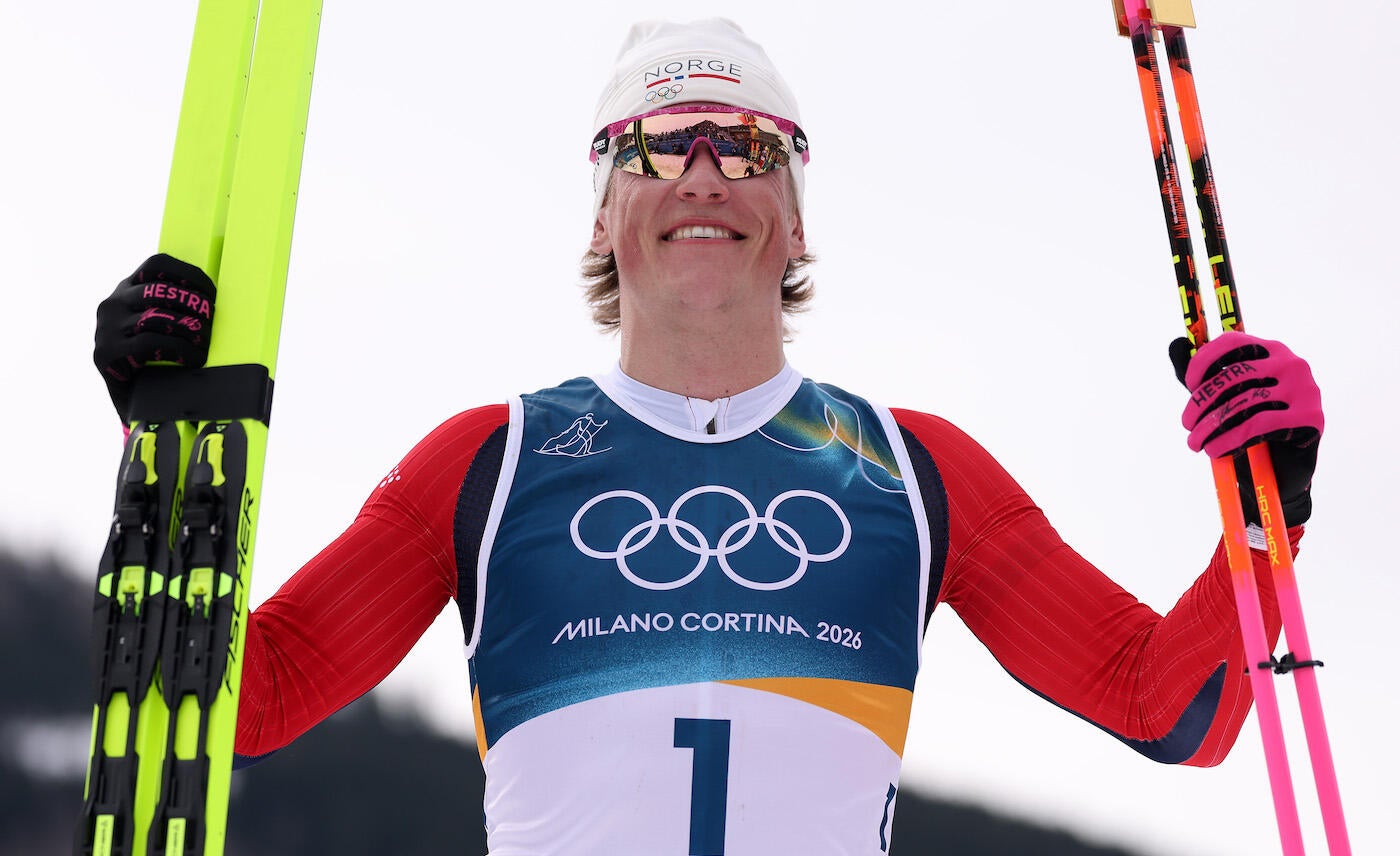
Norwegian cross-country skier Johannes Høsflot Klæbo might be one of the 10 most fit humans on the planet. Cross-country ski racing isn't a sport so much as it is a masochistic display of pain tolerance. Klæbo is one of the most impressive athletes I've ever seen, and with six golds, he's done the near-impossible and become a global star as a cross-country skier. His six gold medals over a two-week span are a Winter Olympics record. He skied almost 62 miles in Italy. The 29-year-old joins Michael Phelps as the only Olympians ever to have double-digit gold medals (Klæbo now has 11; Phelps is untouchable with 23). Klæbo's six helped get Norway to the top of medal table; the country finished with 18 golds and 41 overall, both records.
Sub-six-minute mile pace uphill on skis: #WinterOlympics SPEED. 🔥 pic.twitter.com/trof9rs4zf
— NBC Olympics & Paralympics (@NBCOlympics) February 10, 2026
Klæbo wasn't the only cross-country skier to earn big headlines. The weirdest story of the Games goes to his countryman, Norway's Sturla Holm Laegreid, who decided to cry and admit to being a cheater on television, only to see the story go global. To date, there is no indication he's won back his ex-girlfriend. (Seriously, man. What was the plan here? Yikes!)
There was the glory of Brazil's Lucas Pinheiro Braathen, who won the first medal (a gold, nonetheless) for a South American country in a Winter Olympics ever, and then celebrated with an instantly iconic gesture atop the podium after winning the freestyle skiing competition.
The bravest moment of the Games didn't happen on any course, ice, snow or field of competition. Ukraine's Vladyslav Heraskevych was not allowed to compete in skeleton after he refused to compete in anything other than the helmet that bore the images of his fellow Ukranian athletes who were killed in the Russian invasion in recent years. By trying not to make a political statement, the IOC wound up making one anyway and Heraskevych emerged as a disappointed but principled and proud hero who was as clear-eyed in his pursuits as any of the 2,800-plus Olympians who earned invites to Italy.
I loved American snowboarder Nick Baumgartner, a 44-year-old with the spirit of a happy kid. He's still going for medals in snowboard cross, and he very much intends to be back in four years. If he can do it, so can Austrian Benjamin Karl, who won gold as a 40-year-old and celebrated by going topless.
Why next two Winter Games will likely top 2026
One major reason I've long loved the Winter Olympics: the delicate skill it takes to be the greatest in the world in the most unforgiving of settings. For the most part, no sports are tougher on mind and body. The one big rule of these Games is that all competition must take place on the surface of snow or ice. And so there they went on those slippery surfaces every day. Downhill skiers barreling down an icy mountain piste at 80-plus miles per hour. Snowboarders and freestyle skiers scooping themselves dozens of feet in the air above a halfpipe. Balancing on the thinnest of edges while skating on ice, or uncorking acrobatics wonders before gracefully landing on a slim slab of riveted silver, those who put blades below their feet continued to push the boundaries of what is physically possible.
Luge, skeleton and bobsleigh athletes throw themselves down verglas slides on sleds at speeds going faster than the legal limit on most American highways. Others endure organ-bursting snow pursuits in cross-country skiing, or take on heart-stopping flight risks in a variety of ski and snowboard aerial competitions.
It's truly some of the most thrilling athletic competition known to man.
And I think we just witnessed an all-timer of an Olympics.
Now scroll back up and look at the names of the athletes that medaled. So many of them will be back, as will the likes of Eileen Gu, Chloe Kim and more. The United States outperformed expectations in Italy ... and yet at the same it feels like more was left on the medal table. In four years, Stolz, Malinin, Shiffrin, Liu and more to emerge onto the scene will have gold medal expectations. In ice hockey, the American rivalries with Canada are sure to hit all-time highs.
After what Milan Cortina gave us, it's obvious that the Winter Olympics are in the midst of a revival, and this is merely Phase 1. The next phase, at the French Alps in 2030, should be even bigger. And then just wait for 2034, when Salt Lake City will again play host after 32 years, and with it, the culmination of a renaissance on ice and snow both for the United States and the world.