Tottenham Hotspur's embarrassing collapse at Atletico Madrid is a mess of Johan Lange's making
Johan Lange is the architect of Spurs' most uninspiring team in decades, and it's time to hit the reset button

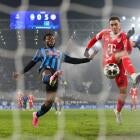
For Atletico Madrid's many gifted attackers, reducing an opposing defender to an unpleasant moment in a highlight reel is part of the job. This was no ordinary highlight reel, though – a collapse of epic proportions was complete in just 22 minutes as Atleti took a 4-0 lead over Tottenham Hotspur to kick off their UEFA Champions League round of 16 tie. It was not a demolition of Atleti's creation, though; Spurs crumbled at the sight of Atleti's attackers, making a series of shockingly simple mistakes, making things unusually easy for the opponent.
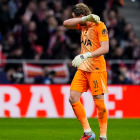
The blame could, and perhaps should, go around after a 5-2 defeat in Madrid. Antonin Kinsky made blunder after blunder in his first Champions League start, the 22-year-old goalkeeper coming off after just 17 minutes for usual starter Guglielmo Vicario in a debut that would be memorable for all the wrong reasons. Micky van de Ven was sloppy and not for the first time, trading his top-tier ability for one mistake after another and looking as checked out as anyone. Igor Tudor, Spurs' new coach, earned plenty of flak for those two – and their teammates – showing up in that matter, forcing questions of what value he brings if he could not identify that a young goalkeeper was not ready for the spotlight, instead ensuring he would run down the tunnel to cry and need consolation from his teammates.
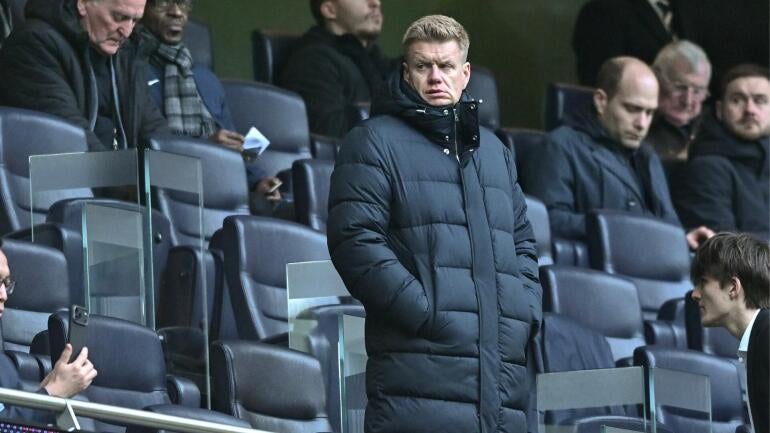
Picking out those details, however significant they may be, does not begin to answer the question of where it all went wrong for a respectable Premier League side that is less than a year removed from winning the UEFA Europa League. It is not actually a question for Kinsky, van de Ven or Tudor, no matter how much blame they deserve for Tuesday's unraveling – the question is Johan Lange's to answer, the architect of Spurs' most uninspiring team in decades.
Spurs' plummet feels like a rapid one, even with the caveat that they won the Europa League despite a 17th-place Premier League finish last season. After all, Spurs had not finished lower than eighth since the 2008-09 season, last season's downward league turn was well-positioned to be an anomaly rather than the sign of a trend. For those truly paying attention, though, the slide has been years in the making – and not because of the longstanding narrative that ex-chairman Daniel Levy was afraid of spending money. All but one Spurs' top 10 record signings joined the club in 2019 or later, shortly after their new stadium opened, each of them fetching at least $53 million. Eight signed for Spurs in 2022 or after, while four came after Lange took charge of the sporting department in October 2023. Few were players that lifted Spurs' ceiling.
Lange spearheaded years of squad mismanagement that puts Manchester United's post-Alex Ferguson to shame, falling faster and lower than the Red Devils ever had, but did so in the shadows of England's more followed clubs. At their best, van de Ven, Cristian Romero and Pedro Porro look comfortable amongst the world's elites and James Maddison is more than useful when fit. The four players that crack the top 10 since Lange's arrival are not exactly in the same category – Dominic Solanke, Mohamed Kudus, Xavi Simons and Archie Gray.
Simons and Gray, theoretically, have potential. The 19-year-old Gray has been one of the few trying to will his team into better performances, while there's an argument to be made that the 22-year-old Simons should receive more playing time for Spurs because of another Lange decision. Simons is the only fit midfielder on the roster interested in playing a progressive pass, an awkward roster design no matter a coach's preferred style of play.
Solanke and Kudus, though, are symbols of Spurs' problem under Lange's leadership. The pair have their strengths but for a team that should at least be in the conversation for a top-four Premier League finish, they should be rotational options rather than starters, a better fit for the clubs they were previously with. Lange's Spurs could have saved money by signing similarly-skilled players from mainland Europe but that is almost beside the point – they have not been afraid of spending but have instead used their resources poorly. For the nearly $150 million they spent jointly on Solanke and Kudus, they could have signed one high-quality attacker that would have improved the squad considerably.
Lange has mixed in major transfer fees on second-tier talent with an overemphasis on young players, building a squad that is ill-equipped to compete. Recruiting young players, if done well, can be an advantage for any team but Lange prioritized building a team for the future instead of one for the present, the squad now a mixture of players who cannot compete at the top levels and ones who are too young to do so. Look no further than his first summer transfer window in 2024 – Spurs signed five teenagers and Solanke after Ange Postecoglou led them to a fifth-place finish in the Premier League, despite the obvious holes in the team's midfield and attack. Unintentionally or not, Lange deprioritized immediate success and when he went back into the market in subsequent windows, he was unable to make up the gaps.
That is without considering the fact that he played a role in picking out both Thomas Frank and Tudor, the former whose lifeless approach sunk Spurs while the latter only worsened the crisis. Lange Put quite simply, Lange cannot claim a single genuine victory since taking charge at Tottenham two-plus years ago, a signal that his approach does not work – and runs the risk of never working at all.
The good news for Spurs is that there is a way to turn things around, both in the short term and the long term. Tudor increasingly feels like the wrong fit to fix things right away but if they manage to avoid relegation, one thing is clear – things will not get much better as long as Lange stays at the helm, two years of work enough to call time on his underwhelming and ineffective vision of the club.