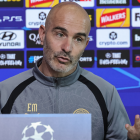
The United States men's national team crashing out of the World Cup in the round of 16 may have been disappointing, but that doesn't mean that it wasn't a memorable experience for both fans and members of the team. Midfielder Tyler Adams wasn't born yet during the 1994 World Cup, and being able to experience the tournament with fan support at home is completely unlike what he goes through playing in England for Bournemouth. From fans outside of hotels to everyone singing "Country Roads" in Seattle, it was a transformative moment for Adams and the USMNT, but it's also one that he wants to make sure can lead to more people playing soccer.
In a partnership with Allstate and the U.S. Soccer Foundation, Adams has helped unveil a new mini-pitch in Sandtown Park in South Fulton, Georgia. It's part of a project aimed at improving the accessibility of soccer, which is something that Adams is passionate about. It has become a hot-button topic about how the USMNT can improve, and one of the biggest things that can be done is making it simple for people who want to play soccer to do so in a culture where the sport still isn't fully embedded. It's common in Europe and South America to see pitches all over, from under highways to in the countryside. From grass pitches to futsal on concrete, the opportunities to play abroad are numerous, with even pickup games being played on side streets with bottles or stones being used as goals.

After the World Cup final, I, a soccer journalist, saw kids in my neighborhood who were reenacting Ferran Torres' World Cup-winning goal for Spain. That's something that can be capitalized on; if they haven't played soccer before, maybe they'll see a field and end up wanting to play, which leads to joining a team and becoming the next Adams. You'll never know if kids don't have the accessibility to the game, and pitches like this help with providing that.
"This is something that myself, Allstate, and the U.S. Soccer Foundation have been working on for the past three years. Obviously opening mini-pitches in the lead-up to the World Cup, with the idea in mind that the World Cup was going to change kind of the narrative of kids wanting to play soccer.
"It doesn't matter who it is, just get outside, get some fresh air, be with your friends, camaraderie, like all these kinds of things that the game does is just bringing people together. So, I'm super thankful for that partnership because it was less about money and things like that, and more about how we can inspire the next generation, which is these youth kids in these communities."
Plenty has changed since Adams came through the New York Red Bulls system, but in some ways the system isn't that different. Adams credits his own success to sacrifices that his parents made, driving him over an hour to play for the best soccer teams possible since it was something that he was interested in. That's not something that's possible for everyone to do, which is what sparked Adams' passion about accessibility and providing more fields and spaces that kids can play on.
One major benefit of soccer is that compared to other American sports, it has a very low cost of entry. All you need is a ball and somewhere to play, but the somewhere to play can be easier said than done at times. Despite my career covering soccer, growing up, I barely knew what soccer was myself. Basketball was king, and there were courts everywhere in West Baltimore. I didn't discover soccer until high school, which is quite different than learning the sport as a kid.
Americans can already be at a disadvantage since they can't get the best coaching in Europe until after they turn 18 unless they have access to a European passport, so getting touches as early as possible if you want to is critical.
"[Playing soccer in Europe] you see the landscape and how different it is than in the U.S. There are so many things that have to come into perspective when you look at the U.S.," Adams said. "I mean, the size of the U.S., finding competitive soccer, driving to find facilities, infrastructure, like all these kinds of things. How we have basketball courts is how they have soccer fields in Europe. And it's just different. Again, I think that's something that I want to have an impact on, and I want to bring more mini-pitches, more things like that where kids can fall in love with the game the same way I did."
That's truly all you can ask for. The national team has inspired people who were having fun watching them during the World Cup, and the next step is getting them to play soccer. It's always a process, but it's one that is happening year after year as the youth in the USMNT system continues to improve. Just look at Julian Hall, Zavier Gozo, Cavan Sullivan, and Adri Mehmeti. Considering how vast the United States is, the next one of them could be out there anywhere, and you won't know it if they don't have access to a field.
Adams also has some words of wisdom from his own experience to share as well for those who are looking to get into the sport.
"To have the belief in yourself is the most important thing, but also to trust the process. I think everyone wants to compare themselves to other people: how quickly they reach success, when is it going to happen to me, sort of thing, but focusing on your own timeline is super important. You can't get caught up in everything else and what other people are doing," Adams said.
While one mini-pitch won't fix everything, it is the beginning of a process and part of a continued commitment to improve accessibility to the game. It's already more accessible than it used to be, so who knows, by the time the next World Cup is in the United States, there could be soccer access available to anyone who wants it.