What went wrong for Xabi Alonso at Real Madrid: A match seemingly made in heaven ends after only seven months
After success at Bayer Leverkused, Xabi Alonso discovered that managing at Madrid is about a lot more than Xs and Os

By
Chuck Booth
•
4 min read
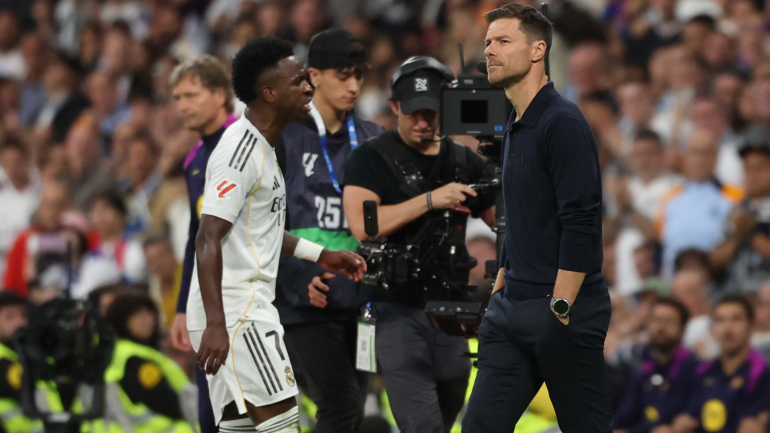
The new year has brought yet another managerial casualty as Xabi Alonso is out as Real Madrid manager after only seven months in charge. This has been an up-and-down season for Los Blancos, marked with a loss to Barcelona in the Supercopa de España over the weekend, so it seems Florentino Perez wanted to make a change sooner rather than later.
Considering it took eight minutes between Madrid's statement of Alonso's departure and their statement on Alvaro Arbeloa taking over as manager, it's clear that this is something that was in the works before the Clasico defeat, but that loss was the final nail in the coffin. Where'd it all go wrong for Alonso? He was the hottest coaching prospect in soccer and entered Real Madrid at the top of the managerial world and now departs with Los Blancos on track to make the top eight of the Champions League league phase and within striking distance of Barcelona for the league title, but none of that mattered.
Alonso isn't long removed from ending Bayern Munich's reign of dominance in the Bundesliga with Bayer Leverkusen during the 2023-24 season, and while he fell just short of an invincible season, losing in the Europa League final, he has shown that his teams can be among the best in the global game. Despite this dismissal, he'll still be one of the names on the managerial market but still, it's hard to understand how it all came unraveled so quickly.
June and July: Overcoming early Club World Cup struggles
Taking over, Alonso had the ability to ease into the job in some ways due to Los Blancos taking part in the Club World Cup instead of a standard preseason. While he had to spend time during the tournament without Kylian Mbappe and Jude Bellignham, it was a good chance to get an extended look at players like Arda Guler and Gonzalo Garcia, all of whom were relied upon in the early parts of the season for Madrid. New defenders such as Dean Huijsen and Trent Alexander-Arnonld were also able to get a look in, and while the tournament ended in disappointment, getting knocked out by Paris Saint-Germain, it seemed like the groundwork was being laid for a turnaround under Alonso. After failing to secure a trophy last campaign, expectations were high for Alonso at Real Madrid, but following increased spending, he seemed set to meet them.
September: A Madrid derby that changed everything
Coming into the season, it seemed like more of the same, where despite struggling, Madrid were pulling out results despite getting red cards, but it all fell apart at the worst time possible. After a perfect opening six games, Alonso's first loss at Madrid was a 5-2 embarrassment at the hands of Atletico Madrid. It was a match where they were thoroughly dominated, conceding a penalty and allowing 13 shots for a 2.31 xG and Alonso's defense went up in flames away from home. This would end up being a match that foreshadowed struggles that would be to come as in November, Real Madrid started dropping points to teams below them in the table with draws coming at the hands of Girona, Elche, and Rayo Vallecano, while Barcelona marched ahead in the table. During those matches, despite the Madrid attack putting up 20+ shots per game, they weren't finding the back of the net.
October: Clasico changes everything, as Vini Jr. shows frustration
El Clásico in October marked a turning point. Xabi Alonso's team won 2-1 while having their lowest possession of the season at only 31.7%. Before that point Real Madrid were dominating games, holding close to 60% possession and won 12 games, only losing one while scoring 30 goals and allowing 11 in 12 matches. After that match the script flipped. Real Madrid's possession number has dropped to around 57% and in 12 matches played, they've won six, lost three, and drawn three between LaLiga and Champions League. They've allowed opponents to pass around their defensive third with ease, leading to more shots than Thibaut Courtois can keep out of his net.
That Clásico in October was also when Vinicius Junior showed public frustrated at Alonso as he was subbed out of the match and made his feelings known. Alonso's predecessor, Carlo Ancelotti, was known as a player's manager at Real Madrid during his time there, and that was something Alonso would have to deal with while trying to instill his own standards at the club. Except that doesn't work at a club where the most powerful man there is the president, Florentino Perez, not the manager. Real Madrid's commercial and on field success has been driven by Perez's leadership, and nothing was going to get in the way of that, not even a former player at manager.
Perez seemed to take Vini Jr's side after that public spat, which is a moment that, in retrospect, seems like the beginning of the end.
January: Alonso leaves Real Madrid
Now fast forward, and with Alosno out, Madrid has now gotten someone in who will presumably run the club the way that Perez sees fit. An upcoming schedule that will see Madrid avoid most of the top teams in the world through March will give Arbeloa time to find his footing, but Alonso will also be one of the hottest names on managerial lists across top clubs in Europe. Going back to a club that allows him to do what he does best in instilling a winning culture is something that should lead to success because Madrid doesn't operate like most clubs in the world. The manager position at the Santago Bernebau is unique, but as long as Perez is in power, that will continue to be the case and whoever takes the helm will either run things the Madrid way, or end up gone before you blink.