CHICAGO -- WNBA All-Star Weekend has grown so much over the past few years that two-time MVP Elena Delle Donne, who made her first of seven All-Star Games in 2013, hardly recognized it when she paused her retirement to participate in the WNBA Shooting Stars competition on Friday night.
"This All-Star looks a little bit different than the first one," she said after her team won the inaugural event, which paired an active player with a legend and a high-school star. "My first one, it was almost like just like pulling up for a scrimmage and leaving. Now it's like a whole weekend, and everybody is getting celebrated the way they should. It's a place everybody wants to be to show up and have fun together."
Most of that growth has taken place under the leadership of Cathy Engelbert, who became the WNBA's first commissioner (prior to her hiring, the league only had presidents) on July 17, 2019.
Engelbert has helped shepherd the league from a budget-sheet afterthought and annoyance to NBA owners into a billion-dollar behemoth that has NBA owners fighting over who gets to pay upward of $250 million to launch the next team. This spring, the league and union signed a landmark CBA that saw player salaries increase by almost 400%. This is the WNBA's 30th anniversary season, and this All-Star Weekend in Chicago was supposed to be a chance for all parties to come together, soak in the success and riches, take a shot with the StudBudz and give all the league's skeptics over the years a nice fat "told you so."
But instead, for the second season in a row, the league's marquee event has been overshadowed by conflict between the league's front office and players. Last year, players took the court before the All-Star Game wearing shirts that said, "Pay Us What You Owe Us" -- signaling their resolve in the then-upcoming CBA negotiations and frustration that Engelbert and WNBA owners were not taking them seriously. It wasn't a great look for the league, but a little discord and tension during a contract year is to be expected.
This year, the conflict is much more self-inflicted. The weeks leading up to All-Star have been marred by missteps and miscommunications, and one of the biggest questions lingering over media day on Friday was whether Engelbert should remain at the helm. And while players met with Engelbert about pressing issues on Tuesday night and took a measured tone with media -- WNBPA president Nneka Ogwumike expressed sympathy for Engelbert and said it wasn't for her to decide whether she should remain at her post -- at a certain point, if you have to ask the question, you might already know the answer.
Engelbert has helped forever change the trajectory of the WNBA and women's sports as a whole, and I believe that if she steps aside soon, history will remember her tenure fondly. But while busy activating brands and holding bottom lines, Engelbert has overlooked other important parts of her job, such as building relationships with the fans, the media and, most importantly, the players.
"Show us that you hear us, that you're there for us, and then we go from there," A'ja Wilson said on Friday, when asked for her thoughts on WNBA leadership. "When it comes from a leadership standpoint, I think I'm big on relationships. I'm big on bonds. I'm big on knowing that I'm seen not as just the athlete, more so as the person."
'We have to be proactive'
Time and time again, Engelbert's inability to convey to players that she sees them and values them and cares about what they say has created self-inflicted wounds that have taken attention away from the sport itself on the biggest stages. It's past time for that cycle to end.
Let's rewind to last year's playoffs. After suffering a brutal injury in the semifinals, Minnesota Lynx star Napheesa Collier called out Engelbert in a scathing prepared statement during her exit interview, saying the WNBA had "the worst leadership in the world." While that might have been hyperbolic -- something Collier later admitted -- she also described past conversations she had with Engelbert that she believed showcased her "dismissive approach." Engelbert released a statement saying that she was "disheartened by how Napheesa characterized our conversation and league leadership," but then escalated tensions by essentially calling Collier a liar at her press conference before Game 1 of the WNBA Finals.
At the draft this year, which took place just weeks after the WNBA CBA was signed, Engelbert soured the celebratory vibes when she got defensive responding to a question she should have been well-prepared for, about how long she wanted to remain as WNBA commissioner.
"I wonder whether you would ask that of a man," Engelbert asked the reporter. "I realize as women we get asked different questions than men do."
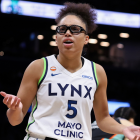
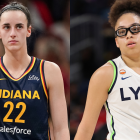
In June, on the day of the Commissioner's Cup final in Brooklyn, Mercury forward Alyssa Thomas spoke to reporters in Phoenix for the first time since being suspended one game for putting her fist on Caitlin Clark's throat during a loose-ball scramble. Thomas accepted the punishment, but was unhappy with how Engelbert handled both notifying her of the suspension and the onslaught of racist and homophobic abuse Thomas received in the aftermath of the incident.
"We still have yet to hear anything from Cathy," Thomas said. "It's no surprise. You can see what's being said on social media, and I mean it's unfortunate, but as usual, she remains silent, and that's unfortunate when our lives are being threatened."
Engelbert didn't release a statement condemning hate until after Thomas' remarks, and then league officials spent time during the Commissioner's Cup game itself responding to questions about the communication between Thomas and Engelbert. The entire news cycle completely swallowed her namesake event, which the Liberty won in dominant fashion over the Aces, and Engelbert was met with boos during the trophy ceremony.
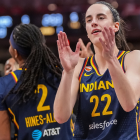
In the weeks since, the WNBA has continued to make headlines for self-inflicted wounds, from Engelbert skipping out on an interview with prominent radio host Dan Patrick to public squabbles with Sabrina Ionescu and Kalya McBride over whether or not the league officially invited them to participate in Friday's 3-point contest. As all of this has been going on, the discourse around Clark and WNBA officiating and the treatment of Clark by Black players has reached deafening levels, and the league has been excruciatingly slow to respond to controversy at every turn and has done next to nothing to try to get out in front of any of it.
"We don't want to be reactive in these moments. We have to be proactive," Ogwumike said.
"I think the biggest thing is between a league and leadership and things like that is the communication," Breanna Stewart added. "The open line of communication, because then that builds trust, and then that builds follow-through, and then that builds all these things. And we're getting there. We're working on it."
'At what point do those become chronic?'
All the players I spoke with on Friday were trying to be optimistic -- or "hopeful" as Ogwumike put it -- about their relationship with Engelbert on the heels of this week's meeting. She seemed to hear them and be willing to work to improve the relationship. However, she has said that before. Last fall, after Collier's comments, Engelbert said, "if the players in the W don't feel appreciated and valued by the league, then we have to do better, and I have to do better."
And yet here we are.
Individually, each of these incidents could be brushed off as unfortunate byproducts of a booming business. But there's an established pattern, And Engelbert is not new to this job -- she's been in it seven years. How hard should the players have to work to get the leader of their league to communicate with them, to advocate for them and to listen to them? The time to start building that trust was 2019, not 2026. There are no simple fixes for what ails the WNBA right now, and being the commissioner is not easy. Many of these problems regarding sensational media coverage and the sexist, racist and homophobic abuse players are experiencing are being heightened by the successes Engelbert helped usher in. That should not be diminished or discounted. But she's become part of the problem, not part of the solution.
"I think growing pains are natural," Ogwumike said. "But at what point do those become chronic? You know, after a while, if you're still experiencing those symptoms, you have to do something to alleviate that type of pain, and that's what the players are asking for."