Napheesa Collier stands by criticism of WNBA leadership, but says 'future is bright' amid CBA talks
The Minnesota Lynx star and Unrivaled co-founder previously said the WNBA had 'the worst leadership in the world'

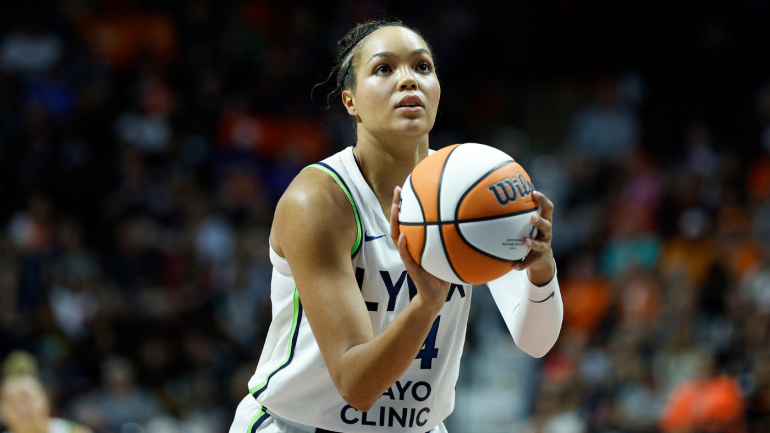
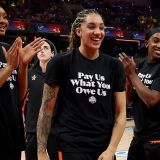
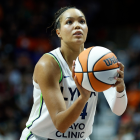
On Tuesday evening at Unrivaled media day, league co-founder Napheesa Collier spoke virtually to reporters for the first time since her end-of-season exit interview with the Minnesota Lynx, when she delivered a scathing pre-written opening statement calling out WNBA commissioner Cathy Engelbert for her dismissive attitude toward players and saying that the WNBA had "the worst leadership in the world."
Those comments, given in the wake of the Lynx's semifinal loss to the Phoenix Mercury in the playoffs, went viral and prompted a widespread discussion about WNBA officiating, the CBA negotiations and Engelbert's future as commissioner of the league.
"I definitely wasn't expecting it to blow up the way that it did," Collier told CBS Sports when asked about the reaction to her statement. "I knew people in our community obviously would see it, but I definitely didn't know that I was going to gain the traction that it did."
When asked whether her opinion of leadership had changed in the past couple of months, especially as CBA negotiations have heated up, Collier said it had not.
"I mean, nothing has changed since then, but I feel really confident in our PA and where we are internally," Collier said. "The conversation has been had now. People are seeing, I think, that change needs to be had. It's coming from so many different directions that so many people feel this way. And I think we're just really excited for the future and what that has to hold, and especially with all these different leagues popping up, Unrivaled, our CBA negotiations, the future just seems so bright. I feel good about it."
The current WNBA CBA was scheduled to expire on Oct. 30, but the WNBA and WNBPA have agreed to two extensions, with the most recent one extending the CBA to Jan. 9. The second season of Unrivaled, a 3-on-3 league founded by Collier and fellow WNBA star Breanna Stewart, tips off on Jan. 5 and lasts until March.
Since many WNBA players participate in Unrivaled and the entire league is based in Miami, Unrivaled is expected to be the site of a lot of CBA discussions and, if and when the new CBA gets signed, a hub of WNBA free agency action. Last season, Unrivaled was the site of a conversation between Engelbert and Collier that Collier made public in her September statement.
At Unrivaled this past February, I sat across from Cathy and asked how she planned to address the officiating issues in our league. Her response was, 'Well, only the losers complain about the refs.' I also asked how she planned to fix the fact that players like Caitlin, Angel and Paige, who are clearly driving massive revenue for the league, are making so little for their first four years. Her response was, 'Caitlin should be grateful she makes $16 million off the court because without the platform the WNBA gives her, she wouldn't make anything.'
In that same conversation, she told me 'players should be on their knees thanking their lucky stars for the media rights deal that I got them.' That's the mentality driving our league from the top. We go to battle every day to protect a shield that doesn't value us. The league believes it succeeds despite its players, not because of them.
Engelbert denied making those comments about Clark and said she was "disheartened by how Napheesa characterized our conversation." The two parties were supposed to meet in person after the WNBA playoffs, but Collier canceled that meeting after Engelbert's denial.
The biggest contention in the CBA negotiations is over revenue sharing and salaries. Players want to move this CBA from a model with fixed salaries and salary caps that increase by a pre-determined percentage each year to a model based revenue sharing that allows salaries to grow in real time with the business. The WNBA has included revenue sharing in its recent proposals, and is offering a salary cap of $5 million, up from $1.5 million currently, and maximum salaries above $1 million. But due to the limitations the WNBA is placing on what can be included in the revenue share, players would still get less than 15 percent of league revenue. The Athletic reported this week that the WNBPA's most recent proposal is seeking closer to 30% of league revenue. So the two sides remain far apart as the new year approaches.

Collier sounded optimistic on Tuesday night, though, especially when asked about the unity of the players throughout this fight.
"I think it's been amazing. Just the player buy in, the player participation, the unity in that we all feel like we're in lockstep with what we want, what we're willing to do to get there," Collier said. "I don't think there's fatigue. Obviously, there's frustrations in that both sides are trying to get what they want, but I think we still have that fire within us and that we're willing to do what it takes, and we're going to do whatever it takes to get what we think we deserve."