2026 NCAA Tournament: How every Sweet 16 underdog can pull off an upset, reach Elite Eight
With only one double-digit seed still alive, there are plenty of toss-ups as the NCAA Tournament hits the Sweet 16

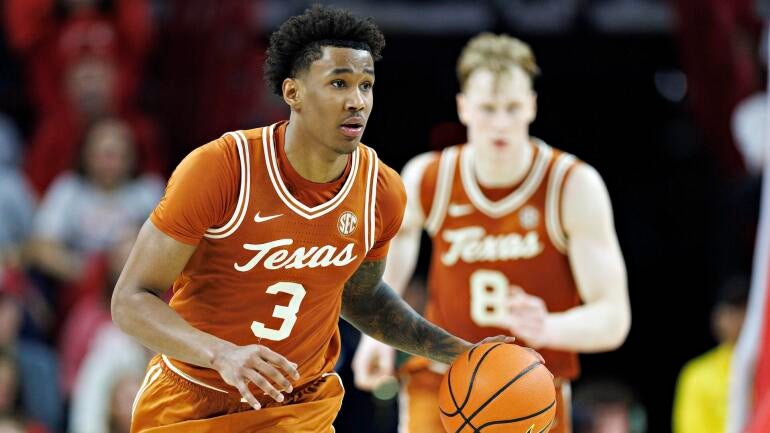
Midnight struck early again for the Cinderellas. For the second straight season, all 16 teams advancing to the second weekend are from the high-major conferences. Before that, there had always been at least one mid-major or low-major program in the Sweet 16. The lone double-digit seed is Texas, and it's impossible to call an SEC power with one of the largest athletic programs in America a Cinderella.
So on one hand, that charm may be lacking. On the other hand, that could lead to some tremendous games. Last year's Sweet 16 featured three games decided by three points or fewer. It included a 100-93 road race between Duke and Arizona. It showed eventual champion Florida flexing its muscle, and it had the 241st edition of Kentucky vs. Tennessee, but it was the first time they had met in the NCAA Tournament.
And even if there's no traditional Cinderella story, let's not sleep on some of the best stories in college basketball, either. Nebraska had never won an NCAA Tournament game before this year. Now the Cornhuskers are not just into the Sweet 16, but they're facing an Iowa team with a coach (Ben McCollum) and best player (Bennett Stirtz) who were in Division II two years ago.
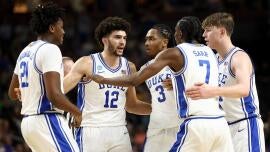
Storylines abound. Underdogs will look to prove their first two games were no fluke. Here's how each can keep its respective run going.
(NOTE: All betting lines via FanDuel Sportsbook; all per-possession numbers via Synergy Sports.)


(11) Texas vs. (2) Purdue
Thursday, March 26, 7:10 p.m. on CBS
Line: Purdue -6.5
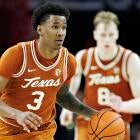
Keys for Texas: Pressure Braden Smith to be a scorer; attack the basket
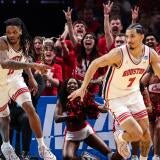
Purdue owns the No. 1 offensive efficiency in the nation. With Division-I all-time assists leader Braden Smith at the wheel, the Boilermakers can turn good looks into great ones via a flurry of Fletcher Loyer 3s, Trey Kaufman-Renn push shots and/or Oscar Cluff finishes near the rim. When needed, Smith can be a scorer, too; he's shooting a career-best 50% inside the arc this season and a solid 37% beyond it.
Still, the first way to slow the Boilermakers is to limit the engine. Smith shot just 3 for 12 -- and 0 for 4 from 3 -- against Miami and committed eight turnovers. The Hurricanes' length and activity level presented problems, even though Purdue eventually won.
Purdue scores 1.24 points per possession with its pick-and-roll rollers, which is in the 93rd percentile nationally. It scores just 0.75 points per possession with its pick-and-roll ball handlers (usually Smith), which is in just the 21st percentile. Miami did a solid job of not hedging screens too hard -- Smith will find the open man -- or playing too deep a drop. If Smith is going to hit contested jumpers, Texas might just have to tip its cap. In general, though, Chendall Weaver and Jordan Pope will be crucial defensively.
Offensively, the Longhorns have to get to the basket. Purdue isn't anything special protecting the rim -- top shot blocker Daniel Jacobsen has hardly played of late, though perhaps he finds his way into the rotation against Matas Vokietaitis -- and has struggled to defend guards who can get downhill. With a relative dearth of outside shooting, Texas has to get to the basket off drives, cuts and post-ups. It's a big ask, but not an impossible one.
(9) Iowa vs. (4) Nebraska
Thursday, March 26, 7:30 p.m. on TBS
Line: Nebraska -1.5
Keys for Iowa: Close out hard; get a Bennett Stirtz masterpiece
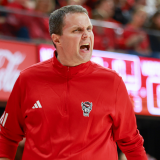
Iowa and Nebraska are not that different. Neither team is uber-athletic, and both teams want to spread opponents out. The Hawkeyes won a five-point game in Iowa City in February, and the Cornhuskers won by nine in overtime in Lincoln a month later. That's why, despite the seed difference, this is nearly a toss-up.
There are two significant differences, though. One is the offensive ideology. Iowa wants to spread things out and let Bennett Stirtz go to work with a screener, whether to attack downhill, pull up for shots, spray out to shooters or find cutters, rollers or poppers. Nebraska, meanwhile, doesn't have such a fulcrum, and it really leans into the 3-pointer. The Cornhuskers have the country's sixth-highest assisted field goal percentage and its 12th-highest 3-point rate.
In its loss at Iowa, Nebraska shot an abysmal 15.4% on spot-up shots. It was the Cornhuskers' worst mark this season. Good shooters missed good looks, yes, but good shooters also missed tough looks. Iowa did a good job getting out to contest shots, something Nebraska's defense does very well, too.
On the other end, Stirtz was relentless. He finished with 25 points; no one else on Iowa had more than 10. In the second matchup, Stirtz had just 11 points. He will have to be effective driving downhill and scoring in isolation. In the first meeting, he had 14 points in isolation. In the second, he had just two.

(4) Arkansas vs. (1) Arizona
Thursday, March 26, 9:45 p.m. on CBS
Line: Arizona -7.5
Keys for Arkansas: Force 3s, limit Montiejas Krivas on the boards
There are few worries about Arkansas' offense. The Razorbacks, led by freshman phenom Darius Acuff Jr., can score with anyone. Rather, this will be a tall task, literally and figuratively, for the defense.
For as outstanding as Acuff and Meleek Thomas can be offensively, they can be similarly frustrating defensively. The Razorbacks ranked in the 33rd percentile nationally defending pick-and-roll ball handlers, in the 26th percentile defending transition possessions and in the 13th percentile defending cutters. The team as a whole is liable to miss assignments on the boards, too.
That doesn't bode well, considering Arizona has a top-five offensive rebounding rate. Tobe Awaka is an absolute bulldog down low on the offensive glass, and Motiejus Krivas was terrific in the second round with an 11-point, 14-rebound (nine offensive) double-double against Utah State. When the Wildcats do get on the boards, Arkansas can't allow anything easy. Arizona is a poor free-throw shooting team.
The Razorbacks also need to limit dribble drives, which is much easier said than done. The Wildcats are a decent 3-point shooting team, but they don't want to shoot many of them. They're 363rd in 3-point rate this season. Unless it's Brayden Burries, the Razorbacks might be best served by sagging off and focusing more on preventing drives and cuts.

(3) Illinois vs. (2) Houston
Thursday, March 27, 10:05 p.m. on TBS
Line: Houston -3.5
Keys for Illinois: Bring toughness, strength to every aspect
This Houston team isn't exactly like prior Kelvin Sampson squads, but it's not far off. The Cougars don't hit the offensive glass quite as well as previous iterations, nor do they defend the 3 or the rim at quite as high a level. This isn't meant to be a shot, by the way. In many cases, Houston was a top-five team in these areas and has fallen merely to the top 30 or so.
What Houston still does as well as anyone is bring toughness, physicality and heady guard play. It is absolutely grueling to play this team. The Cougars will force you to work every possession on both ends of the floor, and they will bump you and bother you to no end. They don't give up anything easily.
Illinois has to make sure it attacks this game with the same vigor and intensity. It starts on the glass. In all eight of their losses, the Illini ceded a 25% or higher offensive rebounding rate. Despite ranking first in KenPom's average height metric, Illinois is just 32nd in defensive rebounding rate. Every member has to be keyed into the defensive glass, especially Ivisic brothers Tomislav and Zvonimir.
The toughness factor has to be factored in everywhere. Kingston Flemings, Emanuel Sharp and Milos Uzan form as tough a backcourt as it gets in college basketball. Can Illinois hold up, especially in the midrange? Can they keep track of Sharp from the outside? There have been a few times this season where Illinois got outworked, out-communicated, and, in turn, outplayed. It can't happen again.

(5) St. John's vs. (1) Duke
Friday, March 27, 7:10 p.m. on CBS
Line: Duke -6.5
Keys for St. John's: Use the press to your advantage; surround Cameron Boozer
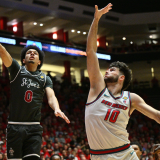
St. John's presses at one of the highest rates in the nation. The Red Storm flummoxed Northern Iowa in the first round and then forced Kansas into 16 turnovers in the second round. Rick Pitino's group can hope to do the same against a Duke team missing its top point guard in Caleb Foster. Cayden Boozer has very much stepped up in Foster's place and was particularly terrific in a first-round scare against Siena, but he is not nearly the shooter (28% from 3) that Foster (40%) is. Expect St. John's to be well aware and well-trained to limit the smaller Boozer's penetration and, when he does penetrate, to stick to Isaiah Evans like glue.
Then there's the larger Boozer. Cameron Boozer is the Player of the Year. He has been phenomenal. He's smart, he finishes around the rim, he has a tremendous feel for the game, and he can shoot it from deep (40%) if needed. He is simply a winner. He is not, however, super tall nor super athletic. The return of Patrick Ngongba II is massive for Duke, if only to take some of the post work and physical beating off of Boozer. Over the past five games, Boozer has played 83% of Duke's center minutes. Ngongba, who played 13 minutes in the second round in his return from a foot issue, should be able to shoulder a heavier minutes load.
When Boozer does inevitably get the ball, though, the Johnnies have a bevy of options -- Bryce Hopkins, Dillon Mitchell, Zuby Ejiofor and even Ruben Prey -- to use. And they should use all of them. The more collapsing on Boozer they do, the more he'll have to feed someone else. The Blue Devils have some qualified "someone else" options, mainly Evans, but putting the pressure on that group to step up is a key to pulling off the upset.
(4) Alabama vs. (1) Michigan
Friday, March 27, 7:35 p.m. on TBS
Line: Michigan -9.5
Keys for Alabama: Force mistakes; spread Michigan out and drive
For all the frustrations (defense inconsistency) and distractions (Aden Holloway), Alabama is back in the Sweet 16, and the Crimson Tide are doing it just how Nate Oats likes. They play fast, they shoot a ton of 3s, and they hit the offensive glass. That third ingredient, though, has seen a recent surge. The Crimson Tide posted a 45% offensive rebounding rate in a first-round win over Hofstra and a 46% offensive rebounding rate in a second-round win over Texas Tech. Those are three of the team's five best performances all year.
The Crimson Tide is experiencing this boost in part because without Holloway, there are more two-big lineups on the floor. But they also place five capable shooters on the floor almost every time. With the floor spread, wings can shoot in from anywhere to hit the glass, and Aiden Sherrell and other bigs have more space to attack, too.
Alabama also does an excellent job taking care of the ball, something that can't be said for Michigan. Alabama doesn't typically force a ton of turnovers, but perhaps they can against Elliot Cadeau and Co. When they can get turnover and stops, the Crimson Tide has to run and attack before bigs Aday Mara and Morez Johnson Jr. can get set. Then they have to spread the floor to drive to score or pass. Michigan's defense can get a little sloppy when it allows guard penetration and kick-outs.

(3) Michigan State vs. (2) UConn
Friday, March 27, 9:45 p.m. on CBS
Line: UConn -1.5
Keys for Michigan State: Attack in transition; own the glass; hit some 3s
Michigan State is once again terrific in transition (91st percentile nationally), on the glass (93rd percentile nationally on putbacks), and in Jeremy Fears Jr., they have a superb point guard who leads the nation in assist rate, gets to the line a lot and can make high-difficulty shots.
UConn defends well in transition, too, but Michigan State will want to open it up when it can; the Huskies play at one of the slower paces in the nation.
Where Michigan State could have a decided advantage is on the glass. The Spartans are a top-10 offensive-rebounding unit and the No. 1 team in the country in defensive rebounding percentage. UConn has had some struggles controlling the defensive glass this year, and a few extra possessions here or there could help Michigan State overcome its shooting disadvantage.
Speaking of that shooting disadvantage, Michigan State will need to mitigate it as much as possible. The Spartans are 21 for 46 (46%) from 3 in the NCAA Tournament. If they can keep the hot shooting going -- keep an eye on Trey Fort, Jaxon Kohler and Jordan Scott in particular -- they are a difficult guard.


(6) Tennessee vs. (2) Iowa State
Friday, March 27, 10:10 p.m. on TBS
Line: Iowa State -4.5
Keys for Tennessee: Take care of the ball; pound the boards; get Nate Ament going
Tennessee's biggest task against Iowa State will be taking care of the ball. The Volunteers rank 225th in turnover rate this season. The Cyclones are fourth in turnover rate forced. It is by far the largest disparity between these two teams. Iowa State's guards defend like crazy and rotate even better. It sometimes feels like the Cyclones have six or seven defenders on the court -- the energy level is that good.
Then there's the big advantage Tennessee has: The Volunteers are the top offensive rebounding team in the nation, grabbing nearly 45% of their misses. Iowa State isn't the best defensive rebounding team (65th nationally), and its best defensive rebounder, Joshua Jefferson, is dealing with an ankle injury. Even if he can play, it's hard to imagine he's 100%. Jaylen Carey, JP Estrella and Felix Okpara should feast.
Finally, Nate Ament absolutely has to get going. He is 5 for 27 from the floor (and 1 for 9 from 3) over his past three games. He didn't score in the opening round against Miami (Ohio). He can get to the line, but Iowa State generally does a very good job defending without fouling. Ament's size and midrange game lend themselves to a "good offense beats good defense" idea, but that offense has to get back to being good.