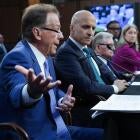


In the last few weeks, we have seen the culmination of months (if not years) of lobbying by college administrators, boosters, coaches and local politicians to "fix college sports" with the hearings on the Protect College Sports Act. The goal is to save college sports from the ills of conference realignment, player compensation, the transfer portal and a host of other issues.
But who will protect college sports from the judicial system?
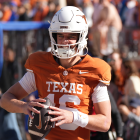
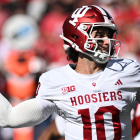
Monday's decision by Lubbock judge Ken Curry to grant a temporary injunction against the NCAA that will allow Texas Tech quarterback Brendan Sorsby to play football in 2026 after admitting to gambling not only on college sports, but on games involving his own team while a student at Indiana and Cincinnati, is one of the most shocking decisions I've ever heard. Based on the reactions I've seen and heard from around the college football world, I am not alone.

Even Tom Mars, an attorney who has made a living out of taking the NCAA to court and wiping the floor with it, couldn't believe it.
"In 40 years as a lawyer, I've never been as shocked and surprised by a court ruling," Mars told ESPN.com's Pete Thamel when asked for a reaction.
If even Tom Mars is looking at this ruling like the system has lost its mind, maybe it's worth asking whether the system has lost its mind.
In the history of sports, no matter which one, there's always been one very clear and steadfast rule that's been ruled on consistently: nobody who partakes in the sporting event -- be it player, coach, or official -- can wager (legally or otherwise) on the outcome of the event. The idea that outcomes could be deliberately influenced by participants is an existential threat to sport itself.
And while I struggle to find anything sensible in Judge Ken Curry's decision from a sports-integrity standpoint, I'm hopeful there could be a positive outcome.
Perhaps this jolt to our collective consciousness is precisely the jolt needed to get Congress to come together and do the one thing that can help protect college sports immediately.
The truth about a lot of the issues covered in the Protect College Sports Act is that they're not actually problems for college sports. They're mostly inconveniences. The true problem college sports faces right now is that judges like Ken Curry have the ability to turn the system on its head at any given time, and it leaves the NCAA powerless and unable to steer a large, unwieldy ship.
The NCAA needs a limited antitrust exemption. Not a blank check to return college sports to the old days, and not the power to do whatever it wants simply because it says it's in the best interest of college athletics. But it needs enough legal cover to enforce basic eligibility and integrity rules without having every decision relitigated in a friendlier jurisdiction.
That is the advantage professional sports leagues have in moments like this. Their rules aren't always perfect, and their punishments aren't always universally applauded, but their authority is clearer. Their gambling policies exist within collectively bargained systems, contracts, arbitration procedures and league disciplinary structures that give them a stronger foundation than the NCAA currently has.
Surely the members of Congress, whether Democrat, Republican, Independent, or Pastafarian, can all agree on the idea that college athletes should not be allowed to bet on their own games. Perhaps this is the one issue that causes them to put their own personal agendas to the side for a while and grant the NCAA the power to not only create rules, but enforce them.
College sports do not need Congress to protect them from athletes making money, players transferring or conferences chasing television dollars. It needs Congress to protect the basic authority to enforce rules everyone claims to believe in -- starting with the one rule every sport has always understood: you cannot bet on games you can influence.
If you truly want to protect college sports, you have to grant the NCAA the ability to do so first.