College football's transfer portal has spun out of control
With more than 3,350 players -- roughly 25% of the FBS -- in the transfer portal, the sport is operating as unregulated free agency with no calendar, no enforcement and no leadership

•
7 min read
Put on your helmet and get ready for war: only the strong will survive.
That's the mindset college football coaching staffs and personnel departments across the country are dealing with in the no-holds-barred era of the transfer portal, which holds over 3,350 players as of Wednesday afternoon -- a sum that is about 25% of all FBS players.
The portal is "amateur" free agency without guardrails disguised under the veil of the House v. NCAA antitrust settlement that was supposed to -- legally -- provide players with their rightful piece of a multi-billon dollar operation.
At least most have stopped pretending the "student-athlete" term still exists within the sport.
"Money is at an all-time high. (The) number of entries are over the top and agents have all the leverage," one power conference personnel director told CBS Sports this week. "You better hope your school has full revenue share, the collective is fully-operational and healthy, and your administration is prepared and fully capable of navigating this ever-changing landscape."
Since the end of the regular season, we've already witnessed several first-time happenings that are only going to increase with further damage done until changes are made at the NCAA level. College football now lives in a world dominated by terms that weren't part of the vernacular as recently as five years ago, phrases like CSC (College Sports Commission), MMR (multimedia rights), revenue share, collectives, buyouts, agent fees and incentives.
Remember the Jaden Rashada saga from 2023 after the elite quarterback prospect originally committed to Miami before signing his LOI with Florida and later was released by the Gators? That was filed under the "crazy" label shortly after the portal's infancy, which officially began in 2019, and makes what is happening this cycle look rather tranquil by comparison.
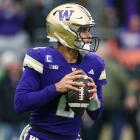
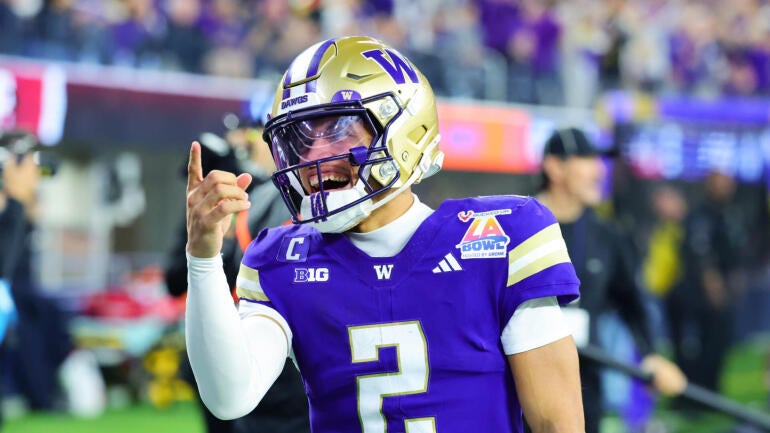
The latest bombshell that will spark calls for oversight is Washington quarterback Demond Williams' decision to enter the portal a couple days after signing a new, binding contract with the Huskies. Washington is planning to pursue any and all legal avenues to enforce the terms of that deal, according to ESPN.
Surprise! LSU is reportedly hoping to swoop in and at least get a visit from Williams as a "team to watch" after recently hosting prized Arizona State transfer Sam Leavitt. Wisconsin sued Miami over the summer for alleged tampering and now the Huskies are expected to submit evidence of similar under-the-table plays from another, unnamed program.
This really is a gunfight at the O.K. Corral this cycle and if you don't have cash on hand and aren't shy about going over established market rates for players, it's going to be difficult to keep up. The Williams news is the tip of the iceberg during what's been a furiously-paced last few weeks:
- Texas wideout Parker Livingstone, the team's third-leading pass catcher this season and roommate of Arch Manning, signed with arch-rival Oklahoma out of the portal. Texas and Livingstone were at loggerheads over money.
- Veteran Oregon running back Jayden Limar, who recorded the Ducks' longest play from scrimmage during their College Football Playoff quarterfinal win over Texas Tech, left the team for the portal two days ahead of the semifinals. He's the second ballcarrier to leave Oregon during the postseason, joining Makhi Hughes, who has since signed with Houston.
- More than a half-dozen Ohio State players left the program in the hours following the Buckeyes' quarterfinal playoff loss to Miami, including former five-star defender C.J. Hicks and backup quarterback Lincoln Kienholz, who landed at Louisville. Tight end Jelani Thurman allowed news of his intent to hit the portal to go live seconds after the Buckeyes lost.
- South Carolina announced the return of standout quarterback LaNorris Sellers days after signing new offensive coordinator Kendal Briles, only to see nearly all of the team's offensive line talent bolt to the portal thereafter, including starting left tackle Josiah Thompson, right guard Trovon Baugh and right tackle Tree Babalade.
- After Louisville running back Isaac Brown announced his intention to hit the portal last week, a source told CBS Sports the Cardinals bought themselves time during the negotiation process by "slow-playing" the processing of his paperwork to halt visit opportunities. Brown resigned with the Cardinals despite heavy interest from Texas and Ole Miss, citing "loyalty" for his reasoning.
- Ole Miss stiff-armed Lane Kiffin and LSU to retain running back Kewan Lacy, who scored an SEC-leading 23 touchdowns this season and was considered a top priority this cycle for the Tigers and the Rebels' former coach.
And those are just the most-newsworthy happenings. Flip over enough boulders around college football and you'll find various other wild portal-tilted stories scurrying about. There are few fanbases happy with the current state of affairs.
How Ole Miss' roster, infrastructure emerged stronger on the other side of 'Portal King' Lane Kiffin's exit
John Talty
There's a common misconception between the mandated $20.5 million revenue share cap and what programs are actually spending on their rosters ahead of the 2026 season. There's been a promise for stricter enforcement of NIL deals at the NCAA level, which includes a clearinghouse aimed at making schools prove they're paying "fair market value" with contract.
That's intended to curb "pay-for-play" schemes between boosters and players, but is that really happening? The better question: is the NCAA brave enough enforce something and prepare to jump through legal hoops against universities to have it resolved?
"You better be a former NFL executive with a clear understanding of the salary cap and contract language so you can advise your administration on how to circumvent things," one college football advisor with a front office role said. "Otherwise you're going to get run over."
College administrators were hopeful that consolidating the portal into one window and punting it to January (after most of the bowl games) would allow their coaches to focus on their own rosters and allow fans to focus on the on-field action. But portal happenings went down well before it opened Jan. 2. Players and coaches in December balanced the high school signing period with postseason games (for some) and uncomfortable end-of-season meetings that have morphed from frank discussions with their coach about areas to improve and opportunities ahead to ruthless bargaining table experiences, where some players are told they can stay with their team for free -- meaning they are essentially cut -- and other players, and their parents and agents, tell whichever coach sitting across from them that they're off to portal-land for a price tag their incumbent school can't dream of touching.
For all parties involved, it is an utter nuisance.
Then you remember the historic coaching carousel, which this year introduced a new twist of coaches leaving for other jobs before a playoff run, and you have a sport that looks better than ever on the field but uglier than ever outside those precious 60 minutes of game time.
There's lack of leadership, no directives and certainly no understandable rules or justifications for why things are the way they are within the sport.
"The portal isn't the issue, it's the calendar," one Power Five head coach told CBS Sports.
There's some thought that the portal should just go to the spring, before or after practice, but would that really stop players from leaving during the winter? The NCAA scares nobody, after all.
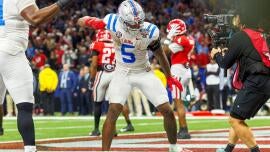
It's a messy time of the year for a sport that has already extended its postseason to Jan. 19. Hours after Ole Miss beat Georgia in the Sugar Bowl last week, first-year coach Pete Golding and what remains of a coaching staff that did not bolt to LSU had to worry about their 2026 roster -- not their upcoming playoff opponent. Just consider the lede of my colleague John Talty's story this week about Ole Miss staving off LSU's roster creep.
Moments after Ole Miss' thrilling Sugar Bowl win over Georgia, the first person Walker Jones found on the field was newly minted Rebels hero Lucas Carneiro.
Carneiro had just hit the game-winning 47-yard field goal to send Ole Miss to a national semifinal and one win away from the national championship game.
When Carneiro saw Jones, the executive director of the Grove Collective, a big smile broke across his face amidst the exuberant on-field celebration.
"I'll call you tomorrow," Carneiro said with a grin.
"You better," Jones replied.
"I've never been so happy to get that call the next day," Jones told CBS Sports this week.
This is what the sport's figureheads have created. The transfer portal has been an ultimate disruptor, with consequences both good and bad, but the current model, combined with unchecked pay-for-play is unsustainable.