Darian Mensah, Duke settlement exposes flaws of NIL contracts as schools fight to protect investments
Why signed NIL agreements will never fully protect college football programs from keeping their stars in place

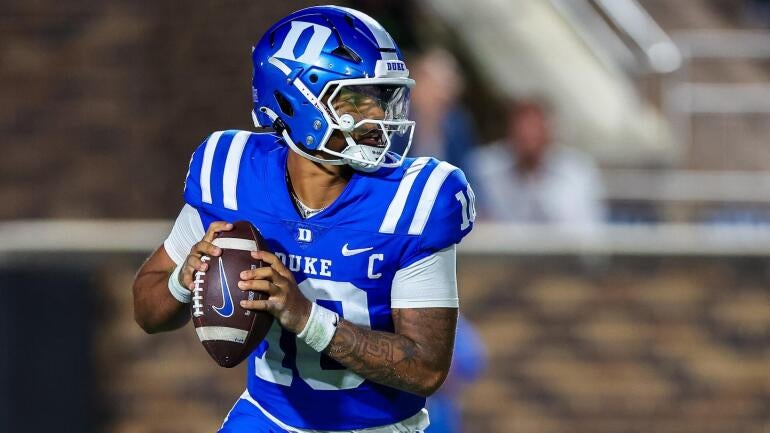
One of the most consequential and contentious transfer decisions in college football history was publicly resolved Tuesday morning via a statement from Young Money Agency.
If that's not representative of where college football is in 2026, I'm not sure what is.
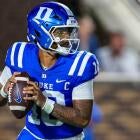
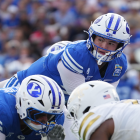
Darian Mensah and Duke settled out of court, with the Blue Devils opting to drop a lawsuit against their star quarterback. The settlement is expected to involve Mensah paying a significant sum to break out of the second year of a $4-million-per-season contract he signed with Duke last offseason when he transferred in from Tulane.
A source close to the situation labeled it "one of the biggest resolutions" in college sports.
Mensah is free to transfer to another school -- Miami is his expected destination -- and Duke gets to move on with a payout it can use to build its roster and defend its ACC championship.
Mensah got what he wanted.
Duke, which made a huge bet on Mensah, did too -- sort of.
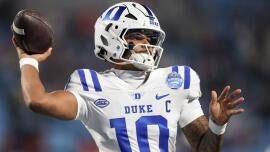
Mensah led the Blue Devils to an ACC championship. But his departure from Duke speaks to the fragility of contracts in college athletics and the brutal timing that can come with it.
Even armed with a new cash reserve, Duke can't really do anything with the money. The portal is closed. Mensah, by deciding to enter in the final hours of the sole portal window on the calendar, put Duke in an incredibly difficult position with no obvious options to replace him.
The Blue Devils ended up with a commitment from San Jose State transfer Walker Eget, but Eget isn't eligible yet as he awaits word from the NCAA on whether his waiver request for an additional season will be granted.
Said one Big 12 general manager when asked for his reaction to the Mensah situation: "I'm sure he didn't just decide on that Friday at 4 p.m. he was going into the portal. There had to be talks that led up to it."
That's the thing about college football: A contract doesn't always mean a player is locked in.
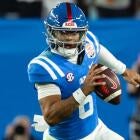
Think about the final days of the 2026 portal cycle. In addition to Mensah, Ole Miss contested the portal entry of star edge rusher Princewill Umanmielen because he had signed a new contract a few days prior. The Rebels eventually entered him into the portal and Umanmielen transferred to LSU, requiring a $600,000 buyout payment to do so. At the same time, Ole Miss worked to flip linebacker transfer Luke Ferrelli, who had begun classes at Clemson before deciding to reenter the portal and sign with Ole Miss.
Clemson coach Dabo Swinney even alleged Rebels coach Pete Golding texted Ferrelli and asked, "What's the buyout?"
"Signed contracts mean nothing," a Big Ten general manager said. "You just hope you're with a state and a university that will stand by you. Still, you have to look at these as if every year is a new year."
It's all part of a chaotic sport structure that puts schools in a near-impossible position in terms of locking a player into the school.
Said another Big 12 general manager: "I think that our sport is falling apart the way blatant tampering is happening around the country and there seems to be zero accountability. Where does it stop if this is allowed to happen without full liquidated damages being sought after? Would be curious to see how many people tamper with players to unenroll post spring ball if they have unexpected needs."
That's a fear of coaches and personnel staffers around the country. The portal window's closing doesn't necessarily prevent players from transferring.
Last year, Xavier Lucas (Wisconsin to Miami) and Jake Retzlaff (BYU to Tulane) both transferred without ever actually entering the portal. With no spring window and plenty of motivated teams to fill roster needs, you could see a run of players opting to do the same to change schools.
That's why, at least among general managers, the way Duke handled the Mensah situation is celebrated.
Schools have been reticent to sue their athletes over breach of contract because of any potential recruiting ramifications that can come from that action. But it's also the only way schools can protect themselves.
"We can hold guys accountable for up to 100% of remaining contract value if they decide to leave and we plan to do that for any of our top guys," a second Big Ten general manager said. "Only leverage we have."
That's the thing about "contracts" in college athletics. They're not really contracts that bind an employee to an employer.
College athletics continues to operate in a gray area where its labor isn't technically labor. Athletes are at best glorified contractors who sign away their name, image and likeness rights to schools to get paid. They're not being compensated for football. They're being compensated for schools licensing their NIL.
It's a subtle difference but a huge one legally. The NCAA's membership, to this point, has refused to label its athletes as employees. That comes with protections for the NCAA -- both legal and financial -- but it also leaves schools vulnerable when these contracts are tested.
Mensah is not a Duke employee. If he were, the Blue Devils would have a much stronger argument that Mensah's exit caused the school irreparable harm -- a key term in any arbitration that would have occurred between the two sides. It would obviously harm Duke for Mensah to go to a competitor like Miami. But when Mensah isn't paid to play football? That's a much harder argument for Duke (or any school) to make.
In talks with several general managers following the settlement of the Mensah situation, all were please Duke stood its ground. Said a third Big 12 general manager: "I thought it was a good step in the right direction that contracts mean something."
But there's still the looming reality for all of them that the contracts only protect the schools so much.
Mensah's Duke contract was historically large at the time, and he had immense success in Year 1. But it didn't prevent him from leaving for a rival.
Until athletes are employees and sign binding contracts with a school for their football rights, college athletics is likely to see many similar situations like this in the future.
It had the second Big 12 general manager almost wishing an athlete would fully take a dispute like this through the court system and establish a precedent that changed the sport forever.
"We need one of these transfers to blow up college football, and we can build it back from the ground up," he said.