

As the Protect College Sports Act awaits its fate in the House of Representatives, the top programs in the ACC are fighting for changes that would stop another round of conference expansion and make it harder for member teams to leave for the Big Ten or the SEC.
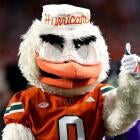
Among the schools leading the charge to change the expansion cap provision in the bill is the University of Miami, where president Joe Echevarria doesn't mince words about the Hurricanes' desire to be part of college football's elite.
Echevarria discussed the Hurricanes' future plans in an extremely candid interview with Yahoo Sports. He explained that their desire to join the SEC or Big Ten has nothing to do with displeasure with the ACC, but rather the realities of the current college football landscape -- bluntly saying "we sit in the second tier."
"You cannot lock us into a conference," Echevarria says. "The fact is that we won about every game you could win last year and maxed out in revenue in our current [ACC] sharing model. And we made the same amount of money as other institutions [in the Big Ten and SEC] whose football programs operate at different levels of investment and performance."
The financial reality of modern college football is that the gap between the teams in the SEC and Big Ten and those outside -- even in the other two Power Four conferences -- is going to grow. The widening revenue splits between the conferences will only exacerbate the challenge of keeping up spending for those in the ACC and Big 12. For a program like Miami, they simply want to be in a conference where everyone else is as committed to spending as they are.
As for where Miami would like to go, Echevarria waded into waters few school officials would on the record and explained why the Big Ten is an ideal fit academically, while the SEC obviously lines up geographically.
"As an AAU [Association of American Universities] research institution, we line up with the Big Ten's profile," he says. "We have an exceptionally strong profile that compares favorably with leading research institutions across the country. On the geography idea, we line up better with the SEC."
The geography bit may also not be that big of a hurdle for the Big Ten, given that the conference already stretches coast-to-coast. Adding Miami could be intriguing for a conference that's only really lacking a footprint in the Southeast at this point, while the SEC already has a presence in the state with Florida.
As Miami, Florida State, Clemson, North Carolina and others push to raise the conference expansion cap in the bill from 20 teams to 22, paving an easier path for the ACC's best to leave, Echevarria explained the Hurricanes are also considering what Plan B looks like if that next round of conference realignment doesn't happen.
"If we have to go independent, I like our chances because we are a national brand," Echevarria says. "I wouldn't like to do that because scheduling [other sports] is really tough. It's great for football but what about track, volleyball and the golf team?"
Conference realignment discussions rarely happen publicly, largely because if they fall apart, you run the risk of upsetting your current conference. However, that Band-Aid has already been ripped off by the top teams in the ACC, who have sued the conference to create a better exit fee structure, and the growing gap in spending between the top and bottom -- in both football and basketball -- makes it clear what programs are and aren't willing to chase that elite status.
If there were any question of Miami's desire to get out of the ACC, Echevarria made it clear with his incredibly candid commentary on the situation. Now it's just a matter of waiting and seeing regarding the PCSA and the fallout from it either passing or failing to advance into law.