
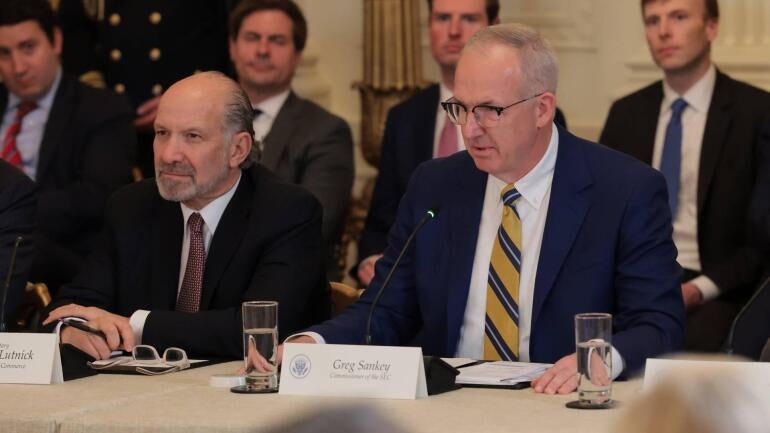
The SEC wants changes to the language of the Protect College Sports Act, which commissioner Greg Sankey believes will lead to more courtroom battles rather than fewer.
CBS Sports obtained a copy of a four-page memo Sankey sent this week to SEC presidents and chancellors outlining his concerns and suggested tweaks. The commissioner listed a set of objections that runs from the legal exposure of public universities to a provision on media rights that he believes unfairly targets the SEC and the Big Ten, and could lead to the elimination of the College Football Playoff.
"We support the overall objectives of the PCSA and continue to believe Congressional action is important," Sankey wrote.
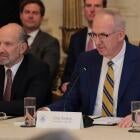
The goal, he said, is a system "that is fair, enforceable, and sustainable for everyone." Sankey and Big Ten commissioner Tony Petitti met with Sen. Ted Cruz, the bill's sponsor, via video call on June 4. The SEC memo was sent on June 8.
The league's first worry is the courtroom, where players have repeatedly beaten the NCAA and its conferences. The bill creates a private right of action -- the ability of athletes to sue -- and the SEC warns that letting those suits proceed against public universities could "effectively waive sovereign immunity," exposing state schools to new litigation. The bill also voids the pre-dispute arbitration agreements and waivers that schools have used to keep disputes out of court, language the conference says could invalidate agreements already in place with current athletes.
The provisions, Sankey writes, "are likely to increase litigation rather than reduce it."
The fix the SEC wants is broader legal protection. The national standards in the bill preempt state law only if they both conflict with and prevent compliance with the bill. Sankey writes there are "no clear compliance obligations" for inducements, tampering and non-NIL compensation. He wants those items included in the preemption, while also removing the requirement that a state law "prevent compliance" with the federal statute.
Simply put, college sports should be protected from lawsuits as long as its organizations and institutions act as authorized by the bill.
Sankey also said revenue-sharing payments to players should be governed only by a cap, not by additional tests such as a "valid business purpose or range of compensation." The cap works as implemented, he said. Where he credits the bill is in its treatment of collectives, folding them into the oversight regime as "associated entities" of their schools.
The loophole, the SEC states, lies in third-party deals through booster collectives and outside sponsors that operate beyond the cap. Without real guardrails, Sankey wrote, "any cap or system becomes ineffective."
The conference credits the bill for folding collectives into its oversight and for defining the web of boosters and donors it labels "associated entities." But it wants two things the draft doesn't deliver: a named authority to set and enforce the market-value standards the bill describes but never assigns, and disclosure that reaches a national body. As written, athletes report their deals only to their own campus, and schools pass only anonymized totals up to the NCAA.
"Disclosure to a national governing entity is critical to enable independent enforcement," the memo says.
The sharpest objections land in Title II, the half of the bill that rewrites the Sports Broadcasting Act of 1961 to let schools pool and sell their media rights together. The Big Ten and SEC believe the language unfairly targets them.
The SEC says it has no quarrel with other conferences pooling their rights, but reiterates that it does not want to be forced in. The memo warns that the pooling language, as written, "exposes the SEC to potential lawsuits, forcing the conference into the media pooling practice." The bill already says participation is optional, but the league doesn't trust the wording to hold.
"The voluntary nature of this legislation must be clearly and unequivocally stated," Sankey wrote.
Sankey says the current language would also allow other leagues to pool postseason media rights, effectively eliminating the College Football Playoff and forcing the SEC and Big Ten "to either play intraconference postseason tournaments or play only other non-pooling conferences or universities in the postseason to replace the CFP."
On top of that, Sankey urges changes to the football scheduling provision, which could limit matchup options for schools that opt into media pooling.
The bill, the SEC complains, "imposes a higher standard on the SEC and Big Ten" than on everyone else. The memo does not name the section, but the bill contains one that bars any conference with more than $1 billion in annual revenue from merging with or absorbing another.
The league's framing of its own complaint is careful.
"This feedback is not about preserving dominance," Sankey wrote, "but about rules being applied fairly and consistently."
Sankey told his presidents the conference is working with the Big Ten on "a more comprehensive analysis and prioritized set of recommendations."
The bipartisan Protect College Sports Act was introduced to the Senate on May 27. Two hearings in front of the Senate Commerce Committee have since occurred in Washington, D.C.. The bill is currently in the "markup" phase, where the involved parties are discussing changes.