Facing an uncertain future at QB, Miami will explore all options -- even names not yet in the transfer portal
With top option Ty Simpson recommitting to the NFL Draft, expect Miami to get creative in its search for a top-end quarterback to lead the team in 2026

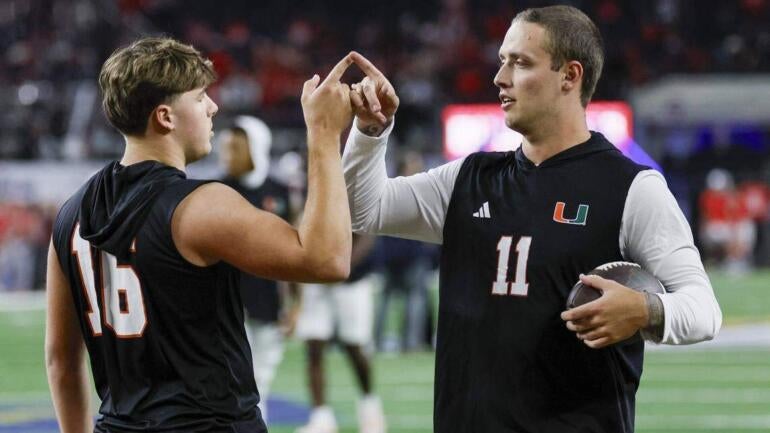
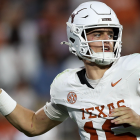
Miami has learned the hard way that quarterback certainty is a luxury, not a given. That lesson crystallized this week when Alabama quarterback Ty Simpson filed paperwork to remain in the 2026 NFL Draft -- confirmed by CBS Sports' Matt Zenitz -- officially removing one of the Hurricanes' most intriguing contingency plans from the board.
The move sent ripples through the industry. Miami, staring down a national championship opportunity and an uncertain future at the most important position in football, is not inclined to sit quietly and assume the solution is already in-house.
No. 10 Miami will face No. 1 Indiana on Monday night in the College Football Playoff National Championship at Hard Rock Stadium, a surreal setting that underscores both how quickly the program has risen and how fragile that ascent can be without the right quarterback. Over the past two seasons, the Hurricanes have leaned aggressively on veteran transfers to fuel their climb, pulling off moves few programs can match.
Miami convinced Cam Ward to withdraw from the 2024 NFL Draft, a decision that ultimately led to him becoming the No. 1 overall pick in the 2025 NFL Draft. The Hurricanes followed that by landing Carson Beck, who reversed course after initially declaring for the draft following four seasons at Georgia.
Both moves were transfer-portal coups. Both were calculated risks. And both worked exactly as intended.
That success is precisely why Miami has turned the quarterback market into a high-alert zone. Simpson was viewed as a potential next target, but that door is now firmly closed -- even after he turned down multiple offers "north of $4 million," including one reported $6.5 million package, according to AL.com.
This is not a staff content to let the board come to it. Miami is exploring every option, including quarterbacks not yet in the portal, with less than 72 hours remaining before the transfer window closes Friday night. Any school that currently rosters a top-20 quarterback in college football would be smart to make sure the ink is dry on their contract -- Washington having all the leverage in the Demond Williams Jr. saga is the only reason he is headed back to Seattle (and not perhaps to Miami). Standing still at quarterback is the fastest way to slip out of national championship contention.
Despite having bodies in the room, Miami understands it lacks a proven answer for 2026.
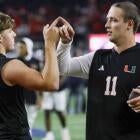
True freshman Luke Nickel, a four-star recruit and the No. 16 quarterback in the 2025 class, has attempted just one collegiate pass -- an incompletion against NC State. Redshirt sophomore Emory Williams has experience but limited production, totaling 813 passing yards, four touchdowns and two interceptions across 12 appearances and two starts. It's possible Williams would explore the transfer portal if Miami lands another veteran quarterback. Redshirt freshman Judd Anderson and incoming freshman Deron Coleman, both three-star prospects, round out the depth chart.
It is a quarterback room. It is not an answer for a program playing for a national title and expecting to remain in the CFP conversation annually.
That urgency helps explain why missing on portal targets stings more now than it would have a year ago. Arizona State transfer Sam Leavitt committed to LSU days after visiting Miami. Dylan Raiola, once linked to the Hurricanes, signed with Oregon. USC transfer Husan Longstreet was the best available quarterback option before also signing with LSU on Wednesday, Zenitz and Chris Hummer reported.
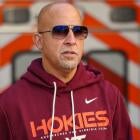
The numbers are not in Miami's favor. Only two of the top 30 transfer quarterbacks in Cooper Petagna's 247Sports portal rankings remain uncommitted, but Penn State transfer Ethan Grunkemeyer is widely expected to follow James Franklin to Virginia Tech. Tennessee transfer Jake Merklinger, ranked No. 27, is the only other option without a landing spot.
That raises an uncomfortable question Miami must confront now rather than later: What happens if the Hurricanes get this close to their first national championship since 2001 only to slide backward after striking out at quarterback?
The program has masked development gaps by landing ready-made answers through the portal. The approach has worked, but it is inherently volatile. The Simpson situation serves as a reminder that not every quarterback can be pried loose, regardless of resources or pitch. Sometimes the timing does not align. Sometimes the paperwork shuts the door.
Miami is not panicking.
The Hurricanes know exactly what they are: a national contender with high-level talent throughout the roster. They also know what they cannot afford to become: a program close enough to touch a title, only to reset because it ran out of options at quarterback.
That is why the phones remain active. And why, even as Miami prepares to play for a national championship in its own backyard, the Hurricanes are already looking ahead to 2026.
No assumptions. No complacency. Because at Miami, the margin between staying elite and slipping back into the pack is one quarterback decision away.