The ballot for the BBWAA portion of the 2027 Baseball Hall of Fame vote was revealed on Monday, featuring 13 holdovers and 14 newcomers.
The full ballot, in alphabetical order, is Bobby Abreu, Jake Arrieta, Jay Bruce, Mark Buehrle, Asdrúbal Cabrera, Starlin Castro, Wade Davis, Brett Gardner, Cole Hamels, Félix Hernández, Torii Hunter, Jon Lester, Andrew Miller, Dustin Pedroia, Andy Pettitte, Buster Posey, Alex Rodriguez, Francisco Rodríguez, Jimmy Rollins, Pablo Sandoval, Ervin Santana, Kyle Seager, Joakim Soria, Chase Utley, Omar Vizquel, David Wright and Ryan Zimmerman. Newcomers to the ballot are in bold.
As a reminder, players must receive votes on at least 75% of the ballots cast to be inducted into the Hall of Fame with the 2027 class. Those who get at least 5% of the vote can remain on the ballot the following year, and so on, for a maximum of 10 voting cycles. Players who are on the ballot for 10 years without getting 75% of the vote, in addition to players not getting 5% of the vote, fall off the ballot in ensuing years, though that doesn't mean the doors to the Hall are permanently shut.
The results will be announced on Jan. 19, with the induction set for Cooperstown over the summer.
Here's everything else you need to know about the Baseball Hall of Fame this offseason.
1. This isn't the only Hall of Fame vote this offseason
As alluded to earlier, there are two different votes each offseason. The BBWAA vote is for former players who have been retired from Major League Baseball for at least five years. It's the most common method in mainstream Hall of Fame ballot discussions. When you hear stuff like "first-ballot Hall of Famer," it means via the BBWAA vote.
Players who don't make it via the BBWAA vote can get extra chances via committees. That's how, for example, Jeff Kent made it last year. Formerly called the Veterans Committee, the Hall of Fame now uses Era Committees, which are divided into two categories: contemporary baseball (1980 to present) and classic (prior to 1980). The contemporary ballot is then split into two, one for players and one for non-players like umpires, executives, pioneers and managers.
Sure enough, this time around, it is a non-player Contemporary Baseball Committee, which looks at "managers, umpires and executives whose most significant career impact was realized since 1980."
- Sandy Alderson
- Dusty Baker
- Bruce Bochy
- Joe Maddon
- Lou Piniella
- Brian Sabean
- Ted Turner
- Bill White
We'll dive further into this group as we get closer to the Dec. 6 vote.
2. There is probably one first-ballot Hall of Famer
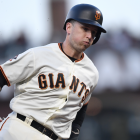
Giants legend Buster Posey joins the ballot, and he's one of those cases where I don't think a bunch of people need to delve deeply into his numbers. More than statistics, sometimes we get "feel" guys, as in, you just know he's a Hall of Famer. Posey qualifies there, I would think, for 75% of the electorate. We'll obviously do a deeper dive in the coming weeks, but even without the longevity component (Posey only played in parts of 12 MLB seasons), I think he's in.
As for the rest of the first-timers, the best case would be Jon Lester. Given the way a lot of similar starting pitchers have been treated in voting in recent years, my hunch is he'll be able to hang around on the ballot, but he has a major uphill battle in order to get in.
Then you're looking at Brett Gardner, Ryan Zimmerman, Kyle Seager, the short peak of Jake Arrieta and relief work of Andrew Miller. Good players worth mentioning, of course, but they won't sniff the Hall and it seems likely all behind Posey and Lester are one-and-dones on this ballot, as they'll fall short of 5% of the vote.
3. A-Rod playing out the string?
This is the sixth year for Alex Rodriguez on the ballot, which means it's the sixth time that I point out that we don't really need much time to go over his case. His numbers say he's one of the 10 best position players of all time, but his ties to PEDs are keeping him out to this point.
He did rise from 37.1% of the vote in 2025 to 40% last time, a new high-water mark. The progress is too modest to believe it's trending toward him getting in, but the number this year is certainly worth watching. If he somehow makes a leap to the 50% range, a deeper conversation might be in order.
4. Utley's big chance?
While some voters don't mind sending in blank ballots to prove some sort of nebulous point, most impose limits on themselves. Whether it's the actual rule of 10 or some voters saying they'll only vote, for example, for a maximum of three players on any given ballot, relatively weak ballots can leave openings for the best players to show huge gains. With Carlos Beltràn and Andruw Jones getting in last year and only one strong first-year candidate, perhaps Chase Utley can benefit.
Utley is only in his fourth year on the ballot, but he's already made significant gains:
- First year: 28.8%
- Second: 39.8%
- Third: 59.1%
He only needs to add 15.9 points after jumping nearly 20 last voting cycle. The situation is ripe for Utley to either get all the way in or get close enough to where he probably makes the Hall of Fame in 2028.
5. Watch those starting pitchers
Some of us are pushing to lower the Hall of Fame standard on modern starting pitchers, given the decreases in workload and how it affects their career numbers. We might be making some headway, but it's still tough sledding. Here are the holdover starting pitchers and their standing:
- Andy Pettitte got 48.5% of the vote in his eighth try last cycle. He started out at 9.9% and jumped more than 20 points last time around, but he still has a long way to go.
- Félix Hernández might be trending toward induction. He got 20.6% of the vote in his first year and jumped to 46.1% last year, his second ballot. Another big jump here and he has a real shot.
- Will Cole Hamels have a similar leap? He got 23.8% of the vote last year, his first on the ballot.
- Mark Buehrle was in ballot purgatory before last year, getting between 5.8% and 11.4% of the vote for his first five cycles, but he shot up to 20% last year. This is his seventh ballot and he'd need another major move to have realistic hope.
6. K-Rod and how it could relate moving forward
The bar for relievers to make the Hall of Fame is justly pretty high. We recently saw Billy Wagner make a late move and make it in his last try on the BBWAA ballot. Francisco Rodríguez has had four chances on the ballot and gotten between 7.8% and 11.8% of the vote thus far.
K-Rod ranks sixth all time in saves and has good rate stats. He's worth tracking as it relates to three active relievers. Kenley Jansen is third in saves with a similar number of innings pitched to K-Rod. Craig Kimbrel is fifth and has more than 100 fewer innings pitched. Aroldis Chapman is ninth and in the ballpark of Kimbrel in workload to this point.
If K-Rod continues to have trouble making headway toward induction, does that mean Kimbrel and Chapman will have trouble as well? What about Jansen?
7. Tracking the other holdovers
Who else is back on the ballot? A quick look:
- Bobby Abreu, who got 30.8% of the vote last year in his seventh try.
- Jimmy Rollins got 25.4% on his fifth ballot last cycle.
- Dustin Pedroia received 20.7% last year and it was his second ballot.
- Omar Vizquel is playing out the string at this point. His tally dwindled to 18.4% last year and this is now his 10th and final ballot.
- David Wright got 14.8% of the vote last year, his third ballot.
- Torii Hunter continues to linger just north of the 5% threshold. He got 8.7% last year in his sixth try.
8. Prediction
Posey is a lock. If the committee era chooses Bochy, Baker and/or Sabean, that would be some nice San Francisco flavor, too, right? I'll predict that committee ballot at a later date, though.
I'll also say Utley's good roll here continues with a relatively weak ballot (at least when you factor in what the PED stain has done to some guys).
On the player side, my 2027 Hall of Fame class prediction is Buster Posey and Chase Utley.