Jayson Tatum's second act is here, and it comes with a chance to reframe his career narrative
Tatum's return to the Celtics' title push will be one of the most fascinating stories for the rest of this NBA season

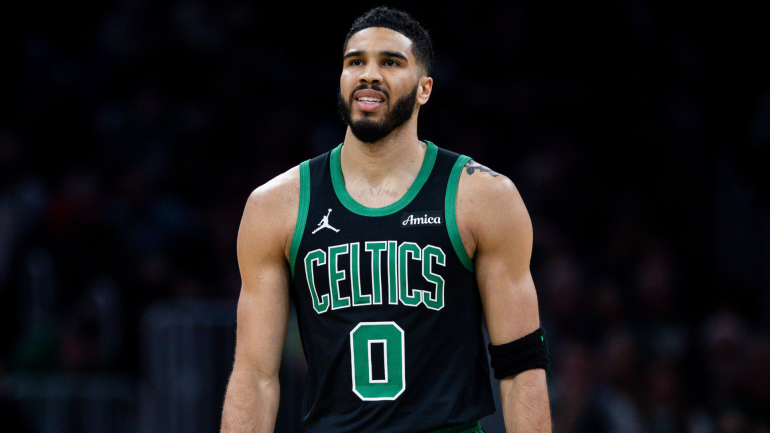
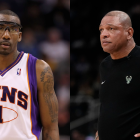
In the past week, prominent former NBA players have both argued that Jayson Tatum should be the face of the NBA and that he hasn't even been the best player in his long-standing partnership with Jaylen Brown. Neither narrative is new or broadly popular, but the existence of both in the same discourse points to a trend that has dogged Tatum throughout his career. We, as a basketball-viewing public, don't know how to talk about Jayson Tatum.
It's a simple enough exercise from a purely basketball perspective. Tatum is something of a blank check. His greatest strength is having no weaknesses. If Boston needs someone to score 45 in an elimination game? He'll do that. If it needs someone to guard opposing centers, rebound and get out of the way of a hotter teammate? He'll do that, too. The brightest stars tend to have the most organizational gravity. You play their style. You orbit around their strengths. The Nuggets are the Nuggets because they have Nikola Jokiċ. The Warriors are the Warriors because they have Stephen Curry. They're incredibly lucky to have those players but they're entirely beholden to them. They're entire organizational identity revolves around them. Could you ever imagine either of their teams starting a season 41-21 without them?
The Celtics aren't the Celtics because they have Jayson Tatum. The Celtics get to be the Celtics because they have Jayson Tatum. They have no stylistic constraints, no one-dimensional players whose value is tied to his. In an increasingly position-less league whose postseason very often comes down to punishing weak links, that versatility is priceless. The Nuggets are a Nikola Jokić team, but they have to be a Nikola Jokić team. The Celtics don't have to be a Jayson Tatum team because Jayson Tatum can be anyone.
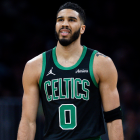
That's enormously valuable for Boston, but that doesn't make it especially compelling for the common basketball fan. This is, in essence, the story of Tatum's career. What makes a player valuable to a team trying to win championships does not fully overlap with what makes a player interesting to a sport's casual fans. To put it simply, Jayson Tatum -- who will return from a torn Achilles and make his season debut Friday night against the Mavericks (7 p.m. ET, ESPN/fubo) -- is boring.
The Celtics are fine with that. They've built an identity around it. They loved that the young star they drafted onto their winning team never needed to overwhelm it. He's had no controversies, created no distractions in the media, and before this season, never really missed games. His public persona mostly boils down to being a lifelong Kobe Bryant fan and a good father.
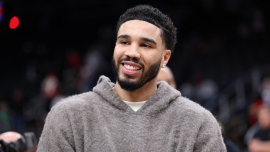
Boston fans have spent years arguing that players should be celebrated for things like that, but again, they make a player valuable, they may even make a player admirable, but they don't make a player interesting to a wider group of fans. He comes to work, does his job exceptionally well, and then goes home. Basketball is a sport, but the NBA is a television show, and while a chunk of its viewers are devoted enough hoopheads to appreciate a player solely on his on-court merits, the majority need compelling characters. They need a story, an arc.
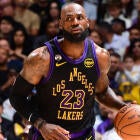
Through no fault of his own, Tatum has just given us so little to talk about that would appeal to those more casual fans. He's not the prophesied successor to Michael Jordan like LeBron James and Kobe Bryant tried to be. He hasn't changed the way the game is played as Curry has. He's not the charmer someone like Shaquille O'Neal was. He's not firing off takes on Twitter like Kevin Durant.
He's not even boring in the entertaining ways other players have been. Tim Duncan was the big fundamental. Nikola Jokić is so seemingly ambivalent about the trappings of stardom that we widely speculate about an early retirement so he can go spend more time with his horses. Kawhi Leonard has cultivated an air of mysterious weirdness that feels uniquely him. He has bizarre catchphrases like "the board man gets paid," and that allows for some hilarious mythmaking like the viral "apple time" story that Leonard sadly refuted. In their cases, it felt a bit more authentic. It never seemed like they cared what anyone thought of them. People are drawn to that.
That's never quite felt like the case with Tatum. Between his pale Kevin Garnett imitation after winning the 2024 championship and the Kobe Bryant cosplay, which almost feels like a photocopy of a photocopy at this point between Bryant's own imitation of Michael Jordan and the legions of other players dedicated to imitating the Mambe Mentality, Tatum has always given the impression that he cares about how he's perceived in the broader basketball landscape. He's even said as much. "The truth is, I envision myself as one of those guys—the LeBron, Steph, KDs," Tatum told reporters in a recent media availability. "I want the next generation to view me as that." But he hasn't quite reached the lofty level as players that they have, and he hasn't made up for in some of the ways his peers have.
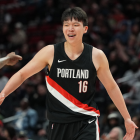
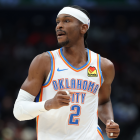
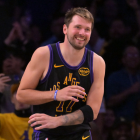
It's why less accomplished players keep lapping him in these hypothetical "face of the league" conversations. That's not strictly a basketball conversation, and the price of admission is more than on-court greatness. Anthony Edwards gets in it for his personality. Victor Wembanyama does for his one-of-a-kind physical proportions, and he's helped himself on this front by intentionally needling rivals. Sometimes circumstances take a player there. Tatum beat Luka Dončić in the Finals, but the stunning trade that shipped Dončić to the Lakers only made him a more interesting character in this league-wide drama. He's simultaneously sympathetic to some for getting shipped off of a team he didn't want to leave and a villain to others by virtue of being a Laker and for the amount of complaining he does toward officials.
He's easier for casual fans to talk about. So are Edwards and Wembanyama, and they all come with pretty straightforward basketball talking points. Want to rag on Dončić? Talk about his defense. Tell Wembanyama to take fewer jumpers and spend more time near the basket. It would be an outdated oversimplification, but it's the sort of criticism fans can get behind because it aligns with his sheer physical dimensions. There's not really a version of this for Tatum. There's no major area of his game that draws easy scrutiny aside, at times, from his shot-selection, and that's nothing compared to some of his peers.
In absence of these easier entry points, the conversation gets generic. You could apply some version of "is this player actually the best on his team?" or "this guy isn't appreciated enough!" to countless stars over the years. Tatum gets more of it because he offers less of everything else.
That's where his comeback offers a chance at a sort of critical reappraisal. There's no such thing as a silver lining to an injury, obviously. The Celtics had a chance to turn a championship into a budding dynasty last spring. Tatum's injury was the final nail in that coffin. We don't know what sort of long-term damage it could do to his career. We don't know how his return is going to affect Boston's increasingly realistic 2026 championship hopes.
But now, one of those easier entry points exists. There's suddenly a story here. Whatever's about to happen in Boston won't be boring.
The narrative arc here is easy enough to construct. Tatum has always been treated as something of a silver-spoon superstar. Drafted by one of the most iconic and successful teams in all of sports onto a roster that had just reached the conference finals, Tatum's professional career has involved less obvious adversity than most players of his ilk. His rosters have always been good. His teams have been well-run and eager to spend. They even drafted his sidekick in the same spot as him, one year earlier. His NBA career was born on third base. Even if he was capable of hitting a triple, he never quite had to prove it in the ways that a normal top draft pick would. Now, in the aftermath of one of the worst injuries an NBA player can suffer, he'll have the chance to do so.
Now we get to see Tatum attempt to climb back to the mountaintop, and to do so in a way no player ever really has. We've never seen a superstar rejoin a contending team midseason and help lead them to a championship. Even Michael Jordan failed on that front in 1995, and he wasn't recovering from a devastating injury. Tatum has led a team to a championship, but he's never really had the chance to make his own history like this. If he pulls this off, he has something no other player has. He's secured his place in history.
There's a good chance he'll fail. Maybe he won't be at full strength in time, maybe he'll disrupt the chemistry and style Boston has spent the season developing, maybe the Celtics will just run into a better team. This might not happen overnight. He might need years to make it back to the Finals. He may never do it. We don't know. But the average basketball fan is going to have a heck of a time watching him try. Sports fans love a comeback.
His idol, Bryant, is something of a template here. He was widely villainized after the breakup of his early 2000s dynasty with Phil Jackson and Shaquille O'Neal. Making it back to the top years later allowed him to rewrite the narrative. He even gave himself the Black Mamba nickname, and fans embraced it. There's a vulnerability that comes with any sort of comeback, one that makes it easier for fans to connect to a player, and in turn, for that player to shape the way they're perceived thereafter.
How much of any of this really matters is a matter of opinion. The job, fundamentally, is to win. Tatum does it as much as any of his peers, and that's a perfectly acceptable legacy on its own. He doesn't need any sort of external validation. But that doesn't mean he doesn't deserve it, and if anything good is going to come out of this injury, it's the chance that it helps fans fully understand and appreciate him not just as a player, but as a figure in the broader basketball picture.