The SuperSonics are (likely) coming back: How Seattle retained name, history while waiting for NBA's return
Seattle is one step closer to an NBA expansion franchise and a revival of the SuperSonics name


The NBA on Wednesday took another step toward returning to Seattle after a 20-year absence.
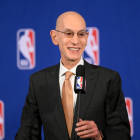
The board of governors unanimously approved a vote that will allow the league to begin accepting bids on two new franchises -- one in Seattle and one in Las Vegas -- with the expected price for the new teams expected to be between $7 billion and $10 billion.
While there are still a few stages left before anything is finalized, the NBA appears to want to move quickly on expansion. The 2028-29 season is the reported target date for when the new franchises would begin play, as both Las Vegas and Seattle have the arena infrastructure in place to help expedite the process.
The Las Vegas franchise will come with seemingly infinite possibilities for the team name, logos and branding. Where Vegas can do something new, which offers some creative freedom, they'll also face a big challenge in building something from scratch.
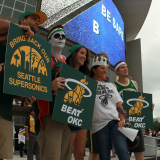
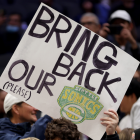
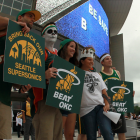
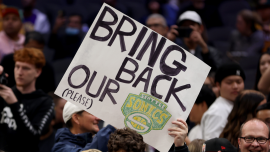
In Seattle, there is little doubt that the new franchise will take on the name and history of the old Seattle SuperSonics. New ownership in Seattle can tap into the immediate national brand recognition with the Sonics -- and a fan base that has been begging for the NBA's return for two decades.
While we wait for bids to come in and an official timeline for expansion teams to join the league, it's worth looking back on the history of the Sonics that a revived franchise can restore.
Seattle SuperSonics franchise history
The SuperSonics joined the NBA as an expansion franchise in 1967 and remained in Seattle until 2008, winning their first and only NBA championship in 1979. The team was named the SuperSonics as a nod to Seattle-based aviation company Boeing, which was developing a supersonic commercial aircraft at the time.
Over their 40 years in Seattle, the Sonics went 1,745-1,585 with 22 playoff appearances and a 107-110 playoff record. Their 1979 championship team, coached by Hall of Famer Lenny Wilkens and led on the court by Hall of Famer Jack Sikma, went 52-30 in the regular season and beat the Los Angeles Lakers, Phoenix Suns and Washington Bullets en route to the title -- avenging a seven-game loss to the Bullets in the 1978 Finals.
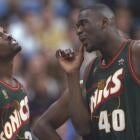
Those were two of the Sonics' three trips to the NBA Finals, and they would have to wait nearly two decades to return. Under coach George Karl, Seattle was one of the best teams in the Western Conference during the 90s, but ended up being one of the victims of Michael Jordan's Chicago Bulls, losing in six games to the Bulls in the 1996 NBA Finals after a 64-win regular season. Those teams, led by Gary Payton, Shawn Kemp and Detlef Schrempf, were beloved not only in Seattle but around the league for their exciting brand of basketball.
Karl left the team after the 1998 season and two more trips to the conference semifinals, and the franchise struggled to stay in contention in the West in the early 2000s. Their best year came in 2005 when they made a run to the conference semifinals, led by Ray Allen and Rashard Lewis, but that would be the team's final playoff appearance in Seattle.
In 2006, the Sonics ownership group helmed by former Starbucks CEO Howard Schultz sold the franchise to a group led by Oklahoma City businessman Clay Bennett. Two years after Bennett purchased the team, and one year after drafting Kevin Durant, the franchise moved to Oklahoma City, where it became the Thunder.
Seattle retained Sonics name, history after OKC move
Bennett cited an inability to work out a deal with Seattle to fund a new arena as the reason for moving the team to Oklahoma City, but that move didn't happen without a legal fight from the city of Seattle.
As part of a settlement that allowed the team to move and break its lease at Key Arena that ran through 2010, the franchise was not allowed to take the SuperSonics name with them. That would remain with the city of Seattle for a future franchise, which they hoped to bring back sooner than the 20 years it's taken. As part of the settlement, the history of the Sonics would also be shared between the Thunder and a future Seattle franchise.
However, the Oklahoma City Thunder don't claim any Seattle history as their own. The Thunder's official record books begin with the 2008-09 season, meaning Seattle's new franchise will take sole possession of the Sonics' history.

While we don't know with certainty that the new Seattle franchise will be named the SuperSonics, it's hard to find any reason why they wouldn't gladly adopt that name and franchise history. We are in an era of nostalgia, especially for the 90s, and new ownership in Seattle will be gifted a golden goose in the form of bringing back Sonics gear and retro logos -- something rarely afforded to an expansion franchise.
It took years before the Charlotte Bobcats could take the Hornets name and history back from New Orleans, but Seattle will have the Sonics waiting for them from the jump. That's a huge advantage. And while new leadership in Seattle will still have to prove it can build a winner to create long-term success, they'll have an immediate boost that not every expansion team gets.
Seattle SuperSonics record holders, retired numbers
The Sonics' record books are dominated by three names -- Payton, Kemp and Sikma. That trio owns the career Sonics record in every major category but one -- Rashard Lewis with 918 made three-pointers.
Payton, who was a nine-time All-NBA selection in Seattle, holds the top spot in most of the franchise's all-time records, including:
- Games played: 999
- Minutes played: 36,868
- Points: 18,207
- Assists: 7,384
- Steals: 2,107
- FGs made: 7,292
- FGs attempted: 15,562
Sikma is the all-time Sonics leader in rebounds (7,729) and free throws made (3,044). Kemp has the most offensive rebounds (2,145), blocks (959) and free throw attempts (3,808).
There are six retired numbers currently for the Seattle SuperSonics franchise.
- 1: Gus Williams
- 10: Nate McMillan
- 19: Lenny Wilkens
- 24: Spencer Haywood
- 32: Fred Brown
- 43: Jack Sikma
Payton (No. 20) and Kemp (No. 40) going in the rafters alongside those six feels like a layup for the inaugural season of the revived Sonics franchise. They are obviously two of the best players in franchise history and have both done work to try to bring the Sonics back to Seattle. New ownership would be wise to bring them back to shine a light on the organization's history sooner rather than later.
Other possibilities for future retired numbers after Kemp and Payton include Lewis, Schrempf and Allen, even as the latter only played 4.5 seasons in Seattle.
At this point, it feels like a matter of when, not if, Seattle gets its Sonics back, and when they do return, they'll have plenty of history to lean on to quickly reinsert themselves into the sports fabric of Seattle.