
Bills fire Sean McDermott: What went wrong and what must change to maximize Josh Allen's Super Bowl window
Buffalo fired McDermott two days after a 33–30 OT loss in Denver. With Allen in his prime, this is a rare opening -- and the franchise's margin for error is shrinking

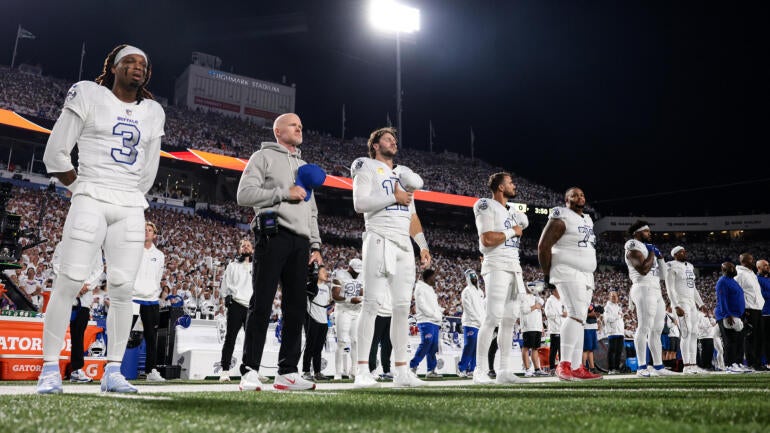
The Buffalo Bills fired head coach Sean McDermott on Monday, two days after their 33-30 divisional-round loss in Denver. General manager Brandon Beane is being retained and will help lead the search for Buffalo's next coach.
"Sean has done an admirable job of leading our football team the past nine seasons," owner Terry Pegula said in a statement. "But I feel we are in need of a new structure within our leadership to give this organization the best opportunity to take our team to the next level. We owe that to our players and to Bills Mafia."
McDermott, 51, had a largely successful nine-year run that included five straight AFC East titles (2020-24) but a .500 postseason mark (8-8) and repeated gut-wrenching exits, capped by Saturday's controversial overtime defeat in Denver. He did deliver the franchise's first road playoff win in 33 years a week earlier in Jacksonville but never snapped Buffalo's Super Bowl drought, which dates to the 1993 season. With Josh Allen at quarterback, the Bills lost once in the wild card round, four times in the divisional round and twice in the AFC Championship.
In all, McDermott went 98-50 with postseason berths in eight of nine seasons. His eight playoff wins are the most by any head coach without a Super Bowl appearance, and his 98 wins are the second-most in a coach's first nine seasons in NFL history. When he arrived in 2017, the Bills had not reached the postseason since 1999.
Buffalo's 73-27 record since 2020 is the best in the NFL. This season, the Bills became just the fifth team with six straight 11-win seasons — and the first team ever to lose a playoff game by three points or fewer in three consecutive seasons.
It is rare for teams to have a head-coach opening with MVP quarterbacks in their prime.
Josh Allen's weaponry

It's somewhat fitting that Buffalo's season arguably swung in the wrong direction on a deep ball to Brandin Cooks -- a 32‑year‑old wide receiver who was claimed off waivers from the Saints and suddenly became an important piece of the Bills' passing attack down the stretch. That kind of personifies some of the issues with Buffalo's receiver corps, which has regressed over the last few years. (Team context from game notes and staff reporting)
Gone are the days of Stefon Diggs, or even of Cole Beasley and John Brown. Instead, the Bills heavily rotate specialists like Khalil Shakir or primary blockers like Tyrell Shavers, plus depth pieces and cast‑offs such as Cooks, Curtis Samuel, Elijah Moore, Gabe Davis, Joshua Palmer and Mecole Hardman.
Keon Coleman, a 2024 second‑rounder, was supposed to be different, but has been unreliable on and off the field. Tight end Dalton Kincaid was supposed to be a premier weapon as well, but has largely been a part‑time player due to blocking limitations and hasn't quite been the receiving force advertised.
Buffalo needs more explosiveness in the pass‑catching corps, especially an X receiver who can stretch the field outside, win in contested‑catch situations, and create space for Shakir and Kincaid over the middle.
This isn't meant to excuse Allen's performance in Denver, where he turned the ball over four times (two interceptions, two fumbles). He played his role in the loss. It's also true Buffalo can't be so dependent on Allen's Superman acts in every game.
The defensive front, again
Buffalo got clocked in the run game throughout the season: 5.1 yards per carry allowed (30th), 100+ rush yards allowed in 12 of 19 games, 150+ in eight, 200+ in four. They ranked 26th in yards allowed before contact per rush (TruMedia) and last in after‑contact yards allowed. Opponents gained 5+ yards on 39.3% of carries (fifth‑worst) and produced explosive runs on 11.3% of rushes (tied for worst). (Team/league data as cited in prior analysis)
As in past playoffs, they struggled to generate pressure without blitzing -- just 25% of opponent dropbacks pressured when sending four or fewer (TruMedia). They've tried to fix this by signing edge rushers, but the biggest moments still belong to A‑tier linemen who can take over games. Buffalo has too many B/B+ pieces up front and not enough game‑wreckers.
The Bills won't have much cap space and will be drafting late each round, but finding a dominant defensive‑front presence should again be priority No. 1 for Beane.
Moving forward in Buffalo
Buffalo enters the offseason with about $3 million in projected 2026 cap space and at least one pick in each of the first five rounds. The biggest needs: receiver, defensive tackle and edge rusher. Notable pending free agents include Joey Bosa, DaQuan Jones, Connor McGovern and Matt Milano.
To begin the playoffs, colleague Douglas Clawson framed this as a golden ticket for Allen. Give Buffalo credit for winning at Jacksonville as an underdog, but there may not be a set of circumstances this favorable again.
"Allen and the Bills have hit the jackpot this year and they need to turn in that golden ticket because this year is a blip. I assume Patrick Mahomes, Lamar Jackson and Joe Burrow will all be back in the postseason looking like themselves ... The Bills could have their hands full with Drake Maye in the AFC East for years to come…"
No, Buffalo's Super Bowl window is not closing. But it may never be that open again. It will be a long winter in Buffalo.