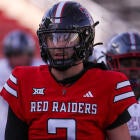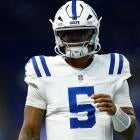


Former Indiana, Cincinnati and Texas Tech quarterback Brendan Sorsby will have to wait another year before he can call himself an NFL player. On Tuesday, the league declined his application for the supplemental draft, and elected to not hold the event for the third year in a row.
It's been a long and winding road for Sorsby, and the end of said road is still not in sight. At one point, it looked like Sorsby would never play college football again. That's when the supplemental draft first came up as an option. Then, he was granted an injunction that allowed him to suit up for the Red Raiders in 2026. However, not long after this favorable ruling was handed down, Sorsby dropped his lawsuit against the NCAA, left the college ranks and applied for the supplemental draft.
Sorsby was the hottest quarterback in the transfer portal this offseason. The Cincinnati signal-caller threw for 2,800 yards, 27 touchdowns and five interceptions in 2025, and considered leaving school for the NFL Draft. Sorsby delayed this decision after the feedback he received indicated he would likely be a Day 2 pick. He was a hot commodity in the transfer portal, though. Texas Tech beat out other prominent programs such as LSU and Miami for the young quarterback.
Then, came the bombshell that shook the sports world at large. Sorsby was placed under investigation by the NCAA for making thousands of bets during his time as a college athlete. That was the beginning of a historic saga that forced us as a collective to examine where we are with collegiate sports.
Let's revisit this Sorsby saga, starting at the beginning.
Sorsby enters treatment as NCAA begins investigation
In late April, sources told CBS Sports' Matt Zenitz that Sorsby was under investigation by the NCAA for making thousands of online bets. The quarterback gambled on several collegiate sporting events, including during his time as a player at Indiana (2022-23). If it was discovered he bet on his own team or own athletic department, Sorsby would be subject to a permanent loss of eligibility.
Sorsby took what was called an indefinite leave to seek inpatient treatment for his gambling addiction. Texas Tech meanwhile stood behind their new quarterback.
"We love Brendan and support his decision to seek professional help," Texas Tech coach Joey McGuire said in a statement. "Taking this step requires courage, and our primary focus is on him as a person. Our program is behind Brendan as he prioritizes his health."
Sorsby gears up for legal fight
Less than a week after the bombshell report, Sorsby retained attorney Jeffrey Kessler. You may remember Kessler as the prominent sports lawyer that won a notable victory in House v. NCAA. Sorsby was looking for a negotiated resolution with the NCAA, but was also ready to take the governing body to court.
Sorsby files injunction against NCAA
More than two weeks after Sorsby inquired of Kessler, the quarterback filed an injunction against the NCAA seeking immediate eligibility for the upcoming college football season. The NCAA was still in the midst of its investigation, but Texas Tech announced in a statement that Sorsby had been ruled ineligible based on an "agreed-upon stipulation of facts between Texas Tech University, the NCAA and Brendan Sorsby."
With the supplemental draft now potentially in play, Sorsby was looking for a resolution to this case by June 15 -- which was a week before the June 22 deadline to apply for the NFL's supplemental draft.
In the filing, Sorsby's side claimed that the 22-year-old suffers from a "mental health condition" and has been "clinically diagnosed" with a gambling addiction:
"The NCAA has weaponized his condition to shore up a facade of competitive integrity, while simultaneously profiting from the very gambling ecosystem it polices," the injunction said.
Details of Sorsby's betting come to light
Sorsby admitted he was a gambling addict, but everyone was curious about the kind of wagers he may have placed on his own team. It was known he gambled on games during his time as a player at Indiana. Court documents obtained by ESPN later revealed he placed at least 40 wagers on the Hoosiers.
Sorsby wrote about his wagers during his time at Indiana in a statement to NCAA reinstatement staff, saying the "bets made me feel like I was supporting the team when I was not playing in games, much like fans betting on their hometown teams to win. It was a way to make me feel more connected to my team when I wasn't playing. I always bet on Indiana to succeed," per ESPN.
Sorsby placed roughly $90,000 in bets over four years, sending money to a family member and friends to place wagers on his behalf.
"It became a habit for me to bet," Sorsby wrote in a statement to the NCAA, per ESPN. "My betting became a compulsion which made it virtually impossible to resist the constant notifications I received from betting apps. I lost complete control of my addiction. I now realize the apps controlled me and I did not control them."
Sorsby granted 2026 eligibility in Lubbock court
On June 8, Lubbock, Texas, judge Ken Curry granted Sorsby a temporary injunction against the NCAA that would allow the quarterback to play in 2026.
The court claimed Sorsby would suffer, "probable, imminent and irreparable injury" if he were not allowed to participate in college athletics while his case proceeds through the legal system. Judge Curry said Sorsby would lose access to high-level training and the ability to maximize his athletic potential.
Part of the agreement required Sorsby to sit out the first two games of the season, which come against Abilene Christian and Oregon State. Then, he could return for the Sept. 18 matchup at home against Houston -- which is the Red Raiders' Big 12 opener.
"I'm very grateful for the endless support I have received throughout this entire process," Sorsby said in a statement. "I am also grateful for the chance to rejoin my teammates. This opportunity comes with the responsibility to remain focused on my personal growth, the ability to learn from this experience, and to be able to use my situation to help others going forward."
The NCAA filed an appeal the same day this ruling came down, and criticized the decision:
"The NCAA strongly disagrees with the court's ruling in Sorsby's case and is deeply concerned about the damaging, far-reaching and broadly destabilizing ramifications of this outcome -- which undermines and corrupts the integrity of sports," the statement said. "The NCAA is committed to supporting student-athlete mental health but must continue to aggressively defend against actions that defraud college athletics and threaten competitive integrity, such as betting on one's own sport."
Outrage ensues
It's not hyperbole to say Curry's decision was one of the most surprising declarations handed down in the modern sports era. You bet on your own team, you're ineligible. That's been the rule. But in this new world, a favorable judge can help you out.
There was outrage felt from all over the country -- and not just from the talking heads. ESPN reported the Big Ten was expected to mull a league-wide mandate against playing Texas Tech, while the Big 12 was considering sanctions if the Red Raiders were to play Sorsby. Athletic department decision-makers at Georgia and Nebraska instructed sport administrators not to schedule Texas Tech in future athletic competitions.
"True integrity means holding your program accountable when things go wrong, not buying custom legislation or running to a local courtroom to bypass the rules," Georgia athletic director Josh Brooks wrote.
NCAA president Charlie Baker said Sorsby's ruling marked a "new low" for college football -- calling it a "thunderbolt moment."
"The judge looks up, sees that one student athlete and makes a decision based on that, but the consequences ripple all over the place," Baker told the Sports Business Journal. "Look, I think it's about as good an example as you're ever going to have of a thunderbolt moment. So many of the folks that I deal with every day, either through email or text or phone calls, were shocked by this.
"And I think for a lot of them, it's going to create a more significant thought process, participation, engagement around where Senator Cantwell and Senator Cruz are. That's probably a good thing."
The infamous video
Two days after Sorsby was granted his temporary injunction, Texas Tech athletic director Kirby Hocutt broke his silence on the matter:
"To my colleagues: I understand the frustration," Hocutt's statement read. "This situation is hard, it is new, and there is no perfect answer. The system we're operating within is binary, but the situation is not. We are open to ongoing conversations about how to best handle these issues as an industry going forward. We will continue to be transparent in our decision-making. Most importantly, we will keep doing what we have always done, put our students first."
The very next day, Texas Tech released a way-too-long video message featuring the president, athletic director and head coach trying to defend their position.
A message to the Texas Tech community from our leadership. pic.twitter.com/MpbXtNJakp
— Texas Tech Red Raiders (@TechAthletics) June 12, 2026
"Mistakes have consequences," president Lawrence Schovanec said. "At the same time, here's a young man with a dream and a vision to pursue a career. We felt not to have the opportunity to pursue that career, given the circumstances and the evolving changes in this world that these athletes face, was unfair and unjust.
"Brendan made a mistake, we acknowledge that, mistakes have consequences. At the same time, here's a young man with a dream and vision to pursue a career. We felt, not to have the opportunity to pursue that career given the circumstances and evolving changes in this world athletes face, was unfair and unjust…"
Sorsby withdraws lawsuit, turns attention to supplemental draft
Three days after Texas Tech's 21-minute video, this saga again got flipped on its head. Sorsby made the decision to withdraw his lawsuit against the NCAA, meaning the temporary injunction he secured would no longer be valid. That made him ineligible for college football -- but eligible for the NFL's supplemental draft.
This decision came on June 15, which was the day Sorsby initially pointed to as his personal deadline to apply for the supplemental draft. However, it was rather unexpected given the fact that he scored the ruling he wanted from judge Curry. Although, the outrage was intense. The Big 12 even filed a legal complaint against Texas Tech in the Northern District of Texas, asking for declaratory and injunctive relief to prevent what it described as outside interference with its governance structure. A conference pursuing legal action against one of its own schools!
"I am grateful for the support from my family, my Tech coaching staff, teammates, the community, and so many others who have encouraged me to address and learn more about this important issue," Sorsby said in a statement. "As my journey continues, I remain fully committed to and focused on being the best I can be, both on and off the field."
Interestingly enough, Texas Tech board chairman Cody Campbell said that the university would not be asking Sorsby to reimburse any of the money paid in his contract.
Sorsby denied from supplemental draft
It was never a given that Sorsby would be allowed to enter the supplemental draft. Sports media spent considerable time hypothesizing where Sorsby could land and what round draft pick a team could utilize on the troubled quarterback. Ultimately, the NFL announced Tuesday they would NOT be holding a supplemental draft this year.
Why did the NFL deny Sorsby? Well, there were several reasons. For one, his petition was apparently filed three business days before the deadline to do so. The league didn't have close to enough time to actually look into this unprecedented situation, and Larry Ferazani Jr. of the NFL management council pointed out that Sorsby has failed to take accountability for his circumstance every step of the way.
"The issues presented by your Petition are too significant, and too closely tied to the League's core integrity interest, to permit meaningful review within the timeline presented."
In all, it's a pretty scathing response:
Text of the letter, sent by Larry Ferazani of the NFL Management Council, to Brendan Sorsby @NFLonCBS pic.twitter.com/v4y6UmvC1g
— Jonathan Jones (@jjones9) June 23, 2026
Additionally, there was some kind of disconnect when it came to what Sorsby needed to submit to the league. The NFL wanted "supporting information" and "documentation." Sorsby's attorney, Jeffrey Kessler, said the NFL's application was basic and did not ask for anything sophisticated.
Kessler claimed Sorsby's agent even followed up with the NFL to ask if any additional information was needed.
"In late April, we inquired with the NFL about the process for gaining entry into the Supplemental Draft. The response from the League was that all that was required was a short application, which needed to be submitted prior to June 22. At no point did the NFL indicate that it would need or want to review anything other than the application itself or that submitting the application at or close to the deadline would have any impact on the NFL's consideration.
"Last week, we requested the NFL's supplemental draft application.The application asked for basic biographical information, responses to four yes-or-no questions and included a small space for Mr. Sorsby to state "why are you applying for the 2026 Supplemental Draft?" It did not provide an opportunity or ask that Mr. Sorsby submit any additional documentation or information. Mr. Sorsby fully completed the application and submitted it to the NFL within hours of receiving it.
"Mr. Sorsby's agent followed up with the NFL to ask if any additional information was needed or if the NFL had any questions. The NFL declined that invitation.
"The NFL gave its letter purporting to deny Mr. Sorsby entry to the Supplemental Draft to the media before sending it to Mr. Sorsby. He learned that the NFL was not planning to hold a Supplemental Draft when the media reported it."
What happens next?
The NFL said Sorsby is a talented player with the potential for future success, and encouraged him to begin preparing for possible entry into the league via the 2027 NFL Draft. However, as CBS Sports NFL insider Jonathan Jones pointed out, Sorsby has shown a willingness to litigate to get to the field. Could he sue the NFL?
"It is a violation of the CBA and the law. We will pursue this immediately with the NFLPA," Kessler told ESPN about the league's decision to not hold a supplemental draft.
Will the NFLPA support Sorsby? He's obviously not a member of the association yet. The saga continues.