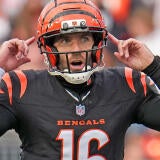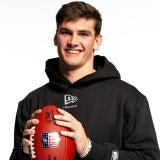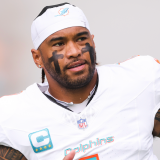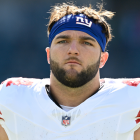
Jarrett Stidham hopes to join Nick Foles, Tom Brady, Kurt Warner, other backup QBs to start in a Super Bowl
Stidham would join some notable company if the Broncos win on Sunday

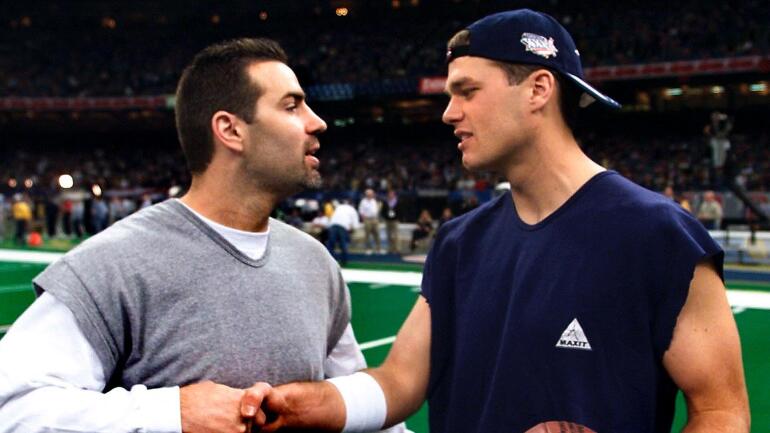
Jarrett Stidham will join a pretty unique group of quarterbacks if the Denver Broncos defeat the New England Patriots in Sunday's AFC Championship.
Stidham -- who will replace Bo Nix in the starting lineup following Nix's season-ending ankle injury that was sustained in this past week's divisional round playoff win over the Buffalo Bills -- would become the 13th backup quarterback in NFL history to start in a Super Bowl. Of the previous 12, eight backup quarterbacks ended up hoisting the Vince Lombardi Trophy by game's end.
None of those players, however, started in their respective conference championship game without having started in any other game that season, which is what Stidham will do on Sunday. In fact, the 29-year-old Stidham hasn't made a start in a non-exhibition game since 2023 and has not attempted a pass in a non-exhibition game in over two years.
Given his lack of recent game reps, you could argue that Stidham would pull off one of the most impressive feats in NFL history if he is able to help the Broncos defeat the visiting Patriots. In doing so, he would also join the following list of backup quarterbacks who started on pro football's biggest stage.
Earl Morrall, Colts: 1968
Owner of one of the most unique careers in NFL history, Morrall was 34 and living the life of a veteran backup when an injury to reigning league MVP Johnny Unitas thrust him into the Colts' starting lineup ahead of the 1968 season.
Morrall ran with the opportunity as he won league MVP honors while leading the Colts to a 15-1 record entering their Super Bowl showdown with the 18-point underdog New York Jets, who were led by their brash young quarterback, Joe Namath.
Namath guaranteed victory prior to the game, and he and his teammates backed it up by recording a shocking 16-7 win over the Colts to secure the AFL's first win over the NFL. Morrall threw three interceptions before he was replaced by Unitas, who led Baltimore to its only points of the game.
1/12/1969
— New York Jets History (@nyjetshistory) January 12, 2026
Super Bowl III
One of the keys to victory in SB III was the @nyjets D creating turnovers. They forced 5 Colts turnovers including 4 Ints.
Here is a clip with all 4 Ints.
1. Game tied 0-0 early 2nd qtr Randy Beverly picks off Earl Morrall in the EZ
2. Jets up 7-0… pic.twitter.com/cJfljzokOd
Ironically, Morrall replaced an injured Unitas two years later in Super Bowl V and helped the Colts capture their first Super Bowl win. Two years after that, he won each of his starts with the Dolphins after replacing injured starter Bob Griese in the season's fifth week. Morrall started the AFC Championship, but Don Shula (his former coach in Baltimore) later went with Griese as the Dolphins' offense needed a spark.
Griese led the Dolphins on two scoring drives en route to a 21-17 win over the Steelers. The Dolphins would then cap off their undefeated season with a 14-7 win over Washington in Super Bowl VII.
Roger Staubach, Cowboys: 1971
Staubach, who was 29 at the time, shared the starting job with veteran Criag Morton (who had led the Cowboys to their first Super Bowl appearance a year earlier) during the season's first seven games before Tom Landry finally gave him the keys to the Cowboys' offense for good following a loss to the Bears in Week 7.
Under Staubach, the Cowboys were a perfect 10-0 during the regular season. In the playoffs, Dallas bested the Vikings and 49ers before posting a dominant, 24-3 win over Shula's Dolphins in Super Bowl VI. Staubach won the game's MVP award after throwing a pair of scores to future Hall of Famers Mike Ditka and Lance Alworth.
Mike Ditka's Super Bowl Touchdown
— Kevin Gallagher (@KevG163) October 18, 2025
Ditka hauls in a 7-yarder from Roger Staubach to salt away the #DallasCowboys' first Super Bowl championship — Super Bowl VI.
Happy Birthday, Iron Mike! pic.twitter.com/b5wE52mZdn
Staubach went on to enjoy a Hall of Fame career with the Cowboys that included another Super Bowl win at the end of the 1977 season.
Vince Ferragamo, Rams: 1979
Ferragamo took over as the Rams' starting quarterback with five games left in the regular season. He took over after starter and former Pro Bowler Pat Haden sustained a season-ending injury and rookie and fellow backup Jeff Rutledge struggled in a loss to Chicago that dropped the Rams' record to 5-6.
While most had given up on the Rams at that point, Ferragamo led them to four straight wins en route to a seventh consecutive NFC West title. He then helped the Rams upset the Cowboys and Buccaneers to punch the franchise's first Super Bowl ticket.
OTD 1979#Rams #Cowboys
— Old Time Football 🏈 (@Ol_TimeFootball) December 30, 2024
A Ferragamo to Waddy 50 yard touchdown is the winning score in the ‘79 NFC divisional#RamsHouse
pic.twitter.com/QnmwzE3XVM
A 10.5-point underdog to the defending champion Pittsburgh Steelers, Ferragamo's steady play helped the Rams take a 13-10 halftime lead and a 19-17 lead heading into the fourth quarter of Super Bowl XIV. But his one mistake -- an interception to Steelers linebacker Jack Lambert -- contributed to the Rams' eventual 31-19 loss as Pittsburgh scored 14 unanswered points during the game's final quarter.
OTD 1980
— Old Time Football 🏈 (@Ol_TimeFootball) January 20, 2023
Jack Lambert picks off Ferragamo in Super Bowl XIV#Steelers pic.twitter.com/EnOCMvcyKx
In defeat, Ferragamo was lauded for his performance against arguably the greatest defense in NFL history. In fact, Steelers center Mike Webster said that Ferragamo outplayed Terry Bradshaw, who won the game's MVP award.
Jim Plunkett, Raiders: 1980
Plunkett is the standard-bearer for former No. 1 overall picks who revived their careers after a rough start. After several rocky seasons with the Patriots (who selected him with the No. 1 overall pick in the 1971 NFL Draft) and 49ers, Plunkett began the 1980 season as a backup on a Raiders team that wasn't expected to be very good.
But an injury to Dan Pastorini five weeks into the season set in motion one of the most unexpected team and individual turnarounds in history. After throwing five interceptions in his first game following Pastorini's injury, Plunkett won his first six starts and would end up going 9-4 as the Raiders' starter during the regular season. His success helped the Raiders clinch a playoff berth with an 11-5 record.
In the playoffs, the Oakland defeated the Oilers (who were quarterbacked by Kenny Stabler, a former Raiders legend who was traded to Houston that season in exchange for Pastorini, who had led the Oilers to consecutive AFC title game appearances prior to being dealt), the cardiac Browns (a win that included the infamous Red Right 88 play) and Dan Fouts and the Chargers' high-scoring offense to reach the Super Bowl.
Underdogs heading into their Super Bowl showdown with the Philadelphia Eagles, the Raiders dominated the game from start to finish. Plunkett took home MVP honors after throwing for 261 yards and three touchdowns as the Raiders became the first wild card team to win it all.
"I was ready once I stepped on that field."
— Las Vegas Raiders (@Raiders) January 26, 2021
On this day in 1981, Jim Plunkett's three passing TDs led the Silver and Black to a Super Bowl XV victory. pic.twitter.com/GHCE3UOGun
Three years later, Plunkett and the Raiders once again reached the mountaintop after defeating defending champion Washington in Super Bowl XVIII.
Doug Williams, Washington: 1987
Williams, despite losing both of his regular-season starts, was named Washington's starter going into the 1987 playoffs over Jay Schroeder, a Pro Bowler the previous season who went 8-2 as Washington's starter that season. Williams (who had dealt with injuries during the regular season) earned the starting job after replacing a struggling Schroeder and leading Washington to a win over the Vikings in Washington's regular-season finale.
A former first-round pick, Williams was back in the spotlight eight years after he helped lead the Buccaneers to their first NFC title game appearance. Now 32, Williams made the most of his new opportunity, helping Washington defeat the Bears and Vikings in the NFC playoffs before he and his teammates obliterated the Broncos in Super Bowl XXII.
Williams' and Washington's performance that day was nothing short of historic. Trailing 10-0 after the first quarter, Washington scored a Super Bowl record 35 points in the second quarter that included four touchdown passes from Williams, who threw for a then-Super Bowl record 340 yards in leading Washington to a 42-10 win. Williams was named MVP after becoming the first starting Black quarterback to win the Super Bowl.
Doug Williams came back on the field after an apparent injury to lead #WashingtonFootball to 35 points in the 2nd quarter of Super Bowl XXII pic.twitter.com/6hgBAHPkJf
— Old Time Football 🏈 (@Ol_TimeFootball) July 24, 2021
Jeff Hostetler, Giants: 1990
In his seventh season at the time, Hostetler had grown tired of sitting on the bench after making just two starts during his first six seasons. It got to the point where he had made up his mind that he would retire after the 1990 season.
Hostetler's career took a drastic turn, however, in Week 15 after Phil Simms went down with a season-ending injury. But despite injuries to Simms and star rookie running back Rodney Hampton, Hostetler and 34-year-old running back Ottis Anderson stepped in and helped the Giants finish the season with five straight wins that included two of the most shocking upsets in NFL history.
In the 1990 NFC title game, the Giants recorded a stunning, 15-13 upset win over a 49ers team that was in pursuit of a record three straight Super Bowl wins. The 49ers' quest came up short after two clutch throws from Hostetler set up Matt Bahr's game-winning field goal as time expired.
No. 25: “There Will Be No Three-Peat” - 1990 Giants vs. 49ers in the NFC Championship Game (Jan. 20, 1991) #NFL100 @Giants
— NFL (@NFL) October 5, 2019
📺: NFL 100 Greatest Games on @nflnetwork pic.twitter.com/sHhYGVF9bp
In Super Bowl XXV, the Giants were again decided underdogs against a Bills team that had posted a 51-3 win over the Raiders in the AFC title game. In an attempt to keep Buffalo's high-scoring offense off the field, Giants coach Bill Parcells employed a ball control offense that maintained possession for a Super Bowl record 40 minutes, 33 seconds. Hostetler directed four scoring drives that included several big third-down completions, none bigger than his 14-yard completion to Mark Ingram on a third-and-13 play that gave the Giants the lead late in the third quarter.
It never gets mentioned, but this is one of the greatest plays by a WR in Super Bowl history. Mark Ingram’s serpentine first down on 3rd-and-13.
— Damon Amendolara (@DamonAmendo) January 27, 2023
🎞: @KevG163 pic.twitter.com/CJKi1M26Ah
Hostetler's poise was complemented by Anderson, who bullied Buffalo's defense to the tune of 102 yards and a touchdown on 21 carries.
Defensively, Giants defensive coordinator Bill Belichick instructed his defense to concede the running game while not allowing Jim Kelly and Buffalo's passing game to beat them. While Thurman Thomas gashed them for 135 yards, Buffalo's passing game was held in check.
The Giants won game, 20-19, after Bills kicker Scott Norwood missed his 47-yard field goal try with eight seconds left. Belichick's game plan vs. Buffalo now resides in the Pro Football Hall of Fame.
Kurt Warner, Rams (1999)
Of all the Super Bowl-winning backup quarterbacks, Warner's story might be the most incredible (it was later made into a movie, after all).
After playing collegiately at Iowa State, Warner spent the next four years trying to land a spot on an NFL roster. He also spent part of that time as a grocery store clerk before having success with the Indoor Football League's Iowa Barnstormers. His success there led to him signing a future contract with the Rams during the 1998 offseason. He ultimately earned a spot on the team's 53-man roster and attempted 11 passes during the '98 season.
Warner entered the 1999 season as Trent Green's backup, but that quickly changed after Green suffered a season-ending knee injury during the preseason. Instead of trying to sign a veteran via free agency, Rams coach Dick Vermeil said that his team would "rally around Kurt Warner, and we'll play good football."
Vermeil's statement proved to be prophetic as Warner and the Rams' offense set the league on fire that season. En route to a 13-3 season, Warner (who credited the fast pace of arena football to his quick success in the NFL) led the NFL with 41 touchdowns, a 65.1% completion percentage and a 109.2 passer rating.
Warner won both league and Super Bowl MVP after throwing for a then-Super Bowl record 414 yards during the Rams' 23-16 win over the Titans in Super Bowl XXXIV. His 73-yard touchdown pass to Isaac Bruce (which came with reigning Defensive Rookie of the Year Javon Kearse bearing down) proved to be the game winner.
25 Years Ago Tonight
— Kevin Gallagher (@KevG163) January 30, 2025
January 30, 2000
The Winning Score of Super Bowl XXXIV
With just over two minutes remaining, immediately after the #Titans tie it up after having trailed 16-0, the #Rams' NFL and Super Bowl MVP Kurt Warner arcs a 73-yard touchdown strike to Isaac Bruce.… pic.twitter.com/CCLvGBuEKk
Warner would win another league MVP two years and would start in two more Super Bowls before retiring after the 2009 season. He was inducted into the Hall of Fame in 2017.
Trent Dilfer, Ravens (2000)
Despite helping lead the Buccaneers to the NFC Championship game in 1999, Dilfer was allowed to test free agency that offseason before settling with being Tony Banks' backup in Baltimore.
Despite going 5-3 as the team's starter, Banks was benched after the Ravens' offense failed to score a touchdown in a fourth straight game. While the streak reached five games with Dilfer under center, the offense broke through during Dilfer's second start (a 27-7 win over the Bengals) and never looked back.
The true turning point for Dilfer and the Ravens occurred during his third start. After throwing a potentially crushing pick-six against the rival Titans, Dilfer led the Ravens' offense on a game-winning drive that was punctuated with his touchdown pas to Patrick Johnson.
Including the playoffs, the Ravens went 11-1 that season with Dilfer, who kicked off Super Bowl XXXV with a 38-yard touchdown pass to Brandon Stokley that set the tone for Baltimore's eventual 34-7 win over the Giants.
Two weeks earlier, Dilfer and Shannon Sharpe connected on a 96-yard touchdown that proved to be the game-winning score in Baltimore's eventual 16-3 win over the Raiders.
25 years ago today, Shannon Sharpe took a Trent Dilfer pass 96 yards for a touchdown in the Ravens’ 16-3 AFC Championship win over the Raiders
— Kevin Oestreicher (@koestreicher34) January 15, 2026
Baltimore would go on to win the Super Bowl pic.twitter.com/9fzAXTawGL
Tom Brady, Patriots (2001)
Warner may have the most incredible story, but Brady is undeniably the greatest former backup QB in NFL history. Heck, many consider him to be the best player in league history given that he retired with more Super Bowl wins (seven) than any team in NFL history.
Brady's first ring came at Warner and the Rams' expense after he led the Patriots to what was at the time the greatest upset in Super Bowl history since the Jets' win over the Colts 33 years earlier.
After Warner and the Rams rallied to tie the score, Brady defied the odds (and legendary broadcaster John Madden included) by not playing for overtime and instead driving the Patriots into field goal range in the game's closing minute. His five completions on New England's final drive set up Adam Vinatieri's game-winning, 48-yard kick as time expired.
The ending of Super Bowl XXXVI pic.twitter.com/VyMa69QKEi https://t.co/CfiDEm8CDd
— RandomTomBradyHighlights (@TomBradyDaily) November 12, 2022
Brady's incredible career may not have happened if not for Drew Bledsoe's injury that occurred way back in Week 2 of the 2001 season. Brady, a second-year player at the time, had thrown just three career passes before taking over for Bledsoe and the 0-2 Patriots.
To the surprise of everyone, Brady gave the Patriots an immediate jolt that included a blowout win over Peyton Manning's Colts in his first career start. And despite a loss to the Rams that dropped the Patriots to 5-5 and Bledsoe being cleared to return to action, Bill Belichick decided to stick with Brady as his starter for the remainder of the season.
That decision proved to change the course of NFL history. Brady and the Patriots never lost again that season while beginning one the longest stained run of success the league has ever seen. That run, however, did include one last moment of brilliance from Bledsoe, who led the Patriots to a win over Pittsburgh in the 2001 AFC title game after relieving an injured Brady.
Jack Delhomme, Panthers: 2003
Delhomme had a cup of coffee as the Panthers' backup in 2003 before replacing veteran Rodney Peete in the starting lineup during Carolina's season-opener. Down 17-0, Delhomme led Carolina to a come-from-behind win that day against the Jaguars and never looked back.
Carolina started 5-0 and finished the regular season with an 11-5 record. Delhomme played well in the regular season, but he took his play to another level in the postseason. He led the NFL with six touchdown passes during the playoffs while leading the Panthers to playoff wins over the Cowboys, Rams and Eagles. Delhomme took full advantage of Carolina's talented skill set that included wideouts Mushin Muhammad, Steve Smith Jr., and running back Stephen Davis.
In the Super Bowl, Delhomme and Brady exchanged blows in one of the most explosive fourth quarters in Super Bowl history. During the quarter, Delhomme fired two touchdown passes that included the game-tying score with 1:08 left.
The longest offensive play from scrimmage in #SuperBowl history
— Kevin Gallagher (@KevG163) February 1, 2025
Jake Delhomme-to-Muhsin Muhammad — an 85-yard fourth quarter scoring strike for the Carolina #Panthers against New England#KeepPounding
Super Bowl XXXVIII
February 1, 2004 pic.twitter.com/iw1VIzCa3R
Brady, though, once again had the final say as he led the Patriots on a last-minute drive that ended with another game-winning kick by Vinatieri.
While 2003 was the pinnacle of his career, Delhomme did have several more Pro Bowl level seasons while enjoying a lengthy NFL career.
Colin Kaepernick, 49ers: 2012
In his second year at the time, Kaepernick got his chance to play after former No. 1 overall pick Alex Smith sustained a concussion in Week 10. Despite leading the 49ers to a 6-2 start and the previous year's NFC title game, Smith lost his starting job to Kapernick, who went 5-2 as San Francisco's starter during the regular season.
Kaepernick was mostly exceptional during the playoffs. He scored four total touchdowns while rushing for 181 yards in San Francisco's divisional round win over the Packers. He then completed 76.2% of his throws as the 49ers edged Matt Ryan and the Atlanta Falcons to clinch a spot in the Super Bowl.
On this day in 2013, #49ers QB Colin Kaepernick runs for a playoff record 181 yards in dominating divisional round win over the #Packers 45-31.
— #Random49ers (@Random49ers) January 12, 2023
Kaepernick throws 2 TDs and runs for 2 more in his playoff debut. #Random49ers #FTTB @Kaepernick7 pic.twitter.com/5l0Ka9bl52
Against the Ravens, the 49ers fell behind big before a power outage shifted the game's momentum. Down 28-6, Kaepernick led 49ers on an epic comeback attempt that come up short in an eventual 34-31 loss. In defeat, Kaepernick threw for 302 yards and a score while also rushing for 62 yards and another score.
Kaepernick would lead the 49ers back to the NFC title game the following season and would spend the ensuing three years in San Francisco. He hasn't played, however, since the 49ers released him ahead of the 2017 season.
Nick Foles, Eagles: 2017
Many forget that Foles as a Pro Bowler in 2013 after throwing 27 touchdowns and just two interceptions for the Eagles. He struggled to regain that level of success in the following years, though, which led to him spending the 2017 season as a backup before he replaced an injured Carson Wentz in Week 14.
Wentz, in his second season at the time, was in the midst of an MVP season at the time of his season-ending injury. And while many expected the Eagles to fade following his injury, that instead went 5-1 with Foles that included the franchise's first Super Bowl win.
In the playoffs, Foles completed an impressive 72.6% of his passes for 971 yards with six touchdowns and one pick. He matched wits with Brady in Super Bowl LII and won MVP honors after throwing for 373 yards and three touchdowns. He also called a touchdown pass on a play that immediately went down in Super Bowl lore.
The @Eagles unleashed the Philly Special two years ago today 🦅
— SportsCenter (@SportsCenter) February 4, 2020
(via @NFL)pic.twitter.com/OHScBFobEG