Rams plan to propose NFL rule change that would have nullified Seahawks' controversial 2-point conversion
Sources say Los Angeles is expected to submit a proposal to "fix what went wrong" on the disputed Week 16 play

The Seattle Seahawks' unconventional yet successful two-point conversion against the Rams in a Week 16 victory wound up being one of the most consequential plays of the 2025 season.
And sources tell CBS Sports the Rams are planning to propose rule changes that would effectively make the play an unsuccessful two-point try.
"Is this the craziest 2-point conversion EVER?"
— NFL (@NFL) December 19, 2025
The @Seahawks tie it up in a WILD way 😳
LARvsSEA on Prime Video
Also streaming on @NFLPlus pic.twitter.com/KwNtEIWVQ7
The Rams plan to propose at least one rule change this offseason, sources say, and there may be a second proposal aimed at certain details around that play. Teams regularly submit rules proposals toward the start of the new league year, and many of those proposals come in around the time of next week's NFL Scouting Combine.
While the language remains unclear, one source with knowledge of the proposal(s) said the Rams' goal is to "fix what went wrong in a few places."
The Rams and Seahawks opened Week 16 on "Thursday Night Football" on Amazon Prime. Both teams were 11-3, and the Rams held the tiebreaker for the top seed in the NFC after beating the Seahawks at home in Week 11.
The Rams held a 16-point lead in the fourth quarter, and a win would have put L.A. in the driver's seat to win the NFC West and potentially earn the conference's No. 1 position in the coming weeks. But Seattle scored consecutive fourth-quarter touchdowns and trailed 30-28 with 6:23 left.
On the Seahawks' two-point conversion attempt, quarterback Sam Darnold attempted a quick pass to running back Zach Charbonnet, but the ball hit Jared Verse's helmet and ultimately fell to the ground with the whistle being blown. Charbonnet, in nonchalant fashion after the whistle was blown, picked the ball up just inside the goal line and then began walking away from the end zone -- the play understood by those on the field to be an incomplete pass and an unsuccessful attempt.
The Seahawks eventually lined up for the ensuing kickoff before referee Brad Allen stopped the game to announce the play was under further review. Replay showed that Verse made contact with the ball behind where Darnold released it, making it a lateral. Charbonnet then recovered it in what the NFL rulebook would call the "immediate continuing action." Had it been ruled a fumble, Charbonnet would not have been allowed to advance it on a two-point try. But because it was a backward pass, and because it was considered "immediate continuing action," he could. It officially went down as a successful two-point rush by Charbonnet, tying the game at 30.
Amazon Prime officiating analyst Terry McAulay, an NFL official for two decades, noticed the officiating quirk quickly on air before the review was initiated more than a minute and a half after the play was over. Earlier this month, NBC Sports reported McAulay called the league office to discuss the play, which may have led to the review being initiated. A statement by the league noted it is not unusual for the league office to be in contact with the game broadcast.
Both teams failed to score in the remainder of regulation, including the Rams missing a 48-yard field goal that could have won the game. In overtime, the Rams scored on the opening possession and made the extra point. The Seahawks responded with a 65-yard touchdown drive of their own and converted a successful two-point attempt to win the game 38-37.
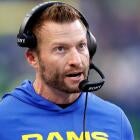
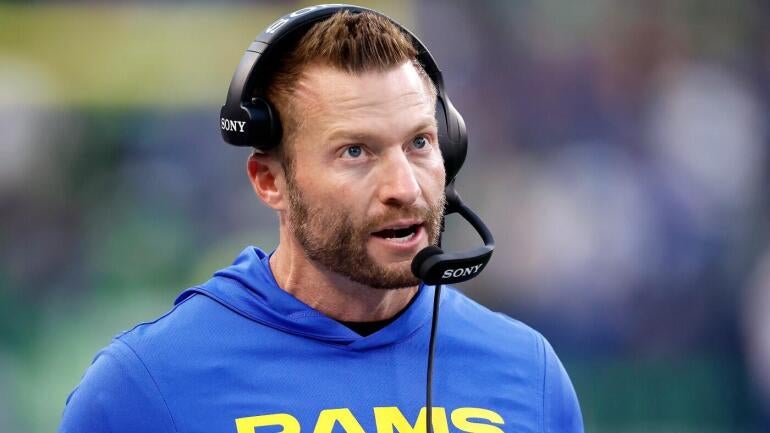
After the game, Rams players and coaches were confused by the ruling. Coach Sean McVay called it "very interesting" in his postgame remarks, adding that he didn't get a clear explanation of the rule because the game was going on.
"I've never seen anything or never been a part of anything like that. And I've grown up around this game," McVay said. "I'm not making excuses. We don't do that. I don't believe in that. It doesn't move us forward, but we do want clarity and an understanding of the things that we can do to minimize that when we rejected the two-point conversion."
The result improved the Seahawks to 12-3 and dropped the Rams to third in the NFC West. Seattle won its next two games, including a division-deciding finale against the 49ers, to win the NFC West and earn the No. 1 seed in the playoffs. The Rams lost the following week to Atlanta, putting them out of reach for the division. L.A. got the fifth seed in the playoffs and played the entire postseason on the road.
The two teams met for a third time when they played for the NFC Championship in Seattle, where the home team won 31-27. Seattle went on to trounce the Patriots 29-13 in Super Bowl LX and deliver a second Lombardi to the Pacific Northwest.

One can speculate as to what changes the Rams are seeking. Perhaps they wish to apply the fumble rules on a two-point try to a lateral that has been touched by the defender and goes forward. Or they want to have a time limit for a review to be initiated. The change could be related to the ball being possessed after the whistle blew. It may seek a clearer definition of what "immediate continuing action" is. Or it could be none of these.
Any team can put forth rule change proposals, and occasionally teams bitten by a certain rule in the previous season will submit a proposal to fix that the following offseason.
Proposals will likely be announced within the next month. From there, the proposal language can be refined up until a vote. Team owners then vote on proposals at the annual league meetings, which this year take place in late March in Phoenix. Twenty-four owners representing a three-fourths majority must agree to the proposal for a rule to change.
The Seahawks likely don't see this as a loophole in the rulebook, but clearly the Rams do. And they are seeking to close it on a rare play that may have shaped this year's postseason.