Jamie Carragher opens on pressure in soccer, mental health and the Liverpool coaching role that he was offered
Carragher appeared on the latest episode of Kickin' It on Paramount+

By
Chuck Booth
•
4 min read
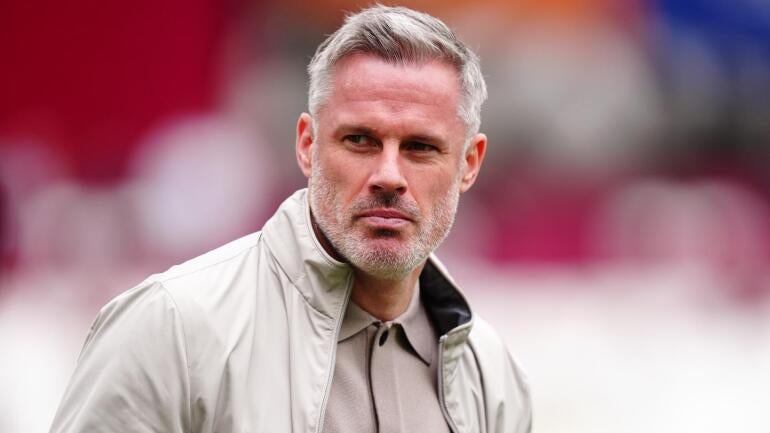
One moment can change the trajectory of your life without even realizing it. This is especially something that can be the case with athletes, where even over the course of a season, things can change drastically at the drop of a hat. Former Liverpool player and current CBS Sports analyst Jamie Carragher opened up on a situation like that in his own career as a player on Kickin' It on Paramount+.
In his final season before retiring, Carragher said that he spoke with incoming Liverpool manager Brendan Rodgers over the phone, and the possibility of Carragher taking up a role as a player manager during the 2012-13 season came up. As Carragher recounts, it could've changed his entire career.
"We had a chat on the phone. We were on the phone for about an hour and a half, two hours just talking football and ideas and at the end of that conversation he offered me a coaching job as in a player coach because I said to him on the phone, 'You're a young manager, I'm an experienced player and I don't want you thinking that I'm going to put pressure on you like that like I'm going to be a problem for you if I'm not playing. I shouldn't be playing for Liverpool right now.'"
At that point, Carragher would've had a chance to see how he felt about coaching by testing the waters, but it didn't come to be. Rodgers never followed up on that discussion, and Carragher didn't ask him about it either, but he did acknowledge that it could've taken him on the management route instead of the current broadcast path.
Just three or four months after that, he joined Sky Sports as a pundit, and the rest is history. But taking into account how he has seen management impact people in soccer, there is a chance that he wouldn't have enjoyed management in comparison to soccer punditry.
"I saw what the job did to two of the managers who were the biggest influence on me, Rafa Benitez and Gerard Houllier. I looked up to them, I had so much respect for them, they helped me so much," Carragher said. "But the way I like to describe it is the guy who walked in the door on the first day was just a shadow of himself from the guy who walked out six years later."
The mental toll that managing takes is something that Jurgen Klopp mentioned when leaving Liverpool, and even Argentina's Lionel Scaloni has also talked about why he's considered leaving the job because of it. There's constant pressure to be at your best each day, and it's only natural for it to take a mental toll after a while. Similar struggles face athletes as well, which is one of the reasons that Carragher doesn't miss being on the pitch, saying he is much happier now than when he played. The feeling that he misses the least is losing, but he explained that while he won't get the highs that the sport brings, he also won't experience the lows.
"Liverpool is great when things are going well, but a lot of that is joy and relief because you have 4-5 days when you can just relax and look forward to the game next week," Carragher said.
"Not every player is like that, and this isn't a criticism of them. I just think my whole life, from being six or seven, football has been in my head constantly every single day. I think I was too hard on myself, and I don't think I enjoyed it enough ... I should've given myself a little bit of slack. If I didn't play well or made a mistake, I'd be in my head for days."
Carragher did speak about those mental issues with someone, but even when he was at the top of his game, he needed it being in the pressure cooker that is the Premier League. The cost of perfection in these situations made him believe that he couldn't make a mistake and cost the team points. Losing a ball in the air away to Atletico Madrid in the Champions League, which led to a draw for the Reds, was a bit of a sliding doors moment for Carragher, as he knew that he shouldn't be putting himself through that.
He spoke with someone every few months, and it was important to be able to speak to someone about what he was going through during his career, both the positive and the negative. This is an aspect of soccer that has been talked about more in recent years, but Carragher encourages others not be afraid to talk through things, finding it helpful in his situation.
“I needed the help when I was at my best.” ❤️@Carra23 shares an honest look at navigating pressure and finding support as a professional player 🗣️ pic.twitter.com/XNyqnbSpIl
— CBS Sports Golazo ⚽️ (@CBSSportsGolazo) January 29, 2026
"I needed the help when I was at my best," Carragher said.
He spoke with someone every few months, and it was important to be able to speak to someone about what he was going through during his career, both the positive and the negative. This is an aspect of soccer that has been talked about more in recent years, but Carragher encourages others not be afraid to talk through things, finding it helpful in his situation.
"I needed the help when I was at my best," Carragher said.