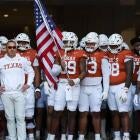


College football roster building was supposed to get a little easier this offseason. Instead, it somehow got way more complicated than anyone could have predicted.
There was no spring transfer portal window this year, only a condensed winter window that still saw a record number of entries. Teams were forced to address major roster needs, departures and additions in a matter of weeks.
Then came the five-for-five eligibility rule. Then the federal court injunction in Colorado that opened another path for members of the 2022 recruiting class to return for an additional season. That created another wave of roster movement just weeks before the start of the season, with some programs bringing back players who otherwise would have exhausted their eligibility.
And now, apparently, we're still not done.
On Wednesday, a Louisiana judge granted a temporary restraining order to 16 football players, including several who had already signed NFL contracts, clearing a potential path for them to return to college football.
For the coaches and front office personnel actually responsible for building these rosters, it's been a summer-long headache. For those of us trying to keep track of all of it, it's been inconvenient.
Our process started as teams finished their 2025 seasons, when we began tracking not only returning starters but every player coming and going from all 138 FBS programs (welcome to the club, North Dakota State and Sacramento State) while keeping tabs on how much playing time each roster was gaining or losing using snap count data from TruMedia.
We published our initial round of returning production features earlier this offseason using spring rosters as the baseline. But with the eligibility rulings and other roster movement continuing well into August, we went back through all 138 rosters one more time before fall camp to provide the most up-to-date look possible.
All that work produced three different ways of answering the same question: What does each FBS roster actually look like entering the 2026 season?
Returning starters are the simplest way to measure continuity, but the transfer portal has made that number less definitive than it once was. Returning snap rates tell us how much of last year's actual workload remains. And career experience shows us how much proven college football a team has on its roster, regardless of whether that experience was developed internally or imported through the transfer portal.
Those numbers often overlap, but they also tell very different stories.
Here's what stood out.
Returning starters: Which teams bring back the most?

The most obvious takeaway from the returning starters study is that the traditional measure of continuity hasn't become irrelevant. It has just become easier to manipulate.
The teams with the most returning starters naturally have some of the strongest continuity entering the season. Georgia, Notre Dame and Oregon each bring back 14 starters, while USC leads the FBS with 15. Six of the eight teams with the best national championship odds return at least 11 starters.
But Indiana is the reason the metric needs some context.
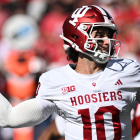
The Hoosiers became the first national champion in nine years to win the title without returning at least 11 starters, bringing back only eight players who had made six or more starts the previous season. Miami had the same number. Both programs supplemented those returning cores with experienced transfers and immediately played for the national championship.
That is the modern version of roster building. You don't necessarily have to keep your players if you can replace them with players who have already done the job somewhere else.
So returning starters remain a useful baseline for continuity. They just don't tell us about the whole roster.
Returning snaps: How much of last year's team actually remains?

This is where the roster picture gets a little more complicated. Returning starters can tell us how many familiar names are back, but they don't capture how much of last year's team is actually returning.
Notre Dame leads the FBS by bringing back 66% of its offensive and defensive snaps from 2025. Six of the eight teams with the best national championship odds rank inside the top 25 in returning snaps. Indiana and Miami are the exceptions. The two teams that played for last year's national championship return just 44% and 46% of their snaps, respectively.
Coaching turnover is a common thread near the bottom: 21 of the 32 teams with the lowest overall returning snap rates also made a change at head coach. But there are some notable exceptions. Colorado, San Jose State and West Virginia all rank in the bottom 12 nationally in returning snap rates despite keeping their head coaches, while Florida, Michigan, Stanford and Virginia Tech all rank among the top 30 despite changing coaches.
A team can bring back several starters and still have a lot of turnover around them, while another can lose a starter or two but retain a significant portion of the players who made up its rotation.
The two measures generally move together. All but five of the 30 teams returning at least 11 starters also rank in the top 30 in returning snaps. But looking at both gives us a better idea of just how much of last year's roster is actually still around.
Experience: Which teams have the most career snaps?
Here's where the transfer portal has fundamentally changed how we should evaluate rosters.
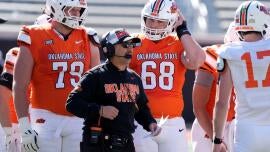
Oklahoma State returns just 11% of its snaps from last season, 133rd nationally. But it also ranks second in the country in total career FBS snaps. Eric Morris tore down much of the 1-11 roster he inherited and replaced a significant amount of that lost experience through the transfer portal.
Virginia took that approach to an even greater extreme, leading the FBS in total career snaps, games played and starts after importing a massive amount of proven college experience.
That's the clearest example of how roster building has changed. Five years ago, an experienced team was usually one that had recruited well and kept its players around long enough to become veterans. Now, a team can lose most of its roster in one offseason and replace that experience almost immediately.
Returning starters tell us which familiar faces remain. Returning snaps tell us how much of the team stayed. Experience tells us who is on the team now and how much college football they've already played.