
Five keys for Indiana upending Miami, completing historic run with first national title in school history
Here's how Curt Cignetti and the Hoosiers could put the ultimate stamp on their dominant run through the CFP field

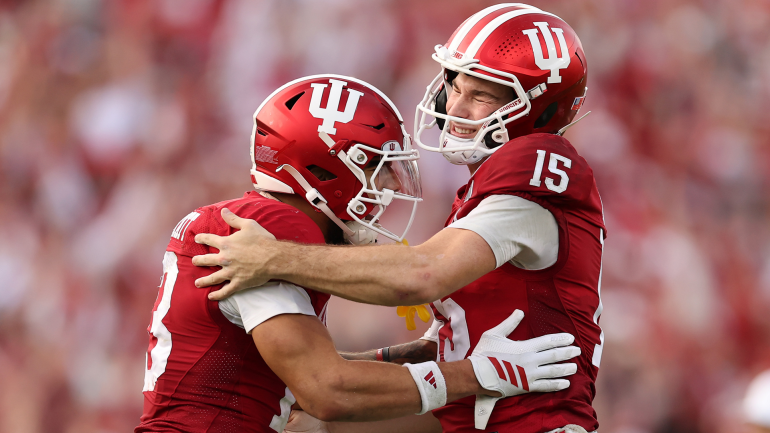
Score more points. For years, coaches and media alike have gone through the process of figuring out what a football team must do to win a football game, but despite all that research, the only thing that has worked every time is to ... score more points.
So when No. 1 Indiana takes the field at Hard Rock Stadium on Monday night with the plan to hoist the national championship trophy for the first time in program history, the thing it absolutely must do in order to achieve that goal is score more points than No. 10 Miami. I promise you that no matter what happens in the game, if Indiana has a higher point total at the end, it will win.
But how does Indiana do that? Well, that's not nearly as simple! Trust me, I wish it were. It would save me a lot of time when my editor assigns me the task of finding five keys to victory for the Hoosiers. I did use that time -- mostly wisely -- to dig into the matchup. I took a good, long look at the Hoosiers, as well as the Hurricanes, searching for the keys to victory.
1. Continue to protect the football
OK, so maybe pushing the turnover button didn't take the most time or research. It's a football cliche, but it's a cliche for a reason. Over the course of time, winning the turnover battle has been a key part of football, and it's one thing Indiana has excelled at all season.
The Hoosiers offense is good at a lot of things, and that's because they get plenty of reps due to not losing the football. Indiana has a turnover rate of 4.8% on offense, which is the third-best mark in the nation but tops in the Power Four. Miami is not awful at 8.4%, but that ranks 32nd nationally.
Where the Hoosiers truly crush teams is what they do with those turnovers. I've long argued that turnovers are great, but scoring points off them matters far more, and Indiana does that. We saw D'Angelo Ponds get a pick six on the first play of the semifinal last week, and then we saw the Hoosiers turn a Dante Moore fumble into another touchdown that essentially put the game away. That's not out of the norm for Indiana. The Hoosiers have scored 134 points off turnovers this season. Not only is that the most in the country, but it's nine points more than second-place Texas Tech. It's 47 points more than Miami, and Miami is 10th nationally! Indiana's points off turnover margin per game (how many points they score off turnovers minus how many points they allow off them) of 7.33 is also the best mark in the country. However, Miami is good in this department as well, ranking 6th at 5.13.
Considering how good both of these teams are, it's not wild to believe this game could come down to one mistake that flips the game. Indiana has shown all year that it's rarely the team making that mistake.
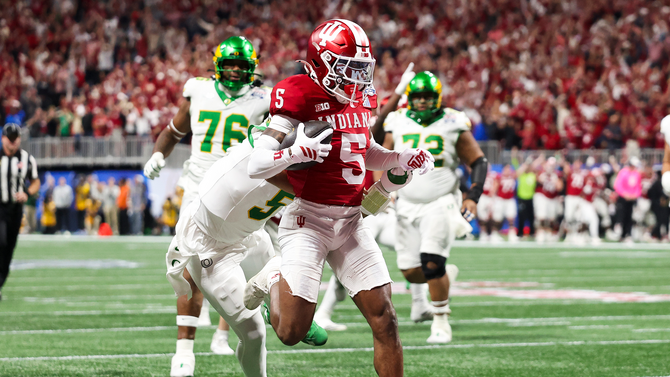
2. Find ways to slow the Miami pass rush
If there's an area of weakness in an Indiana offense that's been great all year, it's pass protection. It's not a serious problem, but the Hoosiers offense has allowed pressure on 28.5% of dropbacks this season, which ranks 36th nationally. Their time until pressure is allowed, according to PFF, is 2.53 seconds. That ranks 69th.
If you rewatch the Rose Bowl, you will see that Alabama's EDGE rushers were having success against Indiana's tackles, even into the second half as the game was getting out of hand. Things weren't as bad against Oregon, but if we go back to the Big Ten Championship Game against Ohio State, Indiana has allowed pressure on 35.6% of its dropbacks over the last three games. That's not great. That's the same rate Auburn allowed during the regular season, and it ranked 103rd nationally.
Perhaps you've heard that Miami has a good pass rush, particularly on the edges with Reuben Bain and Akheem Mesidor. The simple truth of the matter is you won't be able to stop both of them for the entire 60 minutes. They're too good, and they will win battles. Still, you have to find ways to help out your tackles, whether it's with a tight end alongside or chips from running backs.
Then there's the other time-tested method to slow a pass rush: run the dang ball and stay in neutral or advantageous downs. The last thing Indiana wants to do is spend the evening in third-and-long and let the 'Canes defense pin its ears back. This has not typically been a problem for Indiana all year. Only 34.05% of their third-down situations qualify as third-and-long (7 yards or more), which is the second-lowest rate in the nation behind Air Force. Their average distance needed of 5.4 yards is the best in the country, and their 0.60 EPA per third-down play is third.
It's important because while he doesn't turn the ball over when pressured, like nearly all quarterbacks, Fernando Mendoza becomes less effective when he is.
3. Be aggressive early
One of the truths of the expanded playoff era is that the game becomes a battle of attrition as much as it is a football game. It's a violent, physical sport, and the more you play it, the more likely you are to get hurt. Nobody is 100% this time of year, but Indiana is in much better condition physically than the Hurricanes are at the moment. Hey, maybe those byes aren't so bad after all!
I've mentioned Akheem Mesidor already, but he's not at 100%. Nor is defensive tackle Ahmad Moten, or a number of Miami's defensive backs who may or may not be available for this game. The Hurricanes will also be without one of their best corners for the first half of the game after Xavier Lucas was ejected for targeting against Ole Miss.
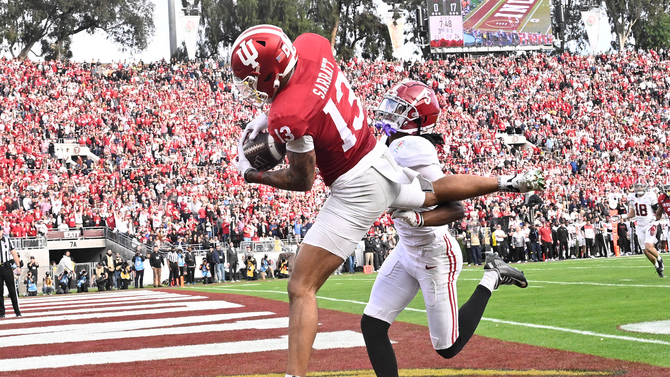
Curt Cignetti and offensive coordinator Mike Shanahan don't need me to tell them to be aggressive since it's their natural state, but I expect they may turn things up a notch early. The Hoosiers have three excellent receivers in Elijah Sarratt, Omar Cooper Jr. and Charlie Becker, as well as tight end Riley Nowakowski. They will look to use them against a depleted Miami secondary.
Indiana hasn't lost a game this season, which is proof that it's not an easy team to beat, but it becomes far more difficult to do so if they build a lead early because they do not ease their foot off the gas pedal. And, getting a big lead early would also help the Hoosiers accomplish another one of their goals.
4. Confuse Carson Beck
We've talked about the Miami pass rush. Everybody does. Bain will be a first-round draft pick, and Mesidor may join him. What isn't mentioned much when talking about Indiana is that its pass rush is incredible, too. Lost in all the Fernando Mendoza and "Google me" Curt Cignetti discussion is that the Hoosiers defense might not have a bunch of first-round picks, but it's still incredible.
Most people don't know that Indiana's pass rush is statistically better than Miami's. Their pressure rate of 41.3% is third nationally (Miami is sixth at 40.8%), and their sack rate of 9.0% ranks ninth (Miami is 11th at 8.7%). Indiana accomplishes this by confusing opposing quarterbacks -- disguising coverages before the snap and bringing blitzes from all over.
Just ask Dante Moore, Julian Sayin, Ty Simpson and every other QB Indiana has faced how tough it is. Hell, Moore had two cracks at it, and he started the rematch by throwing a pick six before taking four sacks (Moore was sacked 19 times all season, and Indiana is responsible for 10 of them).
Miami's offensive line is the best in the country at protecting Carson Beck. Their pressure allowed rate of 17.7% is preposterous, but it's a mixture of talent up front and getting the ball out quickly. Beck is letting that thing loose in 2.49 seconds on average, the sixth quickest nationally.
Indiana needs to confuse Beck so that when he drops back, he's not seeing what he expected, which can lead to hesitation, and hesitation at the QB position is what kills offenses. It killed Oregon, Ohio State, Alabama and damn near everybody the Hoosiers played. Further complicating matters for Miami is that while Mendoza is less effective under pressure, he's still among the best in the nation. Beck is not. Beck goes from top-20 QB in the country to average in a hurry, and his sack rate climbs to 22.1%, which ranks 86th among 133 qualified QBs. More worrisome for the Canes -- his interception rate spikes to 5.7% (112th).
5. Get Miami defenders in space
Miami's defense is not a good tackling defense. Their missed tackle rate of 18.0% ranks 131st nationally. Compare that to Indiana, which is sixth at 11.1%. If you've paid attention to Miami's three playoff games, you've seen it.
The 'Canes have a missed tackle rate of 19.2% in the playoff, including 21.4% against Ole Miss in the Fiesta Bowl. Something Ole Miss took advantage of repeatedly by getting the ball to the perimeter and leaving Miami defenders in one-on-one spots. It didn't lead to a bunch of huge plays, but it did lead to an explosive play rate of 16.67%, which was the highest rate the Miami defense has allowed in a game all season.
Now, Indiana has a different approach offensively than Ole Miss. Mendoza's arm allows Indiana to push the ball vertically up the seams and over the middle of the field in a way Trinidad Chambliss can't. I would not be surprised if we see Indiana do a little more in the screen game in this matchup, however.
Where I really think we could see this come into play is in the run game. Indiana's explosive rush rate of 11.9% ranks 23rd nationally, and its average of 3.54 yards post-contact ranks 23rd. If Indiana breaks through the first level of the line of scrimmage in the run game and gets its backs onto Miami's linebackers or defensive backs, we could see them pop plenty of explosive runs here.