Who could be the next Indiana? Four college football programs positioned for rapid turnarounds in 2026
After Indiana's improbable national championship run in Year 2 under Curt Cignetti, several programs are aiming to replicate the blueprint

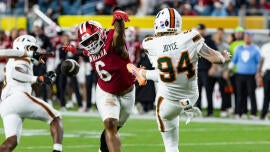
Indiana's national championship run this season was nothing short of remarkable. At the start of the year, the Hoosiers carried the most losses of any FBS program in history, yet in just two years under Curt Cignetti, they transformed from perennial underachievers into an unstoppable force. Indiana went 16-0, culminating in a thrilling 27-21 victory over Miami on Monday night to claim the first national title in program history. The turnaround was unimaginable -- one of the most dramatic reversals college football, or sports at large, has ever seen -- and it's fair to wonder whether anything quite like it will ever happen again.
Still, it raises a tantalizing question: who could come closest to replicating Indiana's leap in the near future?
What makes Indiana's rise particularly relevant in today's game is how quickly rebuilds can happen in the modern era. Gone are the days of waiting for multiple cycles of high school recruits to develop within a system. With aggressive transfer portal strategies and immediate roster impact, programs can add talent, reshape culture and install an identity almost overnight -- if done correctly.
Indiana's rise wasn't about chasing stars or spending sprees. It was built on experience, culture, and process: bringing in players who could contribute immediately, installing a locker room that demanded buy-in, and building a system that maximized performance from Day 1.
There may never be another Indiana. But across the country, programs are trying to borrow pieces of the blueprint, blending ambitious coaching hires with immediate roster reinforcements. Here are four programs already making moves and positioning themselves to chase the closest thing possible to the next Indiana.
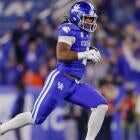
Kentucky
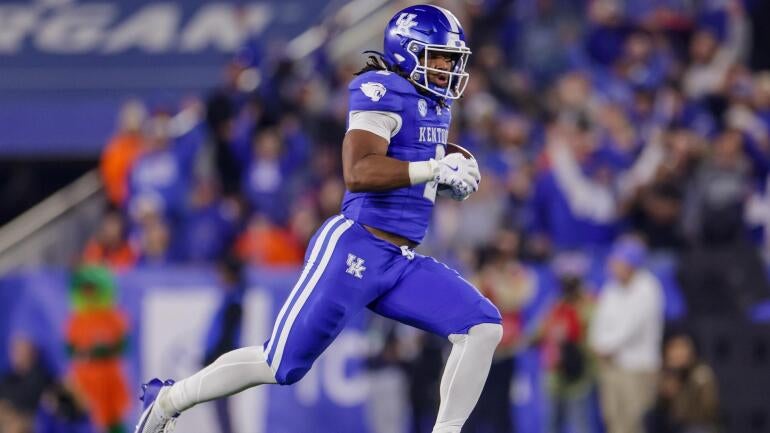
Kentucky is a college basketball blue blood that has never fully decided what it wants to be in football -- similar to what Indiana was before Curt Cignetti arrived. The Wildcats have invested just enough to stay relevant, but not enough to escape the gravitational pull of the SEC's middle class. Despite two 10-win seasons under Mark Stoops, Kentucky has a losing record over the past 15 years, statistically grouped only with Arkansas and Vanderbilt in the SEC.
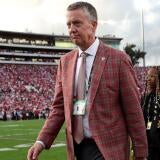
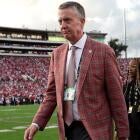
That's why the Will Stein hire feels consequential. Indiana's rise under Cignetti wasn't rooted in pedigree; it came from alignment and aggression. Kentucky, for the first time in a while, appears to have both. Stein and offensive coordinator Joe Sloan attacked the transfer portal with purpose, rebuilding the offensive line with proven Power Four starters and betting on upside elsewhere. Flipping Notre Dame quarterback transfer Kenny Minchey from Nebraska, adding former five-star running back CJ Baxter and taking a calculated swing on LSU receiver transfer Nic Anderson signals a program willing to aim higher than past norms.
Although Stein lacks Cignetti's head-coaching résumé, the infrastructure matters more. Indiana proved that when belief, resources and identity arrive together, history stops being a ceiling. Kentucky finally looks ready to test that idea.
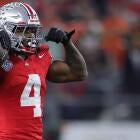
UCLA
Yes, another college basketball blue blood -- but this time, the football program comes with a far richer history of near-misses. UCLA has hit double-digit wins in nine different seasons, yet in the past eight years, it's only reached two bowl games and posted a 6-12 record against the Big Ten since joining in 2024. The talent and tradition are there, but consistency has been elusive.
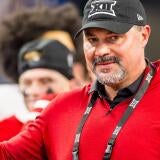
New coach Bob Chesney arrives from James Madison after leading the Dukes to a CFP appearance this season, mirroring Curt Cignetti's path to Indiana. Like Cignetti, Chesney has proven he can win at every level: 23-9 at Salve Regina (Division III), 44-16 at Assumption (Division II), 44-21 at Holy Cross (FCS) and 21-6 at James Madison, compiling a .717 winning percentage nearly on par with Cignetti's .798. And just as Cignetti brought trusted players with him, Chesney arrives with 10 JMU transfers ready to plug gaps and accelerate culture change. The Bruins also return former five-star quarterback Nico Iamaleava, a high-upside talent who could be a centerpiece in Chesney's offense if he reaches his potential.
UCLA has long been a program of unfulfilled promise. With Chesney's proven ability to align coaching, talent and culture -- plus the immediate infusion of familiar transfers -- the Bruins could finally turn potential into the kind of momentum Indiana enjoyed.

Virginia Tech
Virginia Tech is a classic "sleeping giant" in college football -- one of the nation's best programs that has never won a national championship. The Hokies were a fixture under legendary coach Frank Beamer, including a run to the BCS National Championship game in 1999, but over the past decade they've hovered right at .500, leaving a program with a proud history searching for a rejuvenated sense of hope.
That history is part of what made the job so appealing to James Franklin, who arrives in Blacksburg ready to launch a redemption arc after being fired by Penn State in October. Franklin has earned a reputation as a culture builder: he helped lead Vanderbilt to one of the most competitive stretches in its history and navigated Penn State through NCAA sanctions while maintaining consistent success at a high level.
Now Franklin inherits a roster in need of energy and leadership -- and he brings immediate reinforcements in 12 transfers from Penn State, including quarterback Ethan Grunkemeyer and tight end Luke Reynolds, players familiar with his system and capable of stepping in right away.
Virginia Tech has long been defined by what it almost achieved. With Franklin's proven ability to build culture, develop talent and inject urgency into a program, the Hokies have a real shot at recapturing national relevance.
Oklahoma State
This is an Oklahoma State program staring up from rock bottom. Over the past two seasons, only Purdue (3) and UMass (2) have fewer wins among FBS programs, and all three failed to win a single conference game. The 2025 Cowboys were historically bad -- 1-11 with zero wins against FBS opponents.
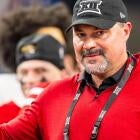
Enter Eric Morris, the new coach known for his dynamic, high-powered offenses. Unlike Curt Cignetti's arrival at Indiana, where he inherited a program with little historical success, Morris steps into a program that has come close to the pinnacle before, proving it can fully invest in football. Under Mike Gundy, the Cowboys frequently contended at the top of the Big 12, giving Morris both the resources and institutional expectation to rebuild a contender in the modern era.
Morris brings the FBS's leading offensive system to Stillwater, but the bigger story is the roster transformation. More than 60 players have entered the portal with a return of more than 50 transfers including 17 familiar faces from North Texas. The haul includes five-star quarterback Drew Mestemaker, national rushing touchdowns leader Caleb Hawkins and top wideout Wyatt Young, alongside key defensive pieces and multiple four-star skill players.
Whether a roster with 65-plus newcomers can gel immediately remains to be seen, but the sheer scale and quality of this infusion gives the Cowboys a legitimate path from last place to national contention -- if it does.