Winners and losers of the Kyle Tucker signing: Dodgers, Mets, Blue Jays, Cody Bellinger and more
The World Series champions have agreed to a four-year, $240 million contract with the top free agent

•
6 min read
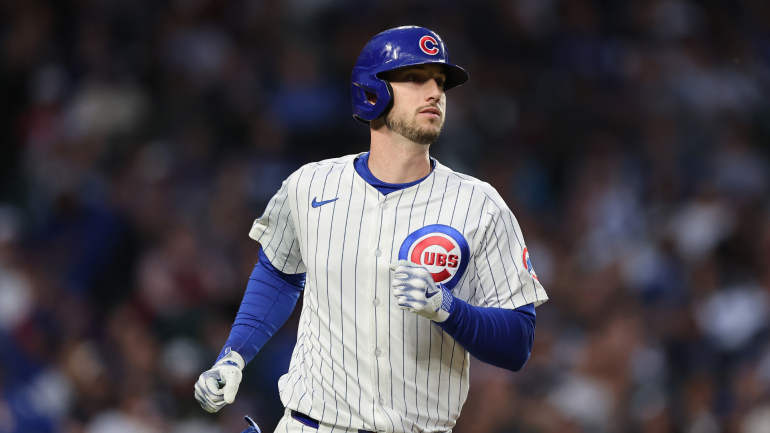
The Los Angeles Dodgers have agreed to terms with outfielder Kyle Tucker on a four-year contract that will pay him $240 million. The resulting $60 million average annual value represents the largest in Major League Baseball's history, surpassing the $51 million AAV Juan Soto received last winter from the New York Mets. The pact reportedly includes opt-out opportunities after the second and third seasons.
Tucker, 29 in a matter of days, was regarded by CBS Sports as the No. 1 free agent on the market this offseason. Here's what we wrote back at the onset of the winter:
Bill James once theorized that it's better for a player's perception for them to start hot and finish cold than the inverse -- that way their numbers are more impressive for a longer period of time. Tucker tested that idea. He entered July sporting a .931 OPS, but from there on he posted an ice-cold .690 mark. His downturn seems connected to injuries, specifically the fractured hand he suffered in June. Tucker still produced his fifth consecutive four-win season, so the shape of his year may prove irrelevant to teams seeking a star-level performer who is good at everything (albeit seldom ranked among the league leaders at anything).
Tucker now joins the Dodgers, MLB's first repeat World Series champion in more than two decades. He figures to slot high into a lineup that already includes All-Star talents like Shohei Ohtani, Mookie Betts, and Freddie Freeman. Tucker will also be part of an outfield alongside some combination of Teoscar Hernández, Andy Pages, and Alex Call.
For more on Tucker's signing, let's highlight a few winners and losers of the deal.
Winners
1. Los Angeles Dodgers
Obviously enough.
The Dodgers were already good enough to win the last two World Series and they already entered the offseason as the favorites to win yet another title. Then they inked closer Edwin Díaz earlier this winter to address their biggest weakness.
The Tucker signing, though, elevates them even more. Think about it this way. They'll now field a lineup that includes four of the top 20 position players in the sport, as judged by total Wins Above Replacement accumulated since 2023. That's Shohei Ohtani (second), Mookie Betts (eighth), Freddie Freeman (18th), and Tucker (19th).
Only one other team has even three of the top 20, with that being the New York Mets: Juan Soto and Francisco Lindor rank fifth and sixth, and Marcus Semien checks in 17th.
That the Dodgers were able to snag Tucker without committing to him for more than two guaranteed years ensures they should avoid any age-related decline. More on that later. For now, they've upped those World Series odds from +370 after Game 7 to +250 (via DraftKings).
2. AAV-heavy structure
It's long been an accepted truth that top free agents, especially hitters who are in their prime years, are compensated in both term and wage. The Tucker signing helps introduce a new kind of contract that trades length for a more intense payday.
The logic on the player's side is straightforward. Not only can Tucker control his own destiny by triggering an opt-out clause after either the second or third season, but he has a chance to walk away with significantly greater earnings this way than if he had signed a 10-year pact worth $300 million (or whatever the accompanying amount would have been). He'll now hit free agency again ahead of his age-33 season (at the latest) with $240 million already in the bank.
As for the team, the Dodgers will be able to avoid paying Tucker deep into his 30s, when he's likely to suffer from age-related decline. Yes, they'll have to write a bigger check to cover their luxury tax penalties, but that's a small price to pay when there's a chance to string together three or more World Series titles in a row.
3. Bellinger and Bichette
The biggest fans of the Tucker signing who don't have a vested interest? Probably free-agent outfielder Cody Bellinger and infielder Bo Bichette.
Bellinger is now, clearly, the top outfield bat remaining on the market. He's been engaged with the New York Yankees for weeks now, with the hangup being over the years. If nothing else, Bellinger's camp can point to the Tucker deal in an attempt to fetch a higher AAV, even if it doesn't necessarily come with a longer term.
Bichette, on the other hand, had originally had his free agency prolonged by the Blue Jays' interest in Tucker and Alex Bregman. With both signing elsewhere, Toronto can more seriously engage in talks about a potential reunion. That doesn't mean Bichette will return to the only franchise he's played for as a professional, but the chances seem higher now than they were this time a week ago.
Losers
1. New York Mets
The Mets have already drawn their share of criticism this winter. Executive David Stearns allowed first baseman Pete Alonso and closer Edwin Díaz to leave through free agency and traded longtime fixtures in outfielder Brandon Nimmo and utility player Jeff McNeil. Still, it appears that Stearns had a real chance of landing Tucker, putting the wind back in New York's sails by giving them another high-level producer -- and potentially doing it without handing out another extremely long-term commitment.
Owner Steve Cohen even raised eyebrows earlier on Thursday evening, sending out a social media post about waiting for smoke.
Clearly Cohen wasn't playing coy. In the end, the Mets were outmaneuvered by the Dodgers, who offered $10 million per annum more than the Mets' last reported offer. (It's unclear if New York upped its bid before Tucker made a decision.) Now, if the Mets are to add another piece to their lineup before Opening Day, they'll have to resort to either signing a lower-tier free agent or making a trade.
That isn't to suggest the Mets are doomed -- they have plenty of talent in place and a handful of promising youngsters nearing a permanent big-league assignment -- but this isn't the kind of winter they had in mind after collapsing late last season and missing the playoffs.
2. Toronto Blue Jays
The Blue Jays have to be tired of being beaten to the punch by the Dodgers. Over the last three years, the Dodgers have snatched free agent after free agent (Ohtani, Roki Sasaki, now Tucker) from Toronto's grasp. If that wasn't enough, the Dodgers also came from behind -- on the road -- to defeat the Blue Jays in last year's World Series.
On the bright side, the Blue Jays can still pivot here and re-sign Bichette. They also made a fair number of additions earlier in the winter, landing right-handers Dylan Cease and Cody Ponce, as well as Japanese infielder Kazuma Okamoto.
Tucker would've been a huge get for the Blue Jays. It just wasn't meant to be.
3. The rest of baseball
Because the Dodgers are that much better, yes, but also because this ensures there will be more sustained bellyaching about a salary cap. (As if the owners have ever needed an excuse.)
The Dodgers, for those keeping score, were already expected to have a luxury tax payroll around $360 million. Depending on the exact terms of Tucker's deal, as well as whatever else they do with their roster, they could exceed $400 million for the second year in a row.
Thanks to their 2025 payroll, the Dodgers had to pay more than $169 million in luxury tax penalties, a new MLB record.