Where Indiana ranks among college football's best teams of 21st century after CFP title game win over Miami
Curt Cignetti, Fernando Mendoza and the Hoosiers made history as college football's first 16-0 champ

•
8 min read
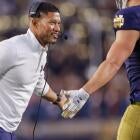
MIAMI GARDENS, Fla. -- Curt Cignetti had choices and the only one worth making was the right one.
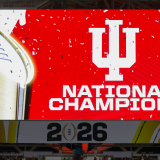
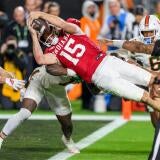
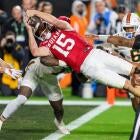
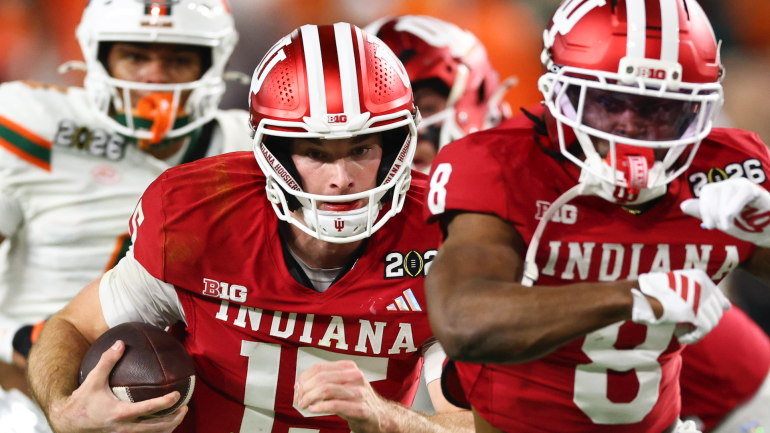
Indiana's unbeaten season had its storybook ending, a fourth-down touchdown run from Heisman Trophy-winning quarterback Fernando Mendoza with 9:18 remaining to give the Hoosiers a 10-point cushion in Monday night's College Football Playoff National Championship.
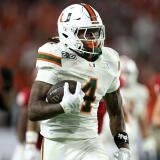
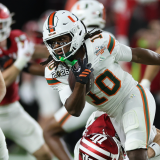
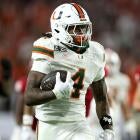
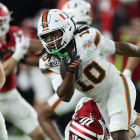
After a touchdown from Miami star Malachi Toney on the ensuring possession, the wind once again left Miami's sails as Indiana got the ball back, kicked a field goal and capped its season with a 27-21 win. The mostly-crimson crowd inside Hard Rock Stadium was on the cusp of jubilation throughout the second half as Indiana's crowning achievement neared -- solidifying the Hoosiers as one of college football's best all-time teams.
Few believed it would happen in college football's expansion era, but it only took two postseasons for a worthy national champion to go end to end as an unblemished, 16-0 juggernaut. Cignetti's Hoosiers peaked at the right time, playing their best in the College Football Playoff against three top-10s, culminating with Monday's effort against the Hurricanes.
What exactly constitutes "best team" when putting together a ranking like this? The overall makeup of talent factors in, how well you dominate your schedule relative to its toughness with wins over quality opponents and, frankly, eye test during the era in which a team captured a national championship. Only that season and those results matter, not the eventual number of draft picks or future performances.
Sifting through college football's last 25 national champions, these are the best teams of the 21st century and where the unbeaten Hoosiers rank among them.
1. 2019 LSU (15-0)
Not since Miami's impressive run during the 1980s and early 1990s did a team show up to the field dripping with as much confidence and swagger as Ed Orgeron's Tigers in 2019. This team was different, evidenced by seven wins over top-10 teams including a 20-point average margin of victory over five top-5 opponents. Heisman-winning quarterback Joe Burrow (5,671 yards, 60 TDs, 6 INTs) and his two studs at wideout -- Ja'Marr Chase (84 catches, 1780 yards, 20 TDs) and Justin Jefferson (111, 1,540, 18) -- were just three of LSU's record-number of head turners on both sides of the football. Clyde Edwards-Helaire had a quiet 1,414 yards rushing with 16 touchdowns while the Tigers were a menace in the secondary defensively, fueled by five-star freshman Derek Stingley Jr.'s six interceptions and Jim Thorpe Award winner Grant Delpit at safety.
LSU's 48.4 points per game is the second-highest average by a national champion since 2000, behind 2020 Alabama (48.5). The Tigers outscored their opponents by a combined total of 726-328, scoring 50-plus points in seven different games. Burrow's seven touchdown passes in the first half of LSU's semifinal win over Oklahoma remains the most notable individual performance in CFP history. In nine other seasons as a head coach, Oregon only eclipsed nine wins once and went 11-11 overall over his next two years in Baton Rouge.
2. 2020 Alabama (13-0)
The only team with three top-5 Heisman finishers over the past 25 years including winner DeVonta Smith, the Crimson Tide were unstoppable to the highest degree in 2020. Smith nuked program records with 117 catches for 1,856 yards and 23 touchdowns, while Mac Jones had a 4,500-yard season with a touchdown to interception ratio of 10:1. Najee Harris accumulated 1,466 yards rushing and 26 scores and was a threat as a pass-catcher, too. Freshman edge Will Anderson Jr.'s best numbers came the next two years, but he still notched 10.5 TFLs and seven sacks as a game-wrecker up front, along with Christian Barmore (8 sacks).
Some stick an asterisk on the 2020 campaign given the mass schedule changes for many teams after the COVID-19 outbreak, but Alabama's slate was full, jam-packed with 10 SEC contests for the first time in history. The Crimson Tide's average margin of victory entering the league title game against Florida was 32.9 points per game, arguably the most impressive regular-season run in conference history highlighted by three wins over ranked competition -- Texas A&M, Georgia and Auburn. Alabama beat Florida in a 52-46 thriller in Atlanta before disposing of Notre Dame in the playoff semifinal prior to a 52-24 clobbering of Ohio State in the CFP title game. That Buckeyes team was unbeaten and coming off a 21-point win over Trevor Lawrence and Clemson in the semis.
Nick Saban's sixth national title at Alabama and seventh overall was his greatest feat, considering the Crimson Tide's defense rarely showed its usual strong effort reflected during much of the legend's historic tenure. In fact, Alabama's unit was the third-worst statistically ever to win a national championship, giving up 352.2 yards per game.
3. 2025 Indiana (16-0)
Good luck picking the right spot to squeeze Indiana within this list of elite title winners. Curt Cignetti and the Hoosiers did it their own way, a considerably different recipe toward victory offering the same, satisfying result. This wasn't a talent-laden roster full of four- and five-star recruits. These were seasoned college football players, all working as one with a level of synergy we haven't seen on the grand stage in the CFP era. Heisman-winning quarterback Fernando Mendoza was terrific throughout, his individual laurels driven by a pair of fourth-quarter comebacks, while the Hoosiers' version of "Moneyball" through transfer portal acquisitions, enhanced preparation and player development came up aces. Indiana might not be the greatest team of the 21st century, but this performance from Cignetti was easily the top coaching job in the last 25 years.
The Hoosiers only had to play two ranked opponents during the first 14 weeks of the season (Illinois and Oregon) before embarking on their season-defining run, enhanced by heightened execution against Ohio State in the Big Ten Championship Game, a backhanded slap of Alabama in the Rose Bowl and complete destruction of the Ducks in the Peach Bowl CFP semis. Monday night's victory over Miami to close it out was the gold star atop a worthy crown for Cignetti and his players, punctuating a singular campaign that won't soon be forgotten in college football postseason lore.
Objectively, even the metrics love the Hoosiers. Only three times in the last decade has college football's national champion finished inside the top 5 in total offense and total defense. Indiana is one of those programs, joining 2022 Georgia and 2018 Clemson. Also, Indiana owns the best single-season point differential by a team in the CFP era at +473 (add Miami difference), which bests 2018 Clemson (+467) and 2019 LSU (+398).
4. 2013 Florida State (14-0)
Heisman winner Jameis Winston pushed the Seminoles to the third unbeaten season in program history during the final year of the Bowl Championship Series in 2013 with an all-time showing offensively. FSU's FBS-record margin of victory at 39.5 points per game still stands and the Seminoles led the country in scoring defense as well at 12.9 points per game under Jeremy Pruitt's tutelage on Jimbo Fisher's elite staff, which included six new additions during the offseason. The Seminoles annihilated ACC competition behind Wiinston's heroic campaign, including four wins over ranked teams (Maryland, Clemson, Miami, Duke) by an average of 41.2 points per game. FSU's 51-14 beatdown of Clemson on the road remains one of the program's best performances away from Doak Campbell Stadium in school history.
FSU trailed Auburn at the Rose Bowl in the national championship game by 11 points at halftime before three lead changes over the final 4:31 of the fourth quarter provided the Seminoles with a 34-31 memorable win. Winston's go-ahead, 2-yard touchdown pass to Kelvin Benjamin with 13 seconds left capped a historic seven-play, 80-yard march after the Tigers had taken a 31-27 lead with just under 90 seconds to play. Winston led college football that season with a 184.8 passer rating after finishing with 4,057 yards, 40 touchdowns and 10 interceptions. Benjamin and Rashad Greene each eclipsed 1,000 yards receiving while Kenny Shaw and tight end Nick O'Leary were nearly equally proficient as third and fourth options in the passing game.
Sixteen different players recorded interceptions on defense, driven by Nate Andrews (4) and P.J. Williams (3). Linebacker Telvin Smith was the team's leading tackler and Timmy Jernigan led pass-rush efforts with 4.5 sacks and a bevy of stops at nose. Only one team recruited on defense at an elite level in the ACC more than a decade ago and it was the Seminoles.
5. 2001 Miami (12-0)
There's a difference between the best team and the most-talented team, though the Hurricanes have an argument for both. This Hurricanes squad is often mentioned as one of the top in program history given their litany of stars, including six All-Americans -- Jeremy Shockey, Bryant McKinnie, Joaquin Gonzalez, Ed Reed, Phillip Buchanon and Todd Sievers. The standouts who did not earn AA status were equally impressive, difference-makers like Ken Dorsey, Clinton Portis, Willis McGahee, Vince Wilfork, Jonathan Vilma and Sean Taylor, among others.
Under first-year coach Larry Coker, Miami destroyed the seven teams it played during Big East play outside of an 18-7 win at Boston College, which finished 8-4 that year with Brian St. Pierre at quarterback. The Hurricanes led 12-7 in the final minute of play on the strength of four field goals before Reed's 80-yard interception return sealed the victory. Notable wins included Penn State, 13th-ranked Florida State in Tallahassee, No. 15 Syracuse, 11th-ranked Washington, 14th-ranked Virginia Tech on the road and a 37-14 clubbing of Nebraska in the national championship game. Miami led 34-0 at intermission of that one against Huskers Heisman-winning quarterback Eric Crouch. Miami's overall talent level, relative to what the Hurricanes faced on a weekly basis against a favorable schedule, is why this team is outside of the top 5.

6. 2018 Clemson (15-0)
Many would argue Dabo Swinney's one-loss 2016 team with a Deshaun Watson-led offense from two years prior was more explosive after Clemson shattered numerous program records for total offense as its star quarterback finished with 5,222 total yards and 50 touchdowns (41 passing, nine rushing). However, freshman signal caller Trevor Lawrence and several first-round defensive linemen were even more dominant in 2018 when the Tigers captured another national title.
Clemson played only two single-possession games (Texas A&M, Syracuse) and beat four ranked opponents by an average margin of 27 points per game, including the most lopsided defeat of Nick Saban's career at Alabama in the title game (44-16). The 14-0 Crimson Tide were led by Tua Tagovailoa and an elite defense, but were no match for Lawrence and the Tigers. During that season with Tony Elliott as offensive coordinator, the Tigers' offensive attack was paced by Lawrence's 3,280 yards passing and 30 touchdowns, Travis Etienne's 1,658 yards and 24 scores, and the duo of Justyn Ross and Tee Higgins on the outside. The ACC had no answers for any of those standouts.
Clelin Ferrell led the Tigers with 11.5 sacks, followed by eight from Austin Bryant and six from Christian Wilkins. Clemson produced five first-team All-Americans in 2018, including offensive tackle Mitch Hyatt. Clemson's three consensus All-America selections in 2018 was a first in school history (Wilkins, Ferrell, Hyatt).