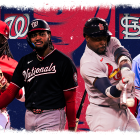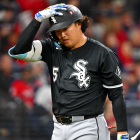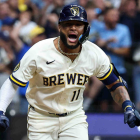


If you were to focus your attention on teams that fared better than generally expected during the 2026 Major League Baseball season, you'd likely land on the St. Louis Cardinals and Washington Nationals.
Both clubs were recently eliminated from playoff contention and are below .500. However, coming into the year, most observers likely would've pegged the Cards and Nats for perhaps 100 losses each in 2026. As such, both teams qualify as pleasant surprises to an extent. The Cardinals still have an outside shot at a .500 or winning record this season, and the Nats at this writing have a positive run differential. That's notable in light of what was expected from these teams.
That brings us to 2027. Will either of these surprisingly respectable teams take the next step and contend in the season ahead? That's entirely possible given that both organizations are young and on the upswing, and the prospects of such a leap forward for St. Louis and D.C. merit further explanation now that they've been bounced from contention in 2026. Let's do that now.
The bullpens must improve
Teams that don't expect to contend, as was very much the case with the Cards and Nats, tend not to put much thought or effort into constructing the bullpen. It's simply not a priority for most rebuilding teams. That was generally true for both these teams, and suffice it to say the results back that up.
Consider how they fare in various bullpen measures relative to their MLB peers (MLB rank in parentheses):
| Team/Stat | Bullpen ERA | Bullpen FIP | Bullpen K% | Blown saves | Meltdowns |
|---|---|---|---|---|---|
Cardinals | 4.55 (24th) | 4.32 (22nd) | 21.2% (23rd) | 30 (3rd) | 106 (2nd) |
Nationals | 5.04 (29th) | 4.97 (29th) | 18.9% (29th) | 39 (1st) | 110 (1st) |
The above should be familiar, except possibly meltdowns. That's a FanGraphs reliever metric, and a reliever earns a meltdown when he worsens his team's odds of winning a given game by 6% or more during a given appearance. As you can see, the Cardinals and Nationals are at or near the top when it comes to their frequencies of blown saves and meltdowns. Otherwise, the corps of note are inept at both run prevention and at underlying performance as indicated by K% and FIP. These are bad bullpens, gallingly bad in the case of Washington's.
With starting pitchers working less and less and thus not going deep into games, bullpens are perhaps more important than they've ever been. To be sure, you can overcome a suboptimal bullpen and contend on the strength of your offense and rotation, but it's difficult. It's especially difficult when your bullpen is downright bad, as these two are.
The good news is that improving a bullpen through churn and skills improvement is quite achievable, especially for progressive front offices such as those found in St. Louis and D.C. Neither club is going to sign a big-name closer on the free-agent market, but there are plenty of other paths to bullpen turnover and improvement, including internal solutions via promotions, starter conversions, and developmental improvements of pitch shapes and arsenals. However it's done, the Cards and Nats won't matter in 2027 if they don't get better performance from their relievers.
The rest of the rosters
The Nats boast one of the best offenses in MLB, and it's also the youngest lineup in the league. That bodes well moving forward, of course, and it's worth noting that the club thus far has resisted entreaties to trade away infielder CJ Abrams. What would greatly aid the cause is if outfielder Dylan Crews, the 24-year-old former No. 2 overall pick (drafted just behind his LSU teammate Paul Skenes) finally takes the next step as a hitter and becomes a worthy core player alongside young All-Star James Wood.
As for the Cardinals, they have the second-youngest lineup in MLB, and it's largely set for the coming seasons, anchored by the likes of JJ Wetherholt, Jordan Walker, and Alec Burleson. The recent emergence of Leo Bernal at catcher means the Cardinals are probably just looking at two question marks for 2027 and beyond: third base and center field. At that, they have prospects on the way and enough pieces in place to paper over or platoon their way out of having real trouble at those positions.
Some numbers for these two offenses, which figure to remain largely intact in 2027:
| Team | 2026 xwOBA (MLB rank) |
|---|---|
Cardinals | .321 (6th) |
Nationals | .324 (2nd) |
xwOBA, or Expected Weighted On-Base Average, is an estimation of what a hitter's or an offense's production should be based on quality of contact. The stat attempts to strip away luck -- bad or good -- and defensive play from its parental stat wOBA and identify a hitter's or an offense's baseline skill. It's quite useful for projecting future performance. In these instances, the very young attacks of the Nats and Cards grade out quite well according to xwOBA and thus do so looking ahead.
On the rotation front, the Cardinals have options, both in place and on the way. Kyle Leahy, Michael McGreevy, and Andre Pallante look like 2027 fixtures, and competing to round out the final two spots will be names like Quinn Mathews, Matthew Liberatore, Richard Fitts, Cooper Hjerpe, and perhaps current Triple-A contributors like Jurrangelo Cijntje and Mason Molina. There's more on the way behind them at Double-A. The Nationals, meantime, have Cade Cavalli in place at the front end, and the injured Connelly Early – acquired from the Red Sox leading up to the trade deadline – may be in line to make his Nats debut before the regular season ends. Controllable lefty Andrew Alvarez looks promising, and flame-hurling prospect Jarlin Susana should be ready soon. Both teams could benefit from some free-agent bargain hunting, and there's space and opportunity for that.
The X-factor
The ongoing negotiations on a new collective bargaining agreement are an X-factor on all such fronts because it's possible there won't be much or any of a 2027 season. Specific to this discussion, though, is the possibility of an expanded postseason.
That's an ugly thought since, at this writing, it's possible the American League spiritually burdens us all with one or more sub-.500 teams, but signs point to continued playoff bloat in MLB.
Owners pushed for a 14-team playoff last time the CBA was negotiated, but the players ultimately agreed to the current 12-team format. Given MLB's appetite for maximizing media revenues no matter what it does to the time-honored foundations of the sport and given how lucrative playoff broadcasts are, another such push can be expected. The players seem likely to agree to it given all the other ownership asks they need to parry.
If indeed that's the case in time for the 2027 season, then the bar for contention will be even lower than it already is. That's quite relevant to the "emerging from rebuild" clubs like the Cardinals and Nationals.
Add it all up and, assuming the necessary bullpen repair work is undertaken in both cities, relevance and possibly even contention seem quite tenable for these two clubs in 2027 – whatever 2027 looks like.