
White Sox rookie Munetaka Murakami off to historic start, but is his power production built to last?
Murakami has homered in five straight games but some of his metrics could be cause for concern

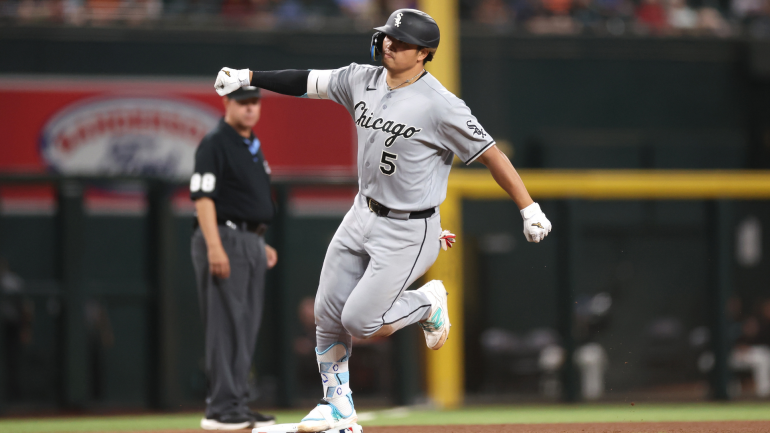
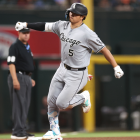
Not much has gone right thus far in 2026 for the Chicago White Sox, who are 9-15 and presently on pace for a fourth straight 100-loss season. One notable exception, however, is the power performance of rookie and marquee offseason addition Munetaka Murakami.
The 26-year-old Murakami, going into his team's Thursday contest against the Arizona Diamondbacks, has homered in five straight games, which ties the franchise record for consecutive games with a home run. Here's a look at his recent work, including a booming clout over the batter's eye in Sacramento:
At this point, it bears mentioning that the MLB record for consecutive games with at least one home run is eight, and it's shared by three sluggers: Dale Long of the Pittsburgh Pirates in 1956, Don Mattingly of the New York Yankees in 1987, and Ken Griffey Jr. of the Seattle Mariners in 1993. Six different players have homered in seven straight games, with Mike Trout of the Los Angeles Angels in 2022 being the most recent. In all, 25 players have homered in six straight games -- Rafael Devers of the Boston Red Sox in 2024 is the most recent -- and Murakami on Thursday will seek to make it 26.
Taking the longer view, Murakami, with 10 home runs in 24 games, is the fastest player in White Sox history to reach double figures in homers in a season and fourth-fastest in all of MLB history. This, to state the obvious, is a most encouraging development for a player who, upon making the leap from Japan's NPB to MLB, had questions about his capacity to make contact often enough.
Murakami has indeed struck out a lot in his first stateside season. Presently, he's struck out in 30.8% of his plate appearances, which puts him in the 12th percentile among MLB hitters in 2026. He's also running a whiff rate of 38.5%, which is good for just the second percentile. That's a lot of swing and miss, but Murakami is doing everything else at the plate well -- very, very well.

He's drawn 21 walks, 19 unintentionally, in 104 plate appearances, which has helped push his on-base percentage north of .400. For all his whiffs, he's been very good thus far at laying off pitches outside the strike zone. Then, of course, there's the power. His lofty home run tally has been noted -- only Yordan Alvarez of the Houston Astros has more, with 11 -- and then there's Murakami's absolute elite quality-of-contact metrics. Consider:
- His expected slugging percentage of .674 is in the 99th percentile.
- His average exit velocity off the bat of 96.4 mph puts him in the 99th percentile.
- His barrel rate, or the percentage of batted balls that leave the bat at the ideal exit velocity and launch angle for power production, is in the 99th percentile.
- His hard-hit rate, or the percentage of batted balls that leave the bat at 95 mph or greater, of 66.7% is likewise in the 99th percentile.
In other words, his sky-scraping power production has been earned and then some thus far. Sure, it's too soon to start pondering Pete Alonso's rookie record of 53 home runs in 2019, but let's keep part of one eye on it insofar as Murakami's early power display is concerned.
Moving forward, there are causes for concern. Murakami's contact rate on pitches in the zone is well below the MLB average, and he's probably not going to see fastballs roughly half the time moving forward. In other words, he's going to have to continue doing huge damage on contact if he's to remain a big producer despite heavy swing and miss.
Thus far, though, he's overcoming those deficits in major ways, and indeed, Murakami has been one of the most productive hitters in all of baseball this season. The challenge is to keep that going despite what might be a fatal flaw in hitters without his capacity to hit the ball very hard and also very far.