The 2026 NBA Draft is officially in the books after Wednesday night's second round concluded one of the most anticipated drafts in recent history. Historically speaking, second-round picks don't have a great hit rate, but some appealing talents with longterm upside were taken Wednesday who could become impact players.
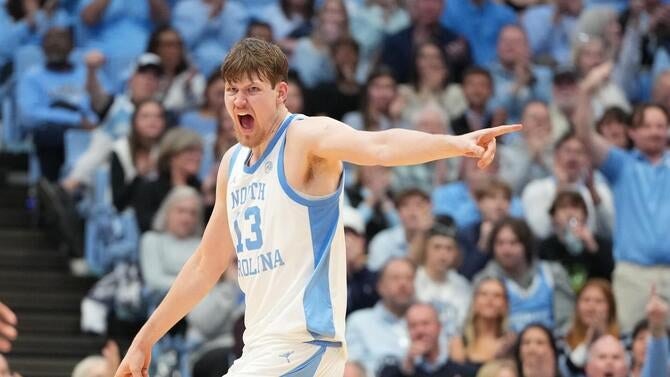
Isaiah Evans (No. 33 to Minnesota), Meleek Thomas (No. 34 to Cleveland) and Henri Veesaar (No. 52 to Atlanta) were each regarded as potential first-round picks entering the week. All three had collegiate eligibility remaining, but they chose to leave millions on the table in order to head to the draft.
Will they go down as the top steals of the 2026 draft and prove that they should have been first round picks? Or will they go down as cautionary tales for future generations of college players who are itching to reach the NBA prematurely?
Much of the rest of the second round was filled with veteran college players who will hope to latch on as role players in the NBA. Among them was former Purdue point guard Braden Smith, who is the NCAA's all-time assists leader. Smith won't be heading far, as he's sticking in Indiana to play for the Pacers, who picked him at No. 38.
Smith will hope to follow the Jalen Brunson mold and thrive in the NBA after slipping to the second round as an undersized point guard with multiple years of college experience.
Early run on shooters
Isaiah Evans and Meleek Thomas were two of the best shooting specialists in this draft class, and both were viewed as potential first round picks entering Tuesday. Though that didn't come to fruition, both came off the board quickly on Wednesday, with Minnesota taking Evans at No. 33 and Cleveland snagging Thomas at No. 34. Both guys profile similarly. They are fearless, high-volume shooters with great range and some uncertainty surrounding the rest of their games.
Neither is particularly well-rounded as a defender or paint finisher. But if their games ever round out, the sky is the limit. If nothing else, don't be surprised to see one or both blossom into an elite 3-point shooting specialist. The early run on perimeter marksmanship continued with Miami snagging Ryan Conwell at No. 37 after Conwell hit 37.6% of his 3-pointers on 923 attempts over a four-year college career. -- David Cobb
Veesaar's slide could work out
It was a long, winding, embarrassing wait, but Henri Veesaar did wind up in a rock-solid basketball situation. Atlanta's frontcourt depth chart is very thin at the moment. Veesaar has a real chance to carve out a role playing with Onyeka Okongwu and his ability to stretch the floor should keep the paint open for drivers like Kingston Flemings and Jalen Johnson. That should earn him a path to playing time early for Quin Snyder and the Hawks' coaching staff.
Veesaar's camp certainly misjudged his market, but there's a real path to minutes from the jump. -- Isaac Trotter
Which second-rounders could stick?
This is a tough one in this watered-down second round (thanks, NIL!). Talent gets you drafted; fit determines just how well everything goes. Here's our best bets to earn minutes next season from this crop of second-round picks. -- IT
Conwell could help Heat
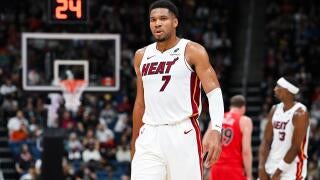
Ryan Conwell is a 6-foot-3 net-shredder. There's a very short list of players who made at least 99 triples in three straight seasons of college basketball. Conwell is on that list with the likes of Steph Curry and JJ Redick. Miami needs cheap rotation players to round out the rotation around Giannis Antetokounmpo and Bam Adebayo. Conwell is a veteran who can defend, cut and shoot the cover off it. He's going to play. -- IT
Brazile brings big talent to Nuggets
Denver needed some fresh legs in its rotation, and Brazile has some real tools as a lanky 6-11 big man who can jump out of the gym, drill open 3-pointers and play way above the rim. If he keeps defending, he can play at the 4 alongside Nikola Jokic. -- IT