The best trade fit for Anthony Davis is a team no one is talking about
AD's trade market is dwindling after a recent injury, but there's one landing spot that makes sense for both sides

By
Sam Quinn
•
13 min read
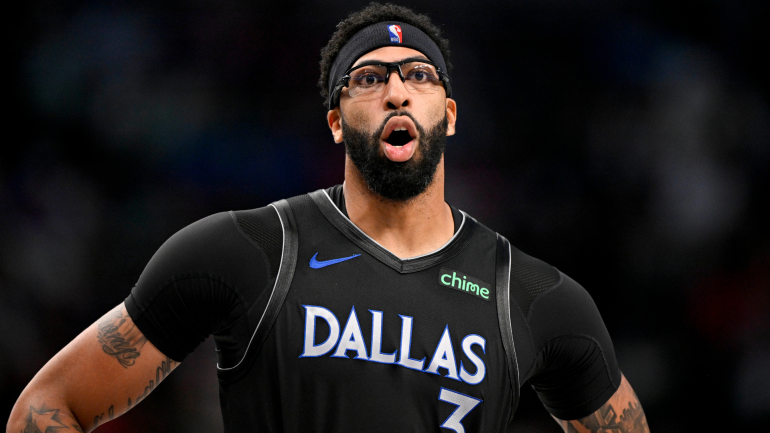
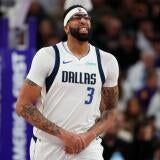
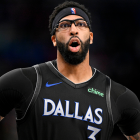
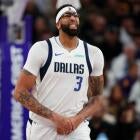
The Anthony Davis trade saga has seemingly taken yet another turn. While he had been in rumors ever since former Mavericks general manager Nico Harrison was fired in November, his recent hand injury seemed as though it could end all talks. With Davis likely out until at least March (even though he reportedly will not undergo surgery), the sort of win-now teams that would want a center who's about to turn 33 suddenly had far less reason to pay a steep price to get a deal across the finish line.
Yet according to ESPN, the Mavericks are having renewed Davis discussions with multiple interested teams. The idea here would seemingly be for Davis to return during the postseason even after he misses a large chunk of time. If that all sounds a bit farfetched to you, well, it should. Players rarely return from significant injuries in the middle of the postseason. Even if they've recovered, their conditioning is practically never at the level it takes to meaningfully contribute to a postseason run.
He'd have to come back during the regular season to get back into shape and integrate into a new team. For now, all we know is that Davis will be re-evaluated in six weeks. That is not the same as returning in six weeks. He might be ready in mid-March. He might suffer a setback that ends with a delayed surgery. Where Davis is concerned, significant risk is always in the picture.
Remember, Davis is making $54 million this season. Any playoff team trying to acquire him would have to send out a similar amount of money to bring him in before Feb. 5. What team could afford to send out that much money and feel reasonably confident that it could even survive long enough to get Davis back? Would a diminished version of Davis even be worth the outgoing salary in the 2026 playoffs? There are too many questions here for a true contender to take this plunge.
What this reporting really suggests is that the Mavericks are so eager to move Davis that they're willing to do so for a lower price than we previously believed. The question here is just how low they're willing to go. If they're willing to act as the Hawks did with Trae Young, for instance, and just dump the contract for expiring money, then the Clippers make perfect sense. They could send Dallas around $50 million in expiring contracts between John Collins, Brook Lopez and Bogdan Bogdanović. They'd need help from a third team, and the Clippers would not give up either of their two tradable first-round picks, but if the price is effectively cap relief, they're the only win-now team with the right combination of contracts and desperation to pull the trigger.
But I don't think the price is that low yet. If multiple teams really are interested, that's enough to create, well, maybe not a bidding "war," but perhaps a bidding "skirmish." Even if the Mavericks lack external leverage, they certainly have internal leverage. They can just keep Davis, siit him out for the year, tank, get another high draft pick to pair with Cooper Flagg, and then bring Davis and Kyrie Irving back next season planning to try to win. Dallas needs to get something of notable value in order to justify punting on next year's upside, but we've covered why win-now teams would have a hard time justifying that kind of price. However, I do think there's a team near the bottom of the standings that makes sense, one that probably wouldn't mind shelving Davis this season, but should be eager to have him on next year's team.
Why the Hornets are the best fit for Anthony Davis
Since Dec. 1, the Charlotte Hornets have the No. 4 ranked offense in the NBA. They have a better net rating in that window than the Rockets and Knicks. This is no longer a fluke. Despite the early season LaMelo Ball trade buzz, the Hornets are building something real here. The core of Ball, Kon Knueppel and Brandon Miller will be ready to make genuine noise in the very near future provided Ball can just stay healthy. What that group needs is size and defense. That certainly sounds like Anthony Davis.
For a variety of reasons, the Hornets and Mavericks line up almost perfectly as trade partners. Consider the following:
- Charlotte controls Dallas' 2027 first-round pick, top-two protected. That pick is very valuable to the Mavericks because it opens the door to another year of tanking. However, it is less valuable to the Hornets, especially if Davis stays in Dallas, because they can't control what the Mavericks do. If their options are "Dallas keeps Davis and is presumably good next year" or "cash that pick in now and improve ourselves," the latter appears more favorable.
- The Hornets can afford to trade a pick now. They have a surplus. In fact, they have an extra first-round pick in three of the next four drafts even ignoring the Dallas pick. This year, they're currently slated to get Phoenix's pick from the Mark Williams trade. They'll get Miami's pick next year from the Terry Rozier deal. Then in 2029, they'll get the least valuable of Utah, Cleveland and Minnesota's picks thanks to the Williams deal. In addition, they control all of their own picks.
- Speaking of their own picks, getting Davis now and sitting him out for the rest of the year would presumably help the Hornets maximize their own 2026 first-round pick. After all, they'd have to send out $50 million or so in salary just to get him. Those are players they could no longer use. Davis could help the Hornets add another premium young player.
- On that financial front, the Hornets have around $14.4 million in room beneath the luxury-tax line. The Mavericks, meanwhile, are around $16.9 million over the tax line. In other words, Charlotte could help Dallas get reasonably close to ducking the tax, likely within one more move. Most teams would be against taking on, say, the next year-and-a-half of money owed to Klay Thompson. It might make sense for Charlotte solely as a veteran mentor for their younger guards.
- And our last financial note: Davis reportedly wants a contract extension. Frankly, he lacks the leverage to get one at the moment. If the Hornets could make this trade without giving him one, that would obviously be preferable. However, Knueppel's rookie deal does give Charlotte a big more wiggle room to at least extend Davis for a single season if necessary. As long as he's off the books by the 2029-30 season, when Knueppel's presumably expensive rookie extension kicks in, that's what matters. And hey, if nothing else, Charlotte might not mind having a big expiring salary on its books in a few years. By then the young players might be so good that they're ready to make another significant trade in which Davis could eventually serve as matching salary.
So what would a trade look like? I imagine something like this:
- Mavericks receive: Miles Bridges, Josh Green, Grant Williams, Pat Connaughton, Mason Plumlee, 2027 first-round pick (via Mavericks)
- Hornets receive: Anthony Davis, Klay Thompson, D'Angelo Russell
Dallas would have to take on around $50 million owed to Bridges, Green and Williams next season. However, it would save over $12 million this season. A Daniel Gafford trade elsewhere, or some other sort of cap dump, would get the Mavericks below the tax line. In the aggregate, Dallas would still save about $20 million next season as well, and then not have to worry about the $63 million or so owed to Davis for the 2027-28 season or any noise he might make about a possible extension. We'd likely need a third party to step in and take a minimum salary or two just to make the roster balance work, but that's always a solvable problem.
Charlotte, meanwhile, would set itself up to enter next season with Davis, that core of Ball, Miller and Knueppel, and fellow emerging younger players like Sion James, Tidjane Salaun, their 2026 lottery pick, and incumbent big men Moussa Diabaté and Ryan Kalkbrenner. Those last two players are notable here. Diabaté has distinguished himself over the past year or so with incredible effort and strong defense. Kalkbrenner has a ways to go, but his size alone makes him a strong shot-blocker and finisher near the basket. Both are probably overtaxed in their current roles, but neither should be excised from the rotation, either.
A Davis acquisition creates a more suitable middle ground. Their roles would likely be smaller with him in the fold, but not disappear completely. Besides, Davis misses his share of games. They wouldn't lack for opportunities to scale up. Given the shooting Charlotte has assembled, it's not implausible that Davis could play minutes with either of them. It wouldn't be ideal offensively, but Davis prefers defending forwards over centers anyway, so if some minutes with the other promising, younger big men in the fold placates him, well, that works out nicely too.
The Hornets probably dug too deep a hole for themselves early this season to make a real playoff run this year. That's fine. This team is young. Another few months of development for those recent draft picks is still going to be valuable for these players. But it won't be long until Charlotte is genuinely ready to win. And when they are, it's just hard to imagine them finding a player that suits their needs better than Davis. If such a player even exists, he'd be substantially more expensive. Charlotte won't have access to the Giannis Antetokounmpos of the world. That's just the reality of their market recent history of losing. Jaren Jackson Jr. might make more sense on Charlotte's timeline, but he'd also cost several first-round picks.
But Davis' star has seemingly fallen far enough for him to be attainable for the Hornets for a bargain. He's a basketball fit for their roster, and he'd represent a real vote of confidence in the core that they're building, a signal to the young players that the team thinks they're ready to start winning. Most of the evidence lately suggests that's true. They're just looking for that one last piece to push them over the top. Even if it doesn't come to fruition until next season, Davis makes plenty of sense as that final addition.
'Why shouldn't the ______ trade for Davis instead?'
Think about the teams that have most widely been reported as potential Davis suitors. Atlanta. Golden State. Toronto. What do those teams have in common? Right now, it's their status as postseason underdogs. The Warriors are a No. 8 seed at the moment. The Hawks are a No. 9 seed. Toronto is No. 4 in the East, but only three games ahead of No. 8 Miami.
Now think about where those teams would be if they gave away $50 million or so in matching salary for Davis without knowing when he'd come back. Say Toronto gave up RJ Barrett and Jakob Poeltl, probably their best-case outcome in terms of players traded given their oversized contracts. Maybe they could get Davis back in time for the playoffs, but how far down the standings would they fall in the process? Would you rather be a top-six seed without Davis or a Play-In team with him? Even if they don't fall down the standings, how confident would you feel in the Raptors, say, winning a first-round series without Davis before bringing him back in the second round if that's what his recovery timeline calls for?
Atlanta, as a No. 9 seed, would face two winner-take-all games before even reaching the postseason... and that's before considering the Hawks playing out the regular season without Kristaps Porziņģis or Luke Kennard, the two obvious pieces of matching salary that would be in the deal, plus whoever else they have to give up. Golden State would at least have a chance at redemption if it lost the first Play-In Game, but imagine the Warriors trying to sneak into the playoffs without either Jimmy Butler (who matches Davis' contract exactly) or basically all of their depth (Draymond Green, Jonathan Kuminga and a few other role players would be needed). Again, that's a tall order.
The reality for these teams is that they just probably wouldn't be able to survive an extended regular-season absence from Davis this season, and even if they made the postseason despite his injury, would be digging such a deep hole for themselves that climbing out would seem almost impossible. That makes a Davis trade more of a next season proposition, and if that's the case, what's the benefit of acting now? Wouldn't you rather scope out the offseason transaction market and see if younger, cheaper alternatives are available?
Besides, these teams have other needs. The Hawks may have traded Trae Young for cap relief, but that doesn't mean they have enough shot-creation. CJ McCollum is a stopgap. Eventually, they'll need to pursue a younger scorer. That eats into their available money. Golden State needs to balance its present with its future. The Stephen Curry era won't last forever. Could the Warriors justify giving away draft capital deep into the future for maybe one or two bites at the postseason apple? That seems unreasonable. If they're giving up picks like that, it would ideally be for a player who could help keep them afloat after Curry retires.
And then there's the desperation tier, teams like the Clippers and Bucks who are set on winning now but have very limited flexibility in pursuing upgrades. We covered the Clippers as a cap dump option, but if the Mavericks want genuine value, there's just no way for Los Angeles to offer it responsibly. A 16-23 team can't justify giving up either its 2030 or 2032 first-round picks for a 33-year-old. The Bucks are in the same boat. The idea here is improving enough to convince Giannis Antetokounmpo he can compete for a championship in Milwaukee. That's already a tall order. If they're giving up all of their matching salary for Davis, they just wouldn't have enough leftover to win with, and they'd be sacrificing draft picks they might need deep in the future to rebuild for life after Giannis.
So, really, the groups of teams that might make sense are the ones that could feel reasonably confident that they will survive long enough in the playoffs to actually get Davis back this season or the ones who would be adding him exclusively for next year and beyond. How many teams like that even exist? Boston needs a center but can't make the money work with Jayson Tatum, Jaylen Brown and Derrick White on expensive contracts. Minnesota is playing too well to disturb its current group. Ironically, the best fit here might even be the Lakers. Just mash all of their expiring contracts together, throw in a 2031 first-round pick and call it a day. Dallas would never cooperate on such a deal. The public backlash would be too significant. There just isn't a viable contender for Davis in this moment.
That means that younger teams like Charlotte who would have some reason to acquire Davis for the future are our best bets. But who else makes sense? The Nets have Charlotte's draft surplus, but are set at center with Nic Claxton and Day'Ron Sharpe, and they don't have Charlotte's offensive firepower, so they wouldn't benefit as much from Davis' presence. The Bulls badly need a defensive center, but their lone, extra first-round pick, a lottery-protected pick coming from Portland, isn't as valuable to Dallas as what the Hornets can offer, and besides, the Bulls have far bigger, long-term roster concerns to address. Unlike the Hornets, they don't have a viable core in place. A Pelicans reunion ironically makes some basketball sense. New Orleans could use a rim-protector next to Derik Queen in the Zion Williamson salary slot. But after the disaster of giving away their unprotected pick this season, New Orleans can't justify giving away any more first-rounders. Besides, Davis is so expensive that New Orleans would have to include more salary on top of Williamson just to make the money work. This is an organization that has never shown any interest in paying the luxury tax.
The Hornets check the most boxes here. They're not the sort of team one would expect to pursue someone like Davis, but the fit is there if you're willing to squint for it. There has been no reporting on a possible deal between Dallas and Charlotte, and just given where the Hornets are on their rebuilding timeline, any trade for a player like Davis is inherently unlikely. But if the Hornets are willing to think outside of the box, Davis could really help this team transition from plucky upstarts to genuine winners as soon as next year.