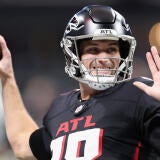
Kirk Cousins getting paid by Raiders: How QB has cashed in to become one of NFL's richest players
Only two players in NFL history have made more money than Cousins, who has just one playoff victory in his 14-year career

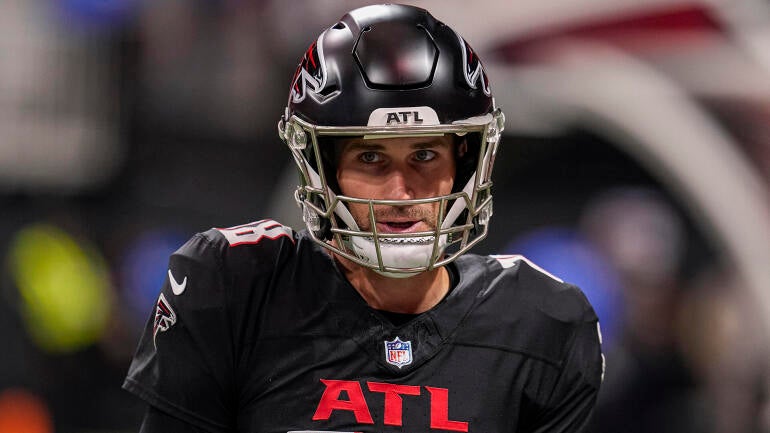
While he may not be a future Pro Football Hall of Fame quarterback, Kirk Cousins is a undoubtably a first ballot Hall of Fame earner.
Cousins, who has effectively signed a one-year, $20 million deal with the Las Vegas Raiders, is the third-highest-earning player in NFL history. Only fellow quarterbacks Matthew Stafford and Aaron Rodgers have accrued more career earnings than Cousins, who recently passed seven-time Super Bowl champion Tom Brady on the all-time earnings list.
The 2026 season will also be the 11th straight year where Cousins' contract is fully guaranteed. Of his career salary, 99% of it has been fully guaranteed. Cousins' $339,369,288 guaranteed salary is an NFL record.
Highest-paid players in NFL history (via Over the Cap)
| Player | Years active | Career earnings | |
|---|---|---|---|
1. | Matthew Stafford | 2009-present | $408,000,000 |
2. | Aaron Rodgers | 2005-present | $395,812,794 |
3. | Kirk Cousins | 2012-present | $341,469,288 |
4. | Tom Brady | 2000-22 | $317,619,794 |
5. | 2012-25 | $315,840,12 | |
6. | 2008-22 | $306,205,882 | |
7. | 2016-present | $295,437,392 | |
8. | Drew Brees | 2001-20 | $273,933,000 |
9. | 2004-21 | $266,724,382 | |
10. | 2016-present | $259,607,504 |
While his career hasn't been as good as most of the other quarterbacks on the above list, Cousins has been good enough over the years to be in the same vicinity as them from a financial standpoint. He's certainly done well -- both on the field and the negotiation tables -- for a player who was drafted in the fourth round and who began his career as a backup behind then rookie phenom Robert Griffin III.
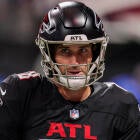
While Griffin's career was derailed by an injury sustained at the end of his rookie season, Cousins has enjoyed a lengthy career that has included four Pro Bowl selections and four playoff runs with Washington and Minnesota. And while his two years in Atlanta didn't go as planned, Cousins still showed enough there to convince new Raiders coach Klint Kubiak that he deserves at least one more shot to be a starting NFL quarterback, albeit the Raiders are expected to select Indiana Heisman Trophy winner Fernando Mendoza with the No. 1 overall pick later this month.
How did Cousins join such exclusive company? Let's find out by looking back at each of his contracts.

2012-2015: Rookie contract
- Team: Washington Commanders
- Four years, $2.57 million
Cousins officially began his NFL career after he signed his first contract with Washington after being selected in the fourth round of the 2012 NFL Draft. After making just nine starts during his first three seasons, Cousins' career was changed for good after he led Washington to an unexpected division title in 2015, a year before he was slated to enter free agency for the first time.
Cousins' stock was probably never higher than after the 2015 season. And while that season ultimately paid dividends from a financial standpoint, Cousins first had to settle for the first of two one-year deals.
2016: Non-exclusive franchise tag
- Team: Washington Commanders
- One year, $19.953 million
Cousins followed up his breakout 2015 campaign with a largely successful 2016 season that culminated with his first Pro Bowl selection. Washington wasn't quite as good, however, missing the playoffs after going 8-7-1 (Washington went 9-7 the previous season).
The 2016 season was in many ways the start of the enigma of Cousins, a prolific statistical player who for whatever reason has not been able to parlay that individual success into more team success. It might be more accurate to say that Cousins' teams haven't parlayed his success into more team success. Either way, the fact that Cousins hasn't had more team success despite him having some very impressive individual seasons is nothing short of puzzling.
2017: Franchise tag
- Team: Washington Commanders
- One year, $23.9 million
Instead of a long-term deal, Washington again decided to hold on to Cousins for one year. But after another non-playoff season despite solid play from Cousins, the writing was on the wall regarding Cousins' time in D.C.
2018-2020: First long-term contract
- Team: Minnesota Vikings
- Three years, $84 million
Cousins was viewed as the missing piece to a potential championship puzzle for a Vikings team that was coming off an NFC Championship game appearance. That wasn't ultimately the case, though, as the 2018 Vikings sputtered through a forgettable, 8-7-1 season despite another good statistical season from Cousins.
The 2019 season, though, may have done as much for Cousins' career than his breakout 2015 season, as his success that year contributed to a successful season for Minnesota that included an overtime win against the Saints in the wild card round that remains Cousins' only postseason win. It also led to Cousins' next big deal.
2021-2022: First contract extension
- Team: Minnesota Vikings
- Two years, $66 million
While 2019 led to another big contract, the following four seasons reinforced the narrative surrounding Cousins and his teams' inability to win more games despite his gaudy numbers.
Despite being named to two more Pro Bowls and throwing a career-high 35 touchdowns in 2020, the Vikings made the playoffs just once during Cousins' final four seasons in Minnesota. In their lone playoff game over that span, Minnesota was upset by the Giants despite Cousins throwing for 273 yards and two touchdowns (and no interceptions) and rushing for another score.
2023: Second contract extension
- Team: Minnesota Vikings
- One year, $35 million
Cousins' last season in Minnesota lasted just eight games when he suffered a torn right Achilles tendon in a Week 8 victory against the Green Bay Packers. However, he was still able to land another lucrative deal as a free agent with the Falcons.
2024: Second long-term contract
- Team: Atlanta Falcons
- Four years, $180 million
Like the Vikings had six years earlier, the Falcons clearly believed that Cousins was the missing piece for a team that was coming off three straight 7-10 seasons. Right from the start, though, the situation in Atlanta proved to be far different than the one Cousins had in Minnesota.
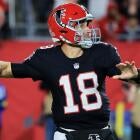
Shortly after signing Cousins, the Falcons shocked everyone by using their first-round pick to select quarterback Michael Penix Jr., a move that led to Cousins publicly stating that he probably would have done something different in free agency had he known that the Falcons were planning to draft a quarterback in the first round.
While it wasn't as stunning as drafting Penix, the Falcons' decision to not play Cousins in the preseason was perplexing. Cousins' rustiness showed during Atlanta's season-opening loss to the visiting Steelers that seemed to be a foreshadowing of Cousins' short run in Atlanta.
Unlike his years in Washington and Minnesota, Cousins' mistakes largely overshadowed his highlights during his first season in Atlanta. It got to the point where he was benched late in the season with Atlanta sitting at 7-7 and clinging to its playoff hopes. The Falcons finished with an 8-9 record as Penix won one of his three starts.
In a twist of irony, Cousins relieved Penix when the later sustained a season-ending injury during the second half of the 2025 season. Cousins (whose struggles in 2024 can at least partly be attributed to injuries that he opted to play through) played well enough to win five of his eight starts that included four straight wins to close out the season.
2026: Latest contract
- Team: Las Vegas Raiders
- Five years, $172 million ($20 million guaranteed)
Cousins will earn $20 million in 2026 with a team option for two additional years at $80 million. Atlanta will pay Cousins $8.7 million this season and Las Vegas will pay him another $1.3 million. The Raiders have also agreed to pay Cousins a $10 million roster bonus on the third day of the 2027 new league year.
Similar to Atlanta, Cousins is likely a short-term solution at QB1 as the Raiders prepare to bring aboard Mendoza with the No. 1 overall pick in this year's draft. The difference this time is that Cousins is fully aware of the situation he is walking into.