

College football rarely follows the preseason script, and that's what makes identifying potential CFP crashers so fascinating this fall. The teams outside the initial AP Top 25 rankings are not supposed to matter in December, but several possess the quarterback play, roster depth and favorable schedule needed to force their way into the conversation.
In the expanded CFP era, one hot month can change everything, especially for programs talented enough to survive an early setback. Some of these unranked contenders are rebuilding under new leadership. Others are overlooked brands carrying legitimate conference-title upside.
Looking back over the last 32 years of the AP poll, at least one team that started the season unranked finished inside the top 10 at year's end. The opportunity is real for most, with several spotlight opportunities to force their way into the national discussion.
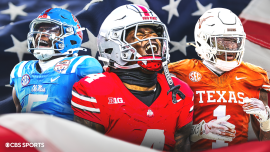
Here are the unranked teams best positioned to wreck expectations, climb the selection committee's board and unexpectedly crash college football's biggest postseason party this season.
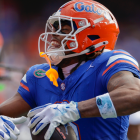
Florida
What's to like: Jon Sumrall's blueprint travels. His teams play fast, hit hard and rarely beat themselves -- three traits that can flip close games against a demanding schedule like the Gators face in the SEC this season. The Gators enter the final days of fall camp without an identifiable starting quarterback, but Sumrall is not bothered. Georgia Tech transfer Aaron Philo brings experience in Buster Faulkner's system, and Tramell Jones is a program favorite.
Florida retained a core and supplemented it with portal help at several needed spots. The roster is loaded at a couple of positions, particularly at wide receiver. Sumrall has won immediately at every stop, and Gainesville offers considerably more resources than he had at Troy or Tulane. If the Gators establish an identity early and survive September, they possess the roster, coaching edge and home-field juice to crash the playoff conversation.
The worry: Florida plays Georgia (in Atlanta), Texas, Ole Miss, Oklahoma and Missouri away from Gainesville, a brutal slate of games in hostile environments.
When to pay attention: If the offense finds an early rhythm and the Gators beat Auburn on the road in Week 3 to start 3-0, that showdown against Ole Miss at Ben Hill Griffin Stadium on Sept. 26 will garner national attention. Ole Miss and Missouri are the only ranked opponents that Florida plays the first half of the campaign, eand both of those games, we think, are winnable.
Boise State
What's to like: Boise State has everything to emerge as the Group of Six's best team and make another playoff push. Maddux Madsen's return gives the Broncos a proven quarterback, while Dylan Riley and Sire Gaines provide explosiveness in the backfield. Coach Spencer Danielson has established a connected culture that expects to win, not merely compete for a conference title.
Boise State's move into the rebuilt Pac-12 brings challenges, but this remains the league's most accomplished program. If the Broncos handle a manageable schedule and avoid the upset that sinks Group of Six contenders, another run toward college football's biggest stage feels entirely realistic.
The worry: The hesitation centers on whether Boise State has enough high-end talent to win when its margin disappears. The Broncos lost difference-makers on defense, but the major concern is a rebuilt wideout group. Also, the new Pac-12 presents more weekly resistance than Boise encountered during its run atop the Mountain West.
When to pay attention: As long as the Broncos split their first two matchups of the season at Oregon and home against Memphis, Boise State will likely control its own destiny in the Group of Six playoff discussion. Now, getting clobbered by the Ducks may alter the discussion later in the year if Boise State is vying for the lone bid against a fellow one-loss or unbeaten squad. Margin matters there, and looking respectable against a CFP lock.
Oklahoma State
What's to like: There's not a school in college football that proverbially wiped its slate clean and started fresh quite like the Cowboys, who welcomed 75 new players this offseason via Eric Morris' first recruiting class and the transfer portal. Few remain from last year's dark and disappointing skid, making this roster flip such a fascinating Big 12 wild card.
The centerpiece is Drew Mestemaker, who followed Morris from North Texas after leading the FBS with 4,379 yards passing. His command of the system should eliminate the transition period that often hampers first-year staffs. There are chemistry and depth concerns after such sweeping turnover, but the Big 12 lacks an untouchable favorite.
The worry: The concern is obvious -- Oklahoma State essentially assembled a new team overnight. The slew of additions creates upside, but it's hard to manufacture depth and defensive cohesion during one offseason. Mestemaker and his comrades were brilliant offensively at North Texas, yet producing against Big 12 defenses is different compared to the American. After a winless season in the conference, expecting an immediate leap into contention requires considerable faith, too.
When to pay attention: We'll know by the end of the season's opening month if the Cowboys have potential staying power in the Big 12 race after they've opened league play at West Virginia in Week 4. No one's picking Oklahoma State to upset Oregon in Week 2, but if it happens, that flying under the radar dynamic this fall will be over.
TCU
What's to like: Count out Sonny Dykes at your own risk. TCU's coach has made a career out of thriving when expectations are modest, and his greatest example came in 2022 when the Horned Frogs stormed from unranked to the national championship game. That history matters entering another wide-open Big 12 race.
Harvard transfer Jaden Craig gives Dykes a quarterback with 2,869 yards and 25 touchdowns last season, while new coordinator Gordon Sammis arrives after helping UConn produce consecutive nine-win campaigns. TCU has enough speed and skill talent to create matchup problems. As an overlooked contender, this is exactly where Dykes operates best.
The worry: The Horned Frogs have remained competitive since 2022, but recapturing that magic is a considerable challenge, and consecutive eight-win regular seasons revealed a program struggling to rejoin the Big 12's elite tier. Now, Dykes must replace Josh Hoover while breaking in Craig and a new offensive coordinator. That's a ton of change for an offense expected to carry the roster. Until TCU proves it can defend consistently and finish close games, doubt is warranted.
When to pay attention: TCU goes from unbeaten feel-good story after early wins over North Carolina and UCF to top-15 legitimacy if the Horned Frogs upset BYU at home on Oct. 3. That's a dangerous matchup for the Cougars, who were tied with USC at No. 14 in Monday's preseason AP Poll.
South Carolina
What's to like: This is an offense under first-year OC Kendal Briles that appears built around LaNorris Sellers rather than asking him to survive it. Briles brings tempo, creativity and a proven quarterback-friendly system after last season's attack surrendered 42 sacks and repeatedly stalled. The Gamecocks attacked their biggest weakness by adding eight veteran offensive linemen, giving position coach Randy Clements one of the nation's most experienced groups by career snaps.
That renovation up front should unlock Sellers' dual-threat ability and create cleaner opportunities for Nyck Harbor and the receiving corps. There is urgency here, too. Shane Beamer enters Year 6 with his back against the wall following a 4-8 collapse, and desperation can sharpen a program quickly. With Dylan Stewart leading a defense that should remain disruptive, South Carolina has enough star power, experience and coaching urgency to become dangerous in an SEC race lacking certainty behind the frontrunners.
The worry: Perhaps the Gamecocks have attempted to fix too many problems at once. A rebuilt offensive line may be experienced, but it has never played together, and Sellers is learning his third offense in three seasons. The Gamecocks also replace considerable defensive production around Stewart along the front lines. Another unforgiving SEC schedule ahead could bury Beamer's team before Briles' system fully takes hold in Columbia this fall.
When to pay attention: As long as South Carolina takes care of business in its SEC opener against Mississippi State on Sept. 19, the Gamecocks should be 3-0 with all of their postseason goals still ahead of them entering Bryant-Denny Stadium against Alabama in Week 4. That's one of several season-defining contests in conference play. The Gamecocks' new-look offensive staff needs to put Sellers in position to succeed, most importantly, to see if he can summon 2024 form.
Virginia
What's to like: Virginia is no longer hoping Tony Elliott's rebuild works. The Cavaliers have proof. Last season's 11-win breakthrough, 7-1 ACC finish and trip to the conference championship game changed the program's internal expectations after years of uncertainty. That confidence matters in a league without an unbeatable favorite unless you're putting seventh-ranked Miami in that category.
Penn State transfer Beau Pribula gives Virginia a mobile quarterback capable of keeping the offense on schedule, while Elliott believes this is his deepest roster in Charlottesville. The Cavaliers learned how to win close games, and maintaining that edge is vital. Virginia enters the season expecting to contend rather than hoping to surprise.
The worry: If the Cavaliers lose their opener to NC State in Week 0, well, so much for the CFP discussion. Losing several foundational veterans, including wideout Trell Harris, and how Virginia fills those holes is an area to watch.
When to pay attention: With only one matchup in the regular season against a team that was ranked this week (SMU), this is a golden schedule opportunity for the Cavaliers. There's a chance Virginia blitzes through the first half of the campaign and heads to Dallas to battle SMU in mid-October inside the top 25.

Clemson
What's to like: Unranked in the preseason AP poll for the first time since 2011, that's motivation enough for Dabo Swinney, his coaching staff and players. Clemson's appeal comes from urgency. This feels like a now-or-never season for Dabo, whose championship reputation has taken hits amid uneven results and an offense that lost its edge. Bringing back Chad Morris as coordinator is a swing toward the tempo, aggression and quarterback development that fueled Clemson's original rise.
The Tigers recruit well enough to overwhelm most ACC opponents, and Christopher Vizzina has the confidence of his coach. Swinney has rebuilt his image before, but patience is evaporating after a 7-6 finish. If Morris restores confidence offensively and the defense is disruptive with Sammy Brown and others, Clemson can re-enter the ACC championship and CFP picture.
The worry: There's many who believe the Tigers are chasing their past rather than building a future. Morris has not coordinated an elite college offense in years, while Vizzina remains unproven across a full season. After multiple staff resets and declining consistency, Swinney must prove nostalgia can produce modern results again.
When to pay attention: Win or lose, how the Tigers respond to the result of their season opener at LSU could determine this team's overall value. On one hand, it's a major change for Clemson to take back some of that national recognition with an upset of Lane Kiffin's team on the road. On the other, a loss doesn't necessarily wreck the campaign unless Week 1 issues prove uncorrectable and show up again against Miami, Virginia Tech and others in league play.
UNLV
What's to like: The case for the Rebels starts with Mullen, an elite quarterback developer and offensive problem-solver. He won 10 games during his first season and kept the Rebels atop the Mountain West with a transfer-rich two-deep. Now, former five-star quarterback Jackson Arnold is battling Alex Orji in a system built to maximize dual-threat talent.
Pairing Arnold and Orji with 1,000-yard rusher Jai'Den Thomas gives UNLV firepower to overwhelm its schedule. The Mountain West also creates a manageable championship path. If Mullen fixes the defense's inconsistencies, the Rebels could become the Group of Six's most explosive contender.
The worry: Doubt centers on quarterback ceiling after Arnold lost starting jobs at Oklahoma and Auburn before landing at UNLV and Orji fizzled out at Michigan. Talent for both players is undeniable, but consistency remains unproven. UNLV also surrendered too many explosive plays last season and lacks the roster depth of nationally-ranked contenders. One poor Saturday could eliminate the Rebels from playoff consideration entirely before their résumé develops.
When to pay attention: The expectation from those in Las Vegas is Mullen working his magic from start to finish out West and the Rebels getting to the playoff. At worst, they must split their first two games of the campaign against Memphis and Hawaii to keep that goal within striking range.