How the Cardinals tore it down: Inside Chaim Bloom's rebuild in St. Louis and where they go from here
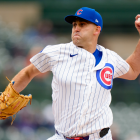
Chaim Bloom this winter has traded away Nolan Arenado, Sonny Gray, Willson Contreras and now Brendan Donovan

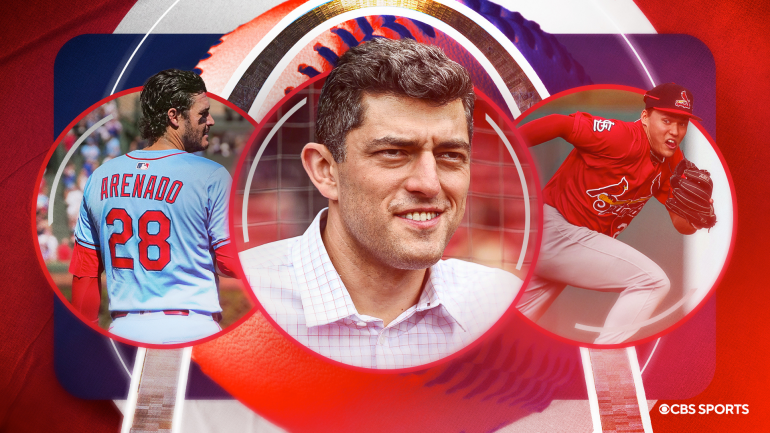
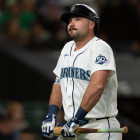
The Cardinals' trade of All-Star utility man Brendan Donovan to the Mariners on Monday serves as the capstone on an offseason that's seen the organization lean fully into the rebuild process.
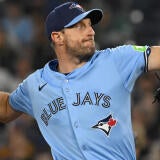
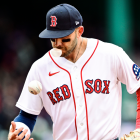
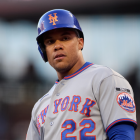
First-year president of baseball operations Chaim Bloom this winter has shipped off, in addition to Donovan, veteran third baseman and potential future Hall of Famer Nolan Arenado to the Diamondbacks, and ace Sonny Gray and veteran slugger Willson Contreras to Bloom's former team, the Red Sox. As a consequence of that quartet of trades, the Cardinals have greatly improved the organizational pitching reserves, both in terms of quantity and quality, but have also greatly diminished their chances of relevance in 2026 and, very likely, 2027.
The decision to undertake such a drastic step -- from a club whose raison d'être not so long ago was perennial contention -- isn't a hasty one or one grounded solely in ownership's desire to trim payroll (though trimming payroll is certainly part of it). So how did a team that was one of the most successful in all of MLB for the first two decades-plus of the current century wind up in such straits? It wasn't a sudden process.
The Cardinals have long tied their cash payroll to game-day revenues, meaning mostly ticket sales. Those revenues took a major hit during the COVID-compromised seasons of 2020 and 2021. To make up for those financial body blows, the DeWitt family, which has owned the Cardinals since 1996, opted not to backfill some coaching, coordinator, and development roles that had been eliminated during the pandemic. As well, ownership reportedly presented then-lead executive John Mozeliak with a single budget to cover both MLB payroll and player-development expenses. Mozeliak, in keeping with the franchise's "eternal contention" ethos, applied it to the big-league roster at the expense of the underlying system. Not only did the on-field results in St. Louis fail to satisfy expectations -- the Cardinals went 0–3 in playoff games from 2021–22 and, at this writing, have missed the playoffs for three straight years -- but their player-development system also fell into disrepair.
The Cardinals were once a cutting-edge organization when it came to drafting and developing, and indeed they were one of the first to systematize the projection of amateur player statistics into what a player's big-league future might look like. As is the case with any successful organization, brain drain took a toll, as did the DeWitts' guiding emphasis on continuity and loyalty. Those are often praiseworthy merits, but taken to extremes in a competitive setting such as professional sports, continuity and loyalty can devolve into stasis and assumption. At roughly the same time, permitting delays, disputes, and cost increases severely delayed the club's efforts to modernize its shared training facilities in Jupiter, Fla. (the Marlins are not ideal "roommates" when it comes to such shared expenses). As a result, Cardinals players training over the winter and during spring were doing so with antiquated tools. That hidebound approach, the problems in Jupiter, plus the disinvestment allowed almost every other team in MLB to catch and surpass the Cardinals in the player-development space.
That's where Bloom came in. Not long after being dismissed from the Red Sox, he landed with the Cardinals in an advisory capacity. He was tasked with auditing the entire organization from top to bottom in an effort to ascertain where and how the player-development program went awry. He did that, and the thoroughness with which he diagnosed the problems led to his being named Mozeliak's successor-in-waiting.
During Mozeliak's final season of 2025, Bloom reconstructed the player-development program, which included filling essential roles that had been left vacant since the early part of the decade, significantly expanding staff, upgrading and adding to the tech in place, bolstering analytics, and eliminating "silos" that had harmed communication and coordination between the player-development and player-performance departments. There was turnover, yes, but it wasn't a scattershot approach. In addition to Bloom's external hires, many front-office members were retained or had their roles adjusted. Above all, staff devoted to finding and developing players grew substantially, and they've finally been given the most emergent laboratory tools with which to work.
In a real way, some of Bloom's most important work was done before he ever helmed a transaction at the big-league level in St. Louis. Those transactions, though, have charted the Cardinals' course more clearly. The trades of Arenado and Donovan mean that Nolan Gorman will finally have what figures to be an uninterrupted season of regular reps and a clear mission to tame his swing-and-miss issues (pending, perhaps, some Grapefruit League competition from Thomas Saggese and maybe José Fermín). The trade of Contreras means that Silver Slugger Alec Burleson will be installed at first base and left there. Gray's departure clears the decks for, perhaps, Quinn Mathews at some point during the 2026 season and, looking further afield, makes it more likely that Liam Doyle, the Cardinals' top pitching prospect, has a runway into the rotation when he's ready. Finally, sending Donovan to Seattle means that JJ Wetherholt, CBS Sports' No. 6 overall prospect, is poised to be the team's starting second baseman in 2026.
Then, as mentioned, there are all the arms that Bloom has brought in as the Cardinals attempt to divorce themselves from the pitch-to-contact mindset that dates back to the days of Tony La Russa and Dave Duncan. There's much more "whiffability" in the ranks now, and that has much to do with Bloom's winter maneuverings. Particularly intriguing in the long term are Brandon Clarke and Blake Aita, acquired from Boston, and Jurrangelo Cijntje from Monday's trade with the M's. This is far from an exhaustive list of the hurlers Bloom has acquired this offseason. Names like Hunter Dobbins, Richard Fitts, Yhoiker Fajardo, and Jack Martinez are also new to the organization and have varying degrees of long-term promise. The new pitching braintrust under Bloom, many of the new hires plucked from pitching-forward organizations, raise expectations that they're able to identify arms who can be leveled up under, yes, that new player-development apparatus.
Looking ahead, lefty reliever JoJo Romero is highly likely to be traded at some point, and Bloom, if he chooses to, can deal from the organizational surfeit of catchers to address needs elsewhere (if Iván Herrera's effort to return behind the plate after elbow surgery is successful, then the Cardinals will have five catchers on the 40-player roster). Also, outfielder Lars Nootbaar will probably be shopped once he shows how well he's recovered after undergoing offseason surgery on both heels. For this winter, though, the most important work is done.
Speaking of which, "credit where due" principles mean we should circle back to the DeWitts. As noted, the franchise has taken significant revenue hits, including this past season, when the Cardinals ranked a dismal and wholly uncharacteristic 19th in MLB in home attendance. The home attendance figure of 2.25 million is the Cards' lowest in a standard season -- i.e., not shortened by labor stoppage or mangled by a global pandemic -- since 1984. As well, the regional sports network asset bubble popped squarely upon them. First, they suffered a 23% reduction in annual revenues when the original Fox Sports Midwest contract was renegotiated and rebranded, and most recently they're set to take another hit to their local-broadcast revenues now that they're making the jump to MLB's broadcast platform for 2026. Still and yet, the DeWitts this winter committed more than $50 million total to defray the contracts of Gray, Contreras, and Arenado and thus improve the trade returns for St. Louis. For Cardinals rooters, this raises hopes that they'll commit to spending on MLB payroll when the club is ready to emerge from this rebuild. They have said that's indeed what they'll do, but their actions will tell that particular story.
On that point, the 2026 season will be telling. If Gorman and Jordan Walker don't take significant steps forward in their offensive development, then Bloom and company may have to reappraise their timeline for contention and align it more with even younger talents like Wetherholt, Doyle, Joshua Baez, and Rainiel Rodriguez. The hope in St. Louis, of course, is that Gorman and Walker this season launch baseballs -- and by extension themselves -- and make this rebuild a relatively brief one. However that plays out, things are very different in St. Louis right now. Things on the field are probably going to be ugly for a time, but in a real sense the pattern of neglect that preceded Bloom necessitated what's going on right now.
That frames the Donovan trade nicely. They did it because of where they are and in the hope that it will help them toward where they're going. The trades are mostly over in St. Louis, but the next chapter of the story has just begun.