
What's next for the Mets after adding Bo Bichette? Three options for David Stearns to keep upgrading
After losing out on Kyle Tucker, the Mets quickly pivoted, but they might not be done just yet

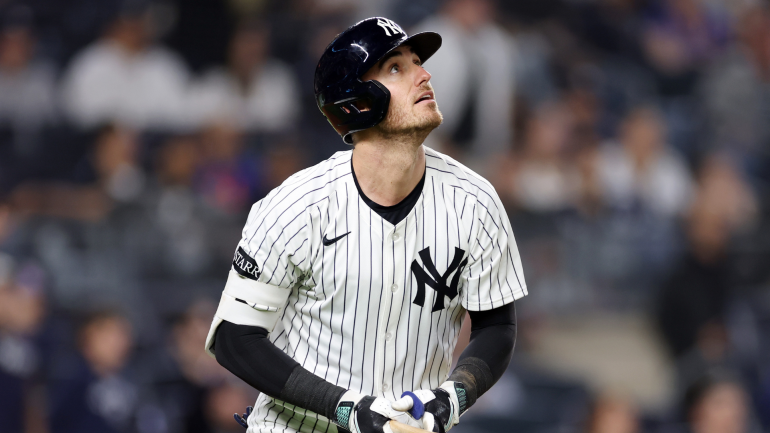
Another chapter was added to the Mets' serialized frustrations of the 2025-26 Major League Baseball offseason on Thursday night, when they lost out on their bid to sign top-ranked free agent Kyle Tucker. Tucker wound up signing with the reigning champion Dodgers, and that means Steve Cohen, David Stearns, and company had to move on to other names and other plans. Those plans were realized swiftly on Friday when the Mets agreed to terms with hard-hitting infielder Bo Bichette on a three-year pact worth $126 million. Just like that, some of those frustrations vaporized.
The Bichette splash was a needed one in multiple ways for the Mets. Outside of the plain matter of roster needs, there had been an almost palpable frustration among Mets fans. Said frustration was in place after losing franchise home run leader and beloved Mets lifer Pete Alonso to the Orioles via free agency, then came the loss of lockdown closer Edwin Díaz (and his best-in-class closer entrance) to the Dodgers. Yes, Stearns did reasonably good work in approximating the outgoing value of Alonso and Díaz by signing Jorge Polanco, Devin Williams, and then Luke Weaver, but those names simply didn't resonate with paying customers, at least relative to the names "Alonso" and "Díaz." The loss of Tucker was thus keenly felt after those disappointments. In that sense, the addition of Bichette -- our No. 3 ranked free agent in the 2025-26 class -- was made to order for the Mets.
So while the Bichette addition eases the pressure to make a needle-moving addition this winter, the Mets presumably aren't done even as we enter the back half of January. Assuming that's the case, what might the Mets be plotting? Let's explore some options for the Mets and Bichette as the winter continues to unwind.
Option 1: Pluck Cody Bellinger from the Yankees
The vigorous pursuit of Tucker of course suggests that the Mets are eyeing an outfield upgrade, and Bellinger certainly checks that box. He's coming off an impressive 5.1-WAR season with the crosstown Yanks, and over the last three seasons he has an OPS+ of 125. As well, Bellinger in 2025 played in 152 games, which is his highest tally since his MVP campaign of 2019. On the deployment front, Bellinger could slide into left field or center for the Mets, and he's also very much capable of manning first base should that post-Alonso role emerge as an acute need. If Bellinger supplanted Tyrone Taylor in center, one could argue that the Mets' lineup will skew too left-handed. That would mean it's essential for Stearns to assemble a bench with multiple options from the right side, but that's not a particularly heavy lift.


Bellinger is going into his age-30 season, which means there's decline risk to be considered if the contract he signs is a lengthy one. That, however, is often the cost of doing business when it comes to premium free agents, even as shorter-term, high-AAV deals like the one Tucker signed become more common. Bellinger for at least the next handful of seasons, though, projects as a highly valuable contributor. As well, the presently afflicted fan base would surely relish plucking yet another star outfielder from the clutches of the Yankees.
Option 2: Add an ace
The Mets have an interesting rotation right now, and Nolan McLean has ace potential in the long-term. However, it's plainly light on known quantities who also provide frontline ability, and that's why the Mets may be best served to pursue rotation help.
The prize, of course, is Tigers uber-ace and back-to-back AL Cy Young winner Tarik Skubal. It's far from certain that he's available in trade going into his walk year of 2026, but a Skubal blockbuster is very much within the range of offseason possibilities. To be clear, the Tigers should make a good-faith effort to sign him to an extension or, failing that, retain him in an effort to make the playoffs for a third straight year. If, though, Detroit does entertain serious trade talks about Skubal, then the Mets figure to be in the middle of them.


Skubal's merits are plain to see. The 29-year-old lefty over the last three seasons has pitched to a 2.39 ERA with a 2.39 FIP to match, and he's struck out 31.5% of opposing batters -- a truly elite figure for a starting pitcher. The cost in trade will be high even with Skubal going into his walk year, but the Mets have the young talent to get it done. Freshly added to that pile of trade-able young talent is Brett Baty. Baty had likely been in line to be the Mets' regular third baseman this season, but that's now Bichette's province (with Francisco Lindor and Marcus Semien on the roster, Bichette won't be returning to the middle infield). Assuming willingness on the part of the Tigers to do such a deal, the Mets can cobble together an impressive package.
Failing that, there's Freddy Peralta of the Brewers. Like Skubal, he's the 29-year-old walk-year ace of an upper Midwest club angling to keep their run of playoff appearances going. While he's not Skubal in terms of quality, Peralta has rather quietly become one of the best starting pitchers around. He's reached 200 strikeouts in each of the last three seasons, and Peralta is fresh off a 2025 campaign in which he put up an ERA+ of 154 in 33 starts and finished fifth in the NL Cy Young vote. Adding to his trade appeal is that he's owed just $8 million for 2026. Suffice it to say, Peralta would be a stabilizing presence at the front of the Mets' rotation, and there's indeed some reported interest on their part. There's also familiarity with Stearns, if that matters to either of them.

If, instead, the Mets turn to the free-agent pool to address their rotation needs, then Framber Valdez is probably the most alluring target. The 32-year-old port-sider is a sinkerball specialist who boasts some of the strongest groundball tendencies in the game today. That could pair well with a Mets infield defense that now features Semien at second base. The departure of Alonso may also help on that front. Valdez over the last four seasons has an ERA+ of 127, and he's averaged 191 ⅔ innings per campaign over that span. That's a bedrock arm and it's something the Mets can use.
Before moving on, let's note that Cohen has the financial wherewithal to land Bellinger and upgrade the rotation, even after springing for Bichette.
Option 3: Let the kids play
In this scenario, the Mets would pull back from headline-grabbing market activity after landing Bichette and instead lean into their young talent base to complement the core of Juan Soto, Lindor, Bichette, and company. This broad approach would entail, among other possibilities, making McLean the Opening Day starter, shifting Vientos and his still-promising power bat to DH or first base (that's likely going to happen with Bichette now on board anyway), installing top prospect Carson Benge as an outfield regular, and turning to Jonah Tong and Brandon Sproat for rotation depth. There's also the very real possibility that young catcher Francisco Alvarez takes the next step in his development as a hitter.
This, of course, is a risky approach and one that may not inspire Mets fans at the outset. If, though, the Mets received significant value from even some of those names above, then the fan base's tune would change and the Mets might find themselves back in the postseason with a brighter long-term future in tow.
However, Cohen and Stearns decide to play it, the rest of the offseason in Queens will be a compelling one.