
In just a few days we'll hit the midpoint of the 2026 season. Hard to believe, isn't it? It feels like the World Baseball Classic was just last month. (To me it does, anyway.) The All-Star Game is less than a month away and the trade deadline is right behind that. Before you know it, we'll be into the dog days of August and the various postseason and awards races will really heat up.
Here now are three trends worth keeping an eye on as we approach the season's midpoint.
Jac's jamming


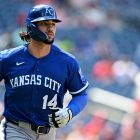
In what is becoming a lost season for the Royals, there are several positives the team can take into 2027. Bobby Witt Jr. remains a star of the first order. Carter Jensen is having a terrific season as a rookie catcher. Veteran starters Seth Lugo and Michael Wacha keep plugging along and getting outs. Daniel Lynch IV has emerged as a legitimate high-leverage reliever.
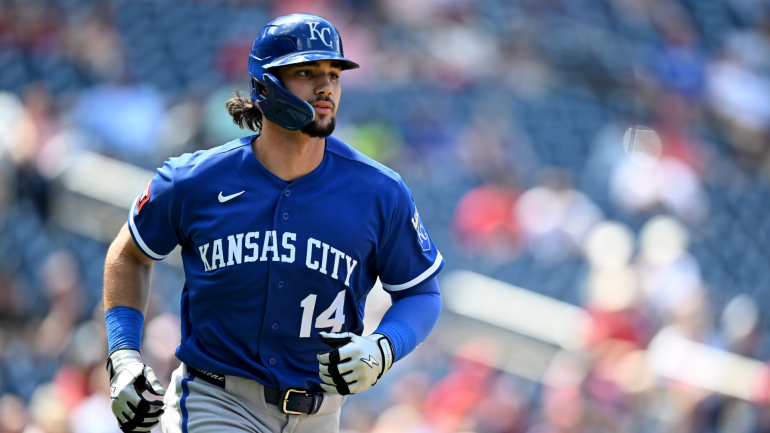
There's also Jac Caglianone, the No. 6 pick in the 2024 Draft and Kansas City's best hope for a future 35-homer bat. Caglianone debuted last season and it didn't go well: .157/.237/.295 in 232 plate appearances. That he ran a league-average strikeout rate was encouraging because swing-and-miss was the biggest concern going into the season. The rest of it though? Yeesh.
Struggling as a rookie can be a great learning experience and it looks like Caglianone put last year's failures to good use. After Tuesday's two-homer game, he's hitting a robust .277/.349/.498 with 14 home runs this season. Caglianone has eight home runs in his last 14 games after hitting six homers in the previous 60 games.
"He's pretty locked in," Royals manager Matt Quatraro said recently about Caglianone (via MLB.com). "That's really impressive power to all fields, which we know he has, but when you put it into play, it's really impressive."
Hard-hit ability has never been an issue with Caglianone. He's put up monster exit velocities and hit monster dingers dating back to his time at Florida. That and the freakish athleticism for a guy his size (6-foot-4 and 250 lbs.) is what got him drafted so high. This year's breakout is tied to fewer strikeouts, better launch angle, and a better mental approach.
Here are some numbers entering Tuesday:
| Strikeout rate | Whiff rate | 10-30° launch angle | |
|---|---|---|---|
April and May | 30.8% | 33.4% | 32.2% |
June | 25.6% | 25.1% | 39.6% |
MLB average | 22.0% | 25.1% | 30.0% |
The 10- to 30-degree launch angle range is ideal. Those are line drives and the kind of fly balls that go over the fence, not hang up long enough for an outfielder to catch. Caglianone was above the league average in April and May, but he's really kicked it up a notch in June. Those six homers in the last 13 games are no fluke. He's hitting more balls in the ideal launch angle range.
Also, Caglianone has gone from missing with one-third of his swings in April and May to only one-quarter of his swings in June, which is an enormous improvement. That's the difference between one of the highest whiff rates in baseball and league average. There's nothing sexy about league average, but when you have this much power, a league average contact rate is a big win.
Beyond the improved launch angle and whiff rate, Caglianone recently explained he's also getting more comfortable having a short memory and moving on to the next pitch. Swings and misses and bad swing decisions are going to happen. That's baseball. But not dwelling on it, and being able to quickly flush it and move on is important. Caglianone's starting to figure that out.
"I think I went about it a little bit poorly," Caglianone recently said (via MLB.com). "... (Now I) say a quick cuss word and move on. Screw it, it's over with. Also, if you know you made a bad swing decision, seven or eight times out of 10, the pitcher thinks he can get you on it again. So take the free ball after that. That's the cat and mouse to it."
We must apply small sample size warnings here, because Caglianone's 2026 success is mostly limited to June. There are good things happening under the hood though (whiff rate, launch angle, etc.), and also with his mental approach. Caglianone is still only 23. He has a lot to learn in this game. Figuring out the mental part takes time and it looks like he's starting to do that now.
Toronto's bullpen workload
It was around this time last season that the Blue Jays turned things around, kicked it into gear, and went on a run that carried them all the way to Game 7 of the World Series. Monday's win (TOR 4, HOU 2) got the Blue Jays back to .500 for the first time since April 4. It was their fifth win in six games and 21st win in their last 36 games. They have the American League's best record since May 12.
As well as things are going north of the border right now, there are some concerns with the Blue Jays, specifically the team's lack of over-the-fence power (23rd in home runs) and the bullpen's workload. Last year's Blue Jays dazzled with their contact-heavy style, though they also finished 11th in homers. They will need several guys (including Vladimir Guerrero Jr.) to hit for more power at some point.
The bullpen is another matter. Entering play Tuesday, Toronto's bullpen ranked first in total relief appearances (by 22!), fourth in innings, and fourth in batters faced. The bullpen has pitched well overall (11th in ERA and ninth in expected ERA), but still, the Blue Jays ask a lot of their relievers. Here are the MLB leaders in pitching appearances entering play Tuesday:
- Mason Fluharty, Blue Jays: 42
- Braydon Fisher, Blue Jays: 40
- Tyler Rogers, Blue Jays: 39
- Hogan Harris, Athletics: 39
- Brent Headrick, Yankees: 39
- Louie Varland, Blue Jays: 38
- Brock Burke, Reds: 38
Four of the seven pitchers with 38 appearances are Blue Jays, and Jeff Hoffman (37) is not too far off that pace. Rogers is used to a huge workload. His 374 relief appearances from 2021-25 were 29 more than any other pitcher. This is uncharted territory for Fisher, Fluharty, and Varland in particular, though. They've never worked this much this early in the season in their careers.
Just to further drive home that point: Varland has gotten at least four outs in 12 of his 38 appearances this season and seven of the 12 have come within the last month. There's been a lot of "the setup guys made a mess of the eighth inning and we need Louie to clean it up" lately. Varland's been tremendous this season, but yeah, the Blue Jays are leaning on him an awful lot.
The starting rotation has dealt with injuries (Shane Bieber, José Berríos, Cody Ponce) and ineffectiveness (Eric Lauer, Max Scherzer), which has put a strain on the bullpen. Bieber made his season debut Tuesday and I would expect Toronto to be in the market for a starter at the trade deadline. That should help with the bullpen workload down the stretch.
For now though, the Blue Jays need their top relievers to continue to absorb this workload. They've gotten their season on track, but they still have an uphill climb ahead of them to get back into the wild-card and AL East races. There's no doubt though, the Blue Jays and manager John Schneider will want to back off the bullpen soon. Their current workload pace is untenable.
The return of the 100-win team?
We are two days away from the midpoint of the 2026 season. Entering Tuesday, the league had played 1,169 of 2,430 scheduled games, or 48.1%. The season's 1,215th game (i.e. the exact midpoint) will be played Friday night, barring rainouts. And, as we approach the season's midpoint, three teams are on pace to win 100 games.
Here are the top of the standings entering play Tuesday:
| Record | Pace | |
|---|---|---|
50-29 (.633) | 103-59 | |
48-29 (.623) | 101-61 | |
47-29 (.618) | 100-62 | |
Yankees | 46-31 (.597) | 97-65 |
43-32 (.573) | 93-69 |
Baseball has not had a 100-win team since the Braves (104), Orioles (101), and Dodgers (100) in 2023. The Brewers led baseball with 97 wins last season. The Dodgers led with 98 wins in 2024. It is hardly unprecedented for baseball to go two straight seasons without a 100-win team, but it is uncommon. At least three teams won 100 games every year from 2017-23 (excluding 2020).
At the season's midpoint last year, two teams were on pace to win 100 games: Dodgers and Tigers. They were both on pace to win 101 games and they finished with 93 and 87 wins, respectively. Detroit suffered an all-time collapse in the second half. The Dodgers limped through August and September, and also took their foot off the gas a bit ahead of the postseason.
There are several explanations for the recent lack of 100-win teams, one of which is that's just baseball. These things tend to be cyclical. Wait a little bit and we'll see 100-win teams again. But also, the third wild-card spot is very forgiving. Why push for 100 wins when 96 or 97 puts you in the same position in October? The Dodgers certainly behave that way.
If there are no 100-win teams this year, another factor could be that the league's worst teams aren't as bad as they were in the past. Baseball's two worst teams are on pace for 64 wins (Rockies) and 65 wins (Angels). At the midpoint last year, the two worst teams were on pace for 36 wins (Rockies) and 52 wins (White Sox). This year's worst teams are much better than last year's.
Baseball is a zero-sum game. There are only so many wins to go around, and the more games the worst teams win, the fewer everyone else wins. That could cut into the chances of a 100-win team. Mostly, though, baseball's postseason format does not incentivize the best teams to push for every last win. Once you clinch a Wild Card Series bye, that's it. No need to chase more wins.